mammoth-diagram
 Mr. Ramos
creating a diagram and flowchart of incident investigation process for bus manufactures Bus-Assembly operations, as per Qatar Standards qatar law act. 108, act. 48, act 115 or qatar local standards
Comments (0)
Sign in to leave a comment
System Requirements
System Requirements Document (SRD)
Project Name: mammoth-diagram
1. Introduction
The mammoth-diagram project aims to create a structured diagram and flowchart for the Incident Investigation Process in Bus-Assembly Operations, adhering to Qatar Standards and local laws, specifically Act 108, Act 48, and Act 115. This initiative, led by Mr. Ramos, focuses on ensuring compliance, safety, and operational efficiency within the bus manufacturing industry in Qatar.
The flowchart will be downloadable and editable, enabling stakeholders to refine and adapt it to specific operational needs.
2. System Overview
The mammoth-diagram system will provide a comprehensive framework for visualizing the incident investigation process in bus assembly operations. It will include:
- A clear flowchart outlining key steps such as incident reporting, investigation, root cause analysis, and corrective actions.
- Compliance with Qatar's legal standards and regulations.
- Editable and downloadable formats for customization.
- Accessibility for various user roles, including safety officers, assembly line managers, and auditors.
This system will serve as a critical tool for improving safety protocols, ensuring legal compliance, and enhancing operational workflows.
3. Functional Requirements
As story points:
- As a Safety Officer, I should be able to report incidents directly into the flowchart system.
- As an Assembly Line Manager, I should be able to track the investigation progress and assign tasks.
- As an Auditor, I should be able to review the flowchart for compliance with Qatar Standards.
- As a User, I should be able to download and edit the flowchart for customization.
- As an Admin, I should be able to update the flowchart to reflect changes in legal standards.
4. User Personas
1. Safety Officer
- Role: Responsible for reporting incidents and ensuring safety protocols are followed.
- Needs: A clear and structured process for incident reporting and investigation.
2. Assembly Line Manager
- Role: Oversees the assembly line and ensures corrective actions are implemented.
- Needs: Tools to monitor investigation progress and assign tasks effectively.
3. Auditor
- Role: Reviews processes for compliance with Qatar Standards and legal regulations.
- Needs: Access to detailed flowcharts for auditing purposes.
4. Admin
- Role: Manages updates to the flowchart and ensures alignment with legal standards.
- Needs: Editable tools to modify the flowchart as required.
5. Visuals Colors and Theme
Color Palette:
The mammoth-diagram project will use a professional and structured color palette to reflect the seriousness of incident investigations while maintaining visual clarity:
- Background: #F7F9FC (Light Grayish Blue)
- Surface: #E1E5EB (Soft Gray)
- Text: #2B2D42 (Dark Slate)
- Accent: #EF233C (Vivid Red for highlighting critical steps)
- Muted Tones: #8D99AE (Muted Blue for secondary elements)
6. Signature Design Concept
Interactive Blueprint Flowchart
The homepage will feature an interactive blueprint-style flowchart that mimics an architectural drawing. Users will see:
- Dynamic Pencil-Sketch Animations: As users hover over sections, the flowchart will animate like a pencil sketch being drawn in real-time.
- Zoomable Sections: Users can zoom into specific steps for detailed information.
- Editable Nodes: Each node in the flowchart will be clickable, allowing users to edit text, add comments, or attach files directly.
- Color Transitions: The flowchart will subtly shift colors (e.g., from muted blue to vivid red) to highlight critical paths during interaction.
- Micro-Interactions: Hovering over a node will display a tooltip with additional details, while clicking will open an editable modal.
This design will make the homepage visually striking, engaging, and functional, leaving a lasting impression on users.
7. Non-Functional Requirements
- The system must be accessible on both desktop and mobile devices.
- The flowchart must support export formats such as PDF, PNG, and SVG.
- The system must ensure data security and compliance with Qatar's privacy laws.
- The system must support multi-language options, including Arabic and English.
8. Tech Stack
Frontend:
- React for Web
Backend:
- Python
- FastAPI
Database:
- MySQL (preferred for structured data storage)
- Alembic for migrations
AI Models:
- GPT 5.4 for user-friendly responses
AI Tools:
- Langchain
Local Orchestration:
- Docker
- docker-compose
Server-Side Orchestration:
- Kubernetes
9. Assumptions and Constraints
Assumptions:
- Users have basic familiarity with flowchart tools.
- The system will primarily be used in Qatar and must comply with local standards.
- The editable flowchart will be used by professionals such as safety officers, managers, and auditors.
Constraints:
- The system must adhere to Qatar's legal regulations (Act 108, Act 48, Act 115).
- The flowchart must be intuitive and easy to use for non-technical users.
10. Glossary
- Incident Investigation: The process of analyzing workplace incidents to determine their causes and prevent recurrence.
- Flowchart: A diagrammatic representation of a process or workflow.
- Qatar Standards: Local regulations governing safety and operational protocols in Qatar.
- Editable Format: A file format that allows users to modify content, such as SVG or PDF.
11. Downloadable Flowchart
The flowchart for the Incident Investigation Process will be provided in the following formats:
- PDF: For easy sharing and printing.
- SVG: For detailed editing and customization.
- PNG: For quick reference and embedding in presentations.
The editable flowchart will include:
- Incident Reporting: Initial step for documenting incidents.
- Investigation: Detailed analysis of the incident.
- Root Cause Analysis: Identifying underlying causes.
- Corrective Actions: Implementing measures to prevent recurrence.
This document is now updated to include the downloadable and editable flowchart requirement, along with all other necessary sections. Let me know if further refinements are needed, Mr. Ramos!
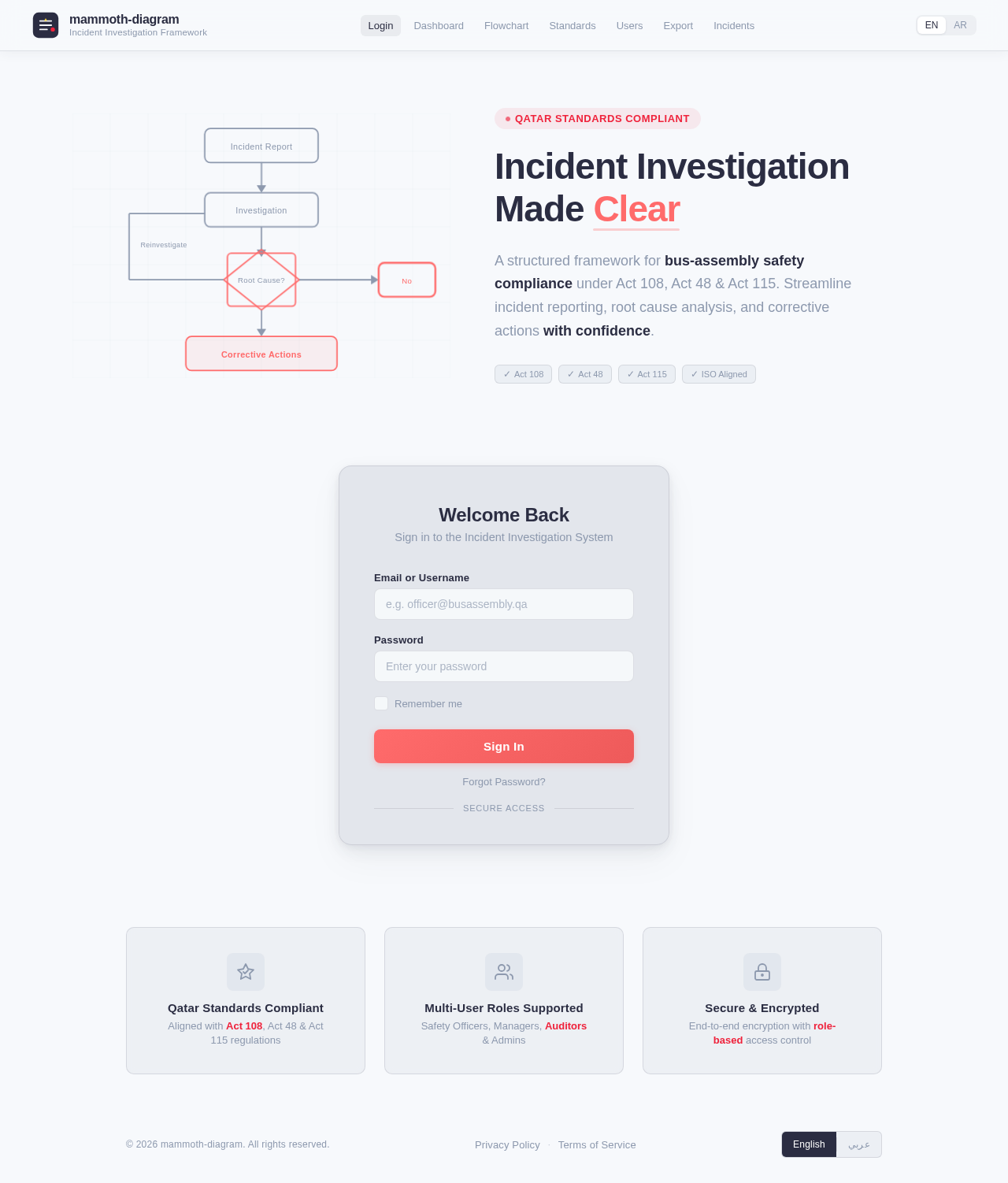
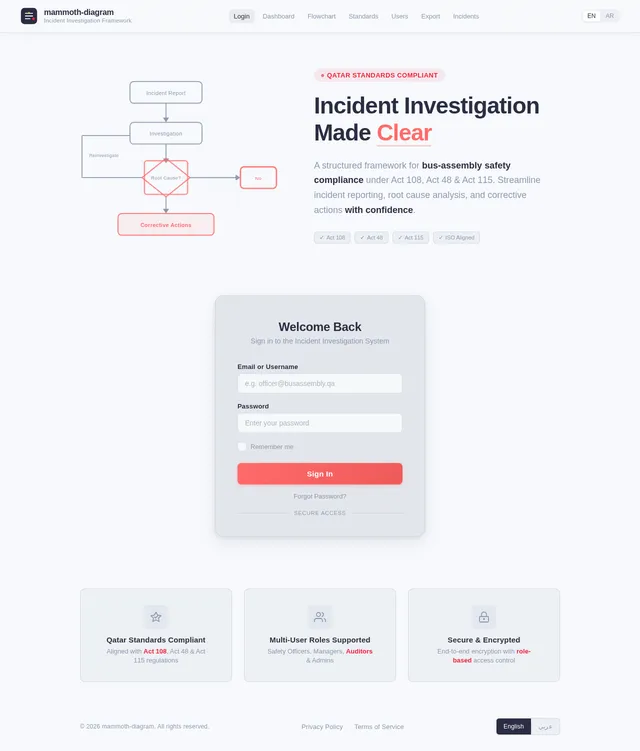
Incident Investigation
Made Clear
A structured framework for bus-assembly safety compliance under Act 108, Act 48 & Act 115. Streamline incident reporting, root cause analysis, and corrective actions with confidence.
Welcome Back
Sign in to the Incident Investigation System
No comments yet. Be the first!