regal-website
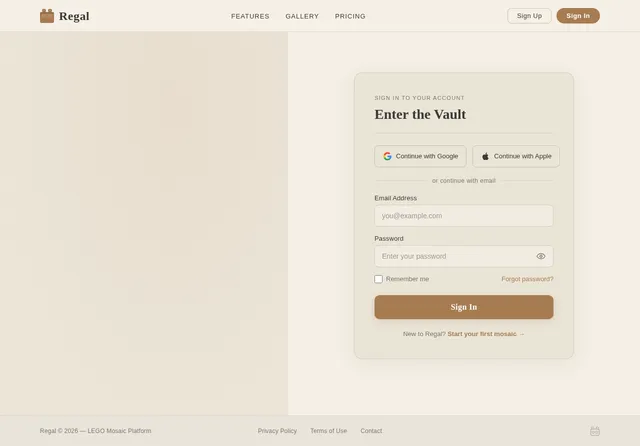
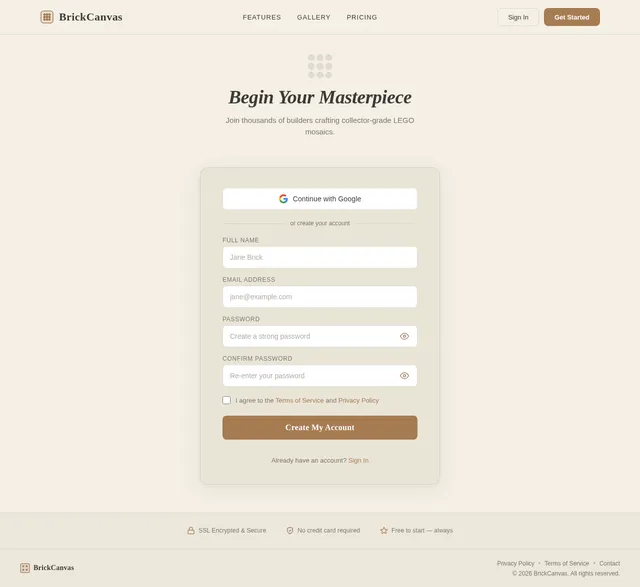
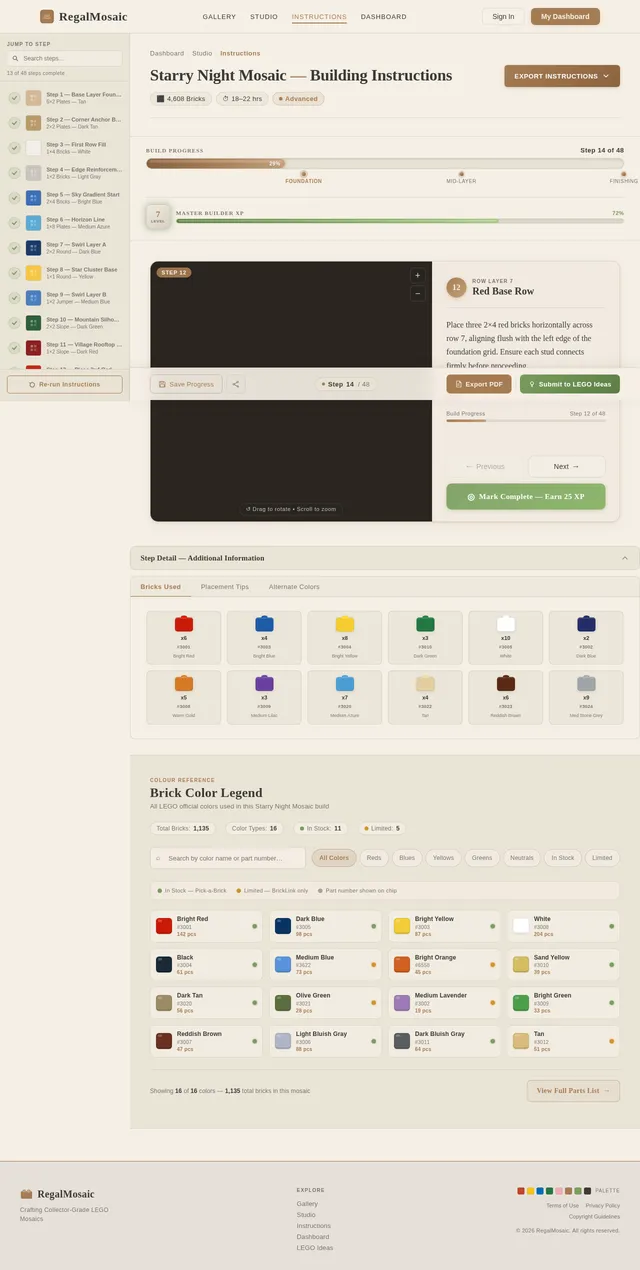
You are an expert AI web developer and creative engineer tasked with building a website named “BrickCanvas”, a professional platform that transforms any digital painting, photograph, or artwork into a collector-quality LEGO® mosaic set. Goal: Build a responsive, visually elegant, and intuitive website that guides users through the complete process of turning 2D artworks into physical 3D LEGO mosaics. Core Features: 1. Image Upload and Processing: Users upload a digital artwork (JPEG, PNG, or TIFF). The system automatically analyzes color, depth, and contrast to generate a LEGO-compatible pixel mapping. 2. Smart Brick Mapping Engine: Convert the image into a LEGO color palette (based on LEGO’s current color catalog). Calculate mosaic dimensions, brick counts, and optimal layout for both aesthetic fidelity and buildability. 3. 3D Mosaic Visualization: Display a rotatable, interactive 3D preview (using WebGL or Three.js) that simulates the completed mosaic. 4. Instruction Book Generator: Automatically create step-by-step digital building instructions inspired by The LEGO® Builder’s Handbook – Become a Master Builder. • Include detailed layer-by-layer assembly steps. • Provide realistic part inventories per step, with part IDs. • Offer downloadable PDF instructions formatted in LEGO-style blueprints. 1. Order and Export Options: • Export digital build files in common LEGO design formats (e.g., BrickLink Studio `.io`, LDraw `.ldr`). • Generate a purchasable parts list with BrickLink or LEGO Pick-a-Brick API integration. • Option to order a custom collector’s kit (with packaging designed from the uploaded image). 1. User Dashboard: Let users save, share, and download their creations. Add social sharing for showcasing completed mosaics. Design Guidelines: • Aesthetic: Clean interface with LEGO-like playful minimalism. White background, vibrant accent colors. • Interaction Flow: Upload → Preview Mosaic → Customize Size/Colors → Generate Instructions → Export or Order Set. • Accessibility: Tooltips, visual previews, progress bar for instruction generation. • Include gamified touches such as “Master Builder Level” progress indicators. Backend & AI Components: • Use a diffusion-based color quantization model trained on LEGO color palettes. • Integrate OpenCV for image segmentation and dominant color extraction. • Utilize Three.js or Babylon.js for 3D rendering of the mosaic. • Use LangChain or similar orchestration frameworks for chaining individual AI tools (image analysis, build step generation, instruction formatting). Deliverables: • Fully functional website prototype runnable on a local server. • Auto-generated documentation describing installation, dependencies, and usage. • Sample input and output (e.g., “Starry Night” → 3D LEGO mosaic PDF instructions + 3D model preview). Tone and Presentation: Write in an inspiring and educational tone, encouraging users to “become a Master Builder.” Present instructions in a LEGO manual–style voice, friendly but technical, using visual callouts and color-coded layers. Objective: At the end, users should be able to: • Upload any artwork • Generate a collector-grade LEGO mosaic set • Follow real build steps to assemble it in the physical world • Order or share their personalized masterpiece Important: Ensure copyright compliance for uploaded artworks and include licensing acknowledgment guidelines



Comments (0)
Sign in to leave a comment
System Requirements
System Requirements Document (SRD)
Project Name: regal-website
1. Introduction
The regal-website project is a professional platform designed to empower individual LEGO enthusiasts to create complex, high-fidelity LEGO mosaic sets from their personal artwork. The platform aims to attract the interest of the LEGO company by enabling users to design collector-grade mosaics that showcase their creativity and technical skill. By providing tools for image processing, 3D visualization, and professional-grade instruction generation, the website bridges the gap between personal creativity and professional LEGO design.
This document outlines the system requirements for the regal-website project, ensuring it meets the needs of its target audience and delivers an exceptional user experience.
2. System Overview
The regal-website platform will serve as a responsive, visually elegant, and intuitive website that guides users through the process of transforming 2D artwork into physical 3D LEGO mosaics. The system will cater to individual LEGO enthusiasts who aim to build complex sets that could potentially attract the interest of the LEGO company.
Key features include:
- Image upload and processing to convert artwork into LEGO-compatible designs.
- A smart brick mapping engine for optimal layout and aesthetic fidelity.
- Interactive 3D mosaic visualization for previewing designs.
- Automatic generation of professional-grade building instructions.
- Export and order options for digital files, parts lists, and custom kits.
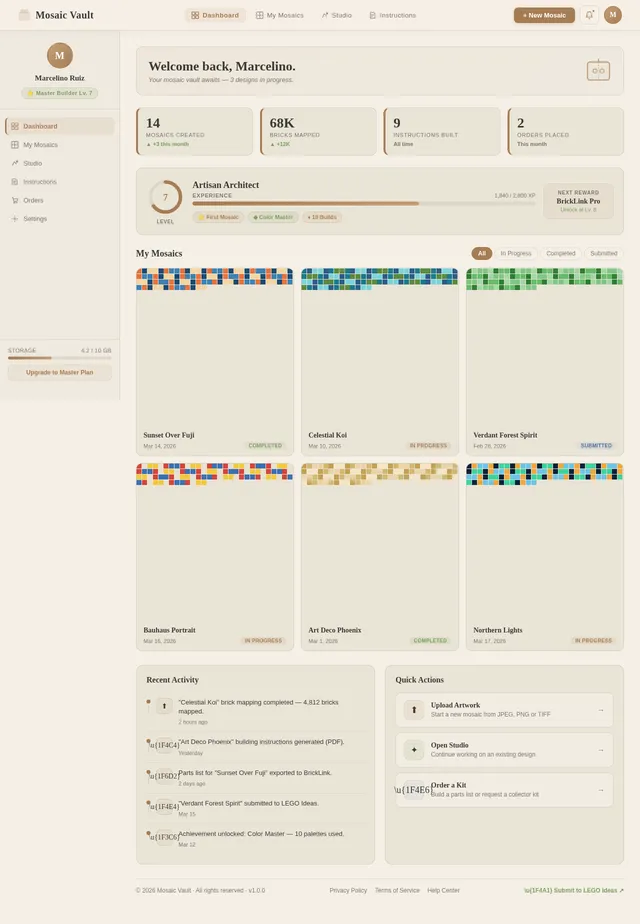
- A user dashboard for saving, sharing, and showcasing creations.
- Selective re-run capability to allow users to regenerate specific outputs (e.g., updated instructions, previews, or parts lists).
The platform will focus on accessibility, gamification, and professional-grade output to inspire users to create designs worthy of official LEGO recognition.
3. Functional Requirements
- As a User, I should be able to upload digital artwork in JPEG, PNG, or TIFF formats.
- As a User, I should be able to preview my artwork as a LEGO mosaic in an interactive 3D environment.
- As a User, I should be able to customize the size and color palette of my mosaic.
- As a User, I should be able to generate step-by-step building instructions in a LEGO-style format.
- As a User, I should be able to export digital build files in formats like
.ioor.ldr. - As a User, I should be able to generate a purchasable parts list with BrickLink or LEGO Pick-a-Brick API integration.
- As a User, I should be able to order a custom collector’s kit with packaging designed from my uploaded image.
- As a User, I should be able to save, share, and download my creations from a personal dashboard.
- As a User, I should be able to track my progress with gamified elements like “Master Builder Level” indicators.
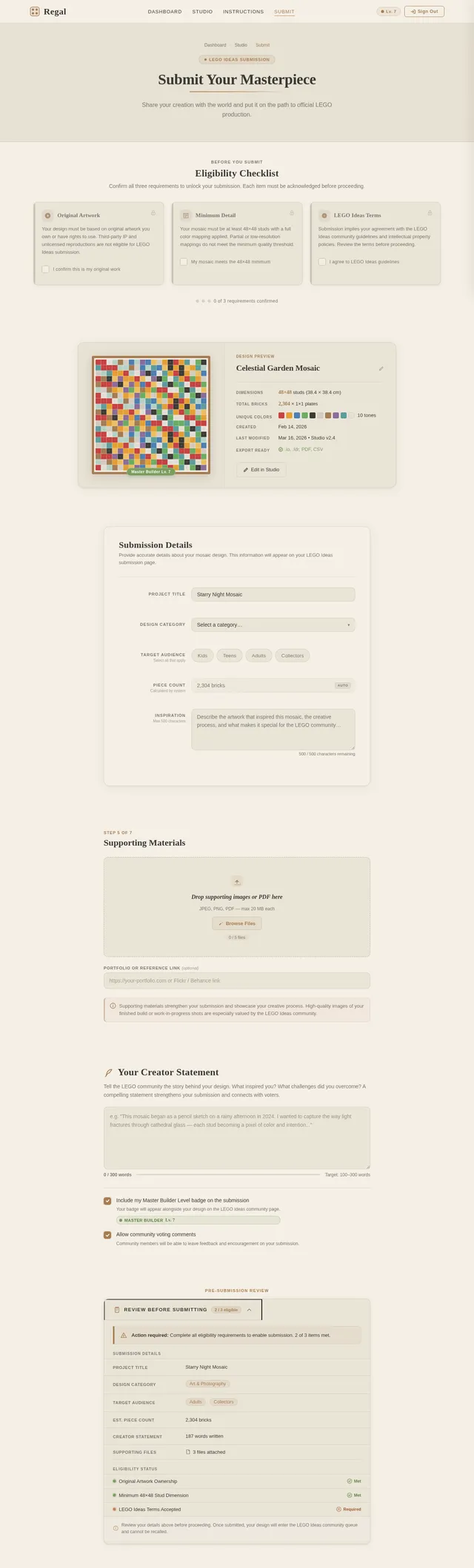
- As a User, I should be able to submit my designs to LEGO Ideas for potential recognition.
- As a User, I should be able to selectively re-run specific outputs (e.g., regenerate instructions, update 3D previews, or refresh parts lists) without starting the entire process over.
4. User Personas
Enthusiast Builder
- Description: A LEGO hobbyist passionate about creating complex, high-quality builds.
- Goals: To design and build mosaics that showcase their creativity and technical skill.
- Needs: Tools for precision, customization, and professional-grade output.
Aspiring LEGO Designer
- Description: An individual aiming to create designs that could attract the interest of the LEGO company.
- Goals: To produce designs worthy of official LEGO recognition or production.
- Needs: Features that emphasize quality, innovation, and professional presentation.
Collector
- Description: A LEGO fan who values unique, custom-designed sets for personal or display purposes.
- Goals: To create and own personalized LEGO mosaics.
- Needs: Seamless ordering and high-quality packaging options.
5. Creative Reference Stories
Based on the project’s focus on professional-grade output and the target audience of enthusiasts aiming for LEGO recognition, the "Architectural Marble" story is the most suitable inspiration.
Visual Direction:
- Mood: Timeless, structured, grounded, and sophisticated.
- Palette: Warm neutrals inspired by marble and natural materials, with a focus on elegance and professionalism.
- Typography: Elegant serif for headings and clean sans-serif for body text, emphasizing clarity and refinement.
- Layout: Medium density with structured vertical hierarchy, ensuring a professional and organized feel.
- Motion: Smooth and slow transitions, with effects like fade-in and gentle rise to maintain a polished aesthetic.
6. Visuals Colors and Theme
A unique color palette has been created for the regal-website project:
- Background: #F4F1EB (soft cream)
- Surface: #E6E0D8 (light sand)
- Text: #3C3B37 (matte dark gray)
- Accent: #B28A5E (mocha brown) and #7A9D5E (sage green)
- Muted Tones: #D5CEC3 (warm beige)
This palette reflects the timeless and sophisticated mood of the project, ensuring a professional and inviting user experience.
7. Signature Design Concept
"The Mosaic Vault"
The homepage of the regal-website will feature an interactive "Mosaic Vault" concept. Upon landing, users will see a grand, architectural vault door slowly opening, revealing a gallery of rotating LEGO mosaic masterpieces. Each mosaic will appear as a framed artwork, with subtle lighting effects highlighting its details.
Key interactions:
- Hover Effects: As users hover over a mosaic, it will animate into a 3D preview, allowing them to rotate and zoom in.
- Dynamic Background: The background will subtly shift between warm marble textures, creating a sense of depth and sophistication.
- Gamification: A “Master Builder Level” progress bar will be displayed prominently, encouraging users to unlock new features and badges.
- Call-to-Action: A glowing button labeled “Start Your Masterpiece” will guide users to upload their artwork and begin the creation process.
This concept combines elegance, interactivity, and inspiration, making the website unforgettable and engaging.
8. Non-Functional Requirements
- The website must be responsive and optimized for desktop and mobile devices.
- The system should process image uploads and generate previews within 5 seconds.
- The platform must comply with copyright laws and provide licensing acknowledgment guidelines.
- The website should support accessibility features, including tooltips and visual previews.
- The selective re-run feature should allow users to regenerate specific outputs without re-uploading their artwork.
9. Tech Stack
- Frontend: React for Web
- Backend: Python with FastAPI
- Database: MySQL with Alembic for migrations
- 3D Rendering: Three.js for interactive previews
- AI Models:
- GPT 5.2 for user-friendly responses
- OpenCV for image segmentation and color extraction
- Orchestration: LangChain for chaining AI tools
- Containerization: Docker and Docker Compose
10. Assumptions and Constraints
- Users will upload artwork in standard formats (JPEG, PNG, TIFF).
- The system will rely on LEGO’s official color catalog for brick mapping.
- The platform will integrate with BrickLink and LEGO Pick-a-Brick APIs for parts lists.
- The website will operate in the US timezone and use USD as the default currency.
- All features will be free for users initially, with potential monetization options in the future.
11. Glossary
- LEGO Mosaic: A 2D artwork recreated using LEGO bricks.
- Brick Mapping Engine: A system that converts artwork into a LEGO-compatible design.
- Master Builder Level: A gamified progress indicator for users.
- BrickLink: An online marketplace for LEGO parts and sets.
- Selective Re-run: A feature allowing users to regenerate specific outputs without restarting the entire process.
This updated SRD ensures the regal-website project aligns with its target audience and delivers a professional, engaging experience. Let me know if you'd like to refine any details further, Marcelino!
No comments yet. Be the first!