azure-hi
hi

Comments (0)
Sign in to leave a comment
System Requirements
System Requirements Document (SRD)
Project Name: azure-hi
1. Introduction
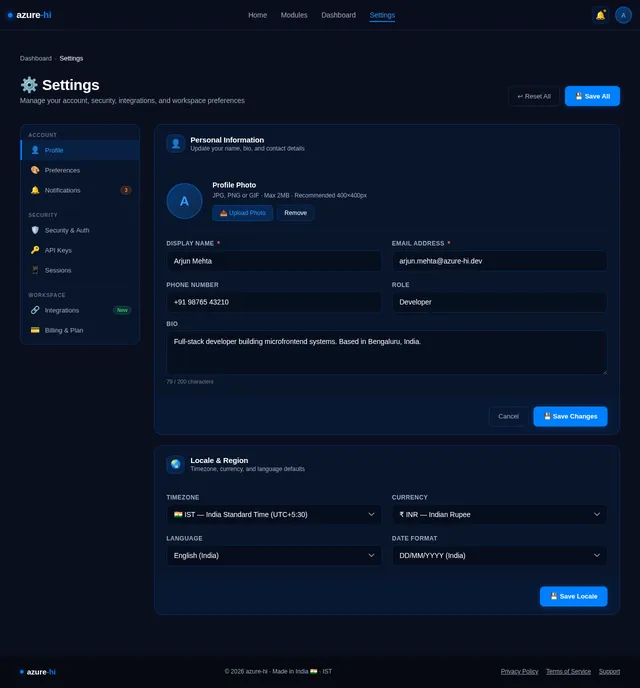
The azure-hi project is a comprehensive React-based microfrontend application designed to integrate multiple independent components seamlessly. This document outlines the system requirements for the project, ensuring a modular architecture that supports scalability, maintainability, and user-friendly interactions. The system is tailored for users in India (IN), considering locale-specific defaults such as IST timezone and INR currency.
2. System Overview
The azure-hi system is a modular, microfrontend-based application built using React. It aims to provide a seamless user experience by dividing the application into smaller, independently deployable components. These components will interact with each other while maintaining their autonomy. The system will leverage modern technologies to ensure high performance, scalability, and ease of integration.
Key features include:
- Modular architecture for independent development and deployment.
- React-based frontend for a dynamic and responsive user interface.
- Backend powered by Python and FastAPI for efficient data handling.
- Integration with both RDBMS (MySQL/MariaDB) and NoSQL (MongoDB) databases.
- AI-powered features for enhanced user interactions and automation.
3. Functional Requirements
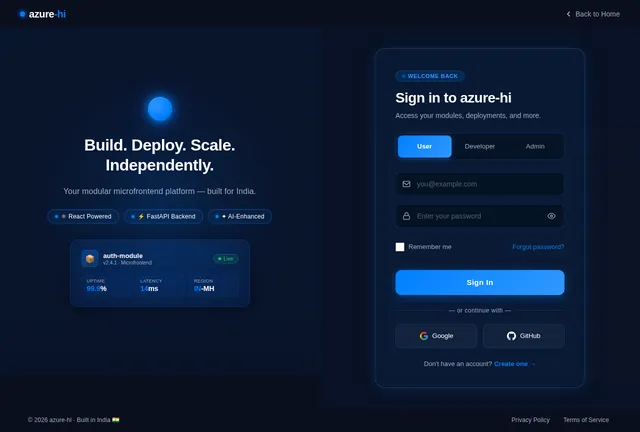
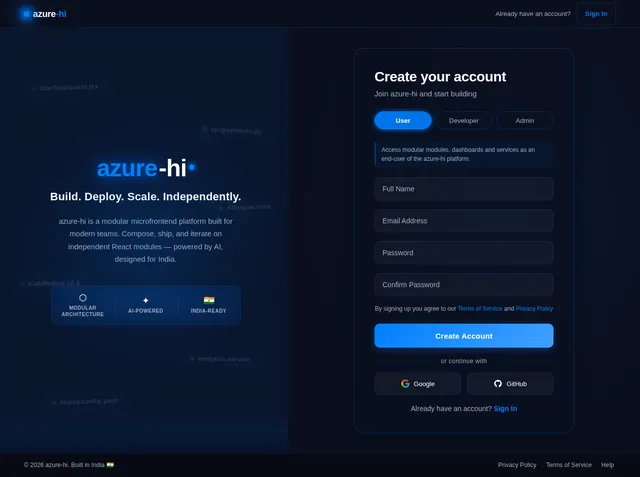
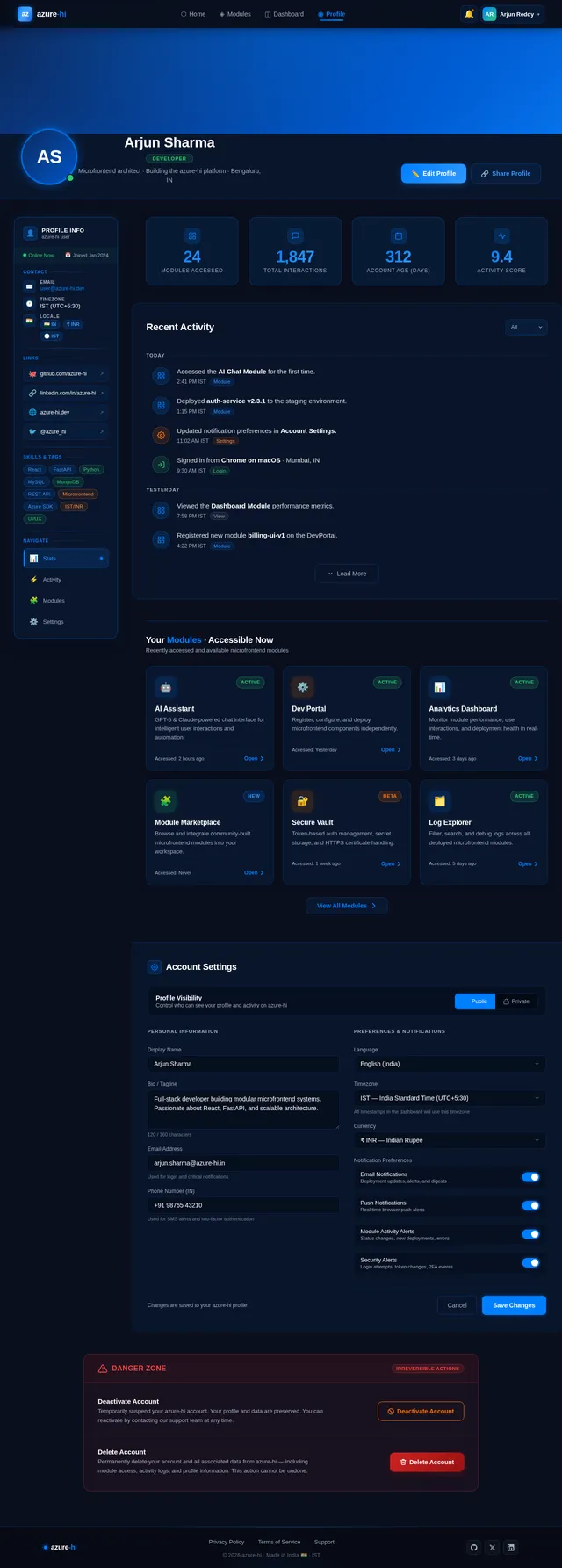
- As a User, I should be able to access different microfrontend modules seamlessly.
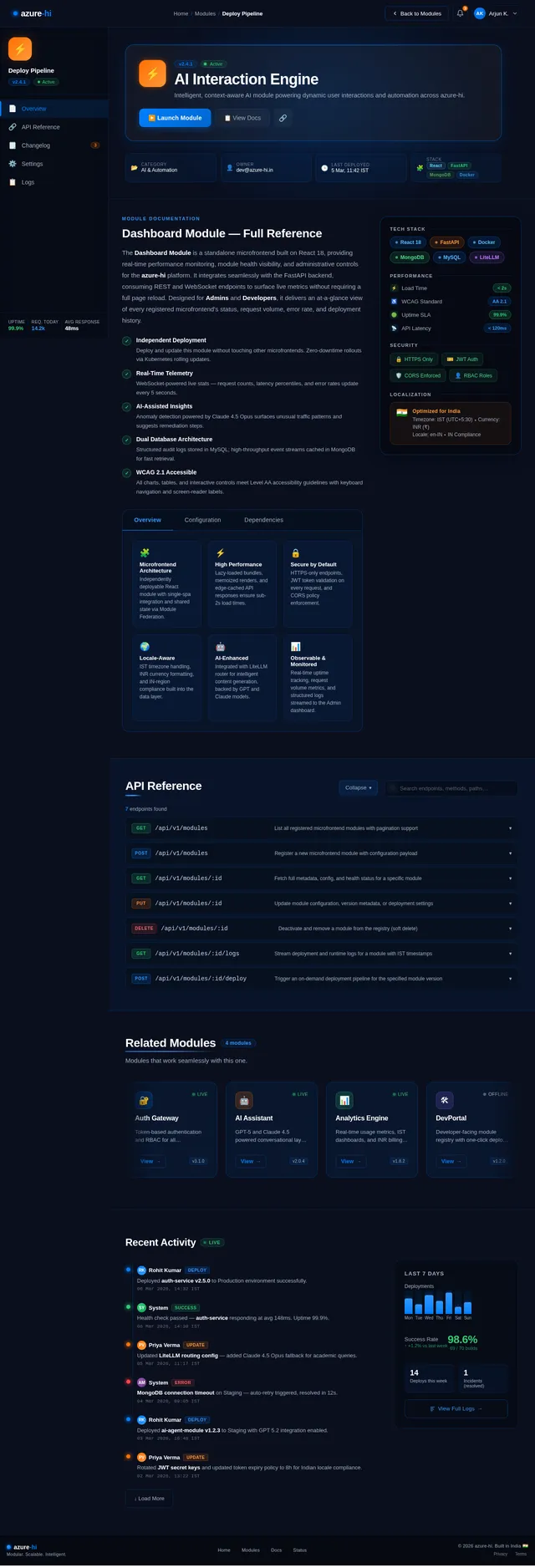
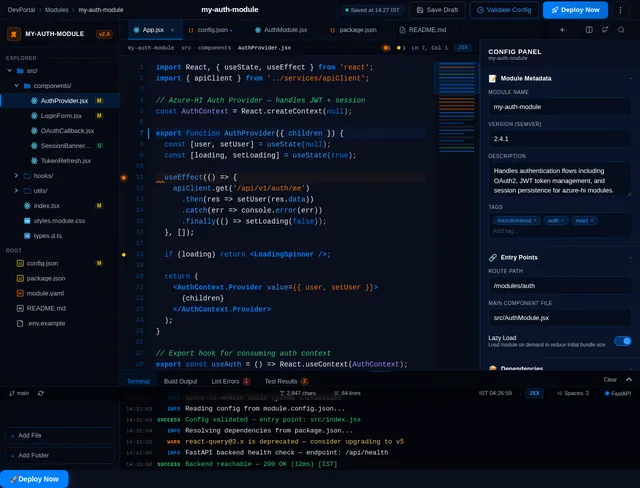
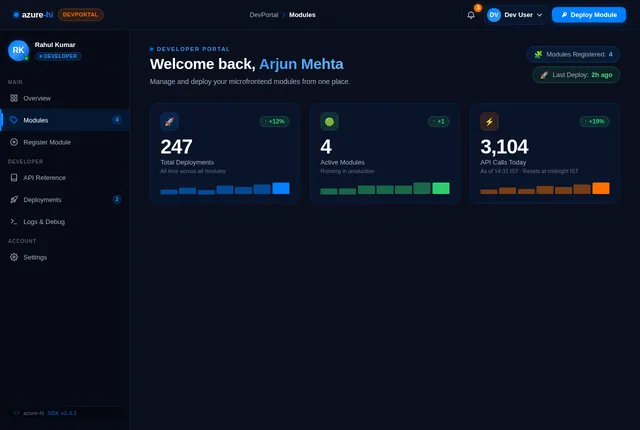
- As a Developer, I should be able to independently deploy and update microfrontend components.
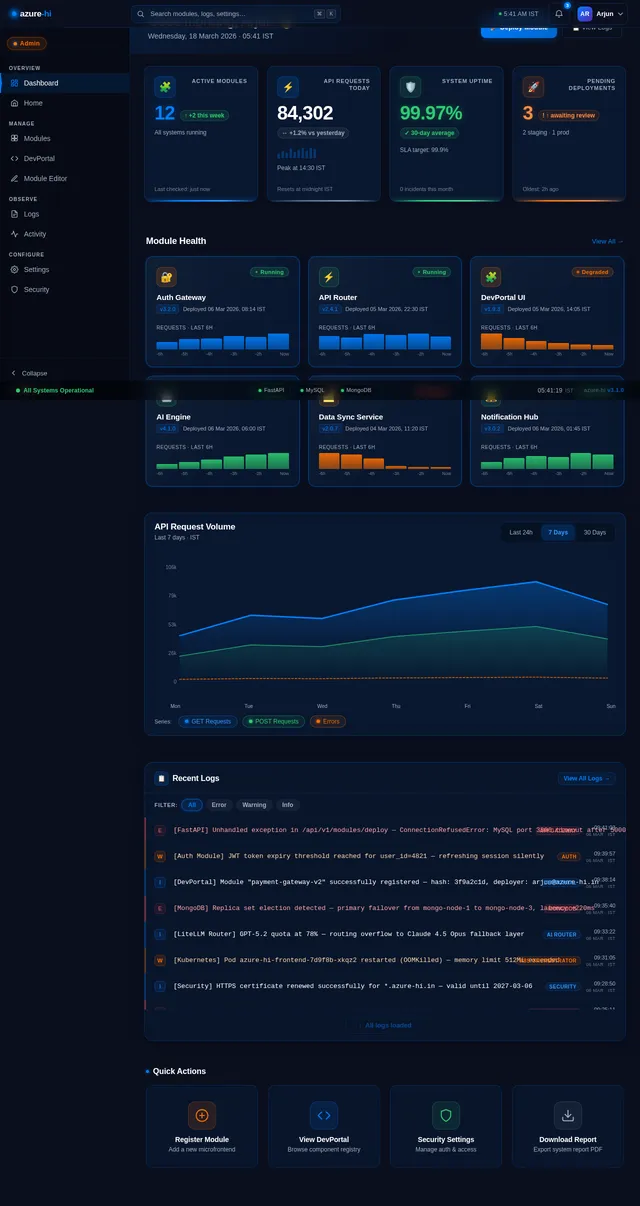
- As an Admin, I should be able to monitor and manage the performance of all microfrontend modules.
- As a User, I should experience a responsive and dynamic interface across devices.
- As a System, I should ensure secure and efficient communication between microfrontend components.
4. User Personas
User:
- Primary end-user of the application.
- Accesses the system to interact with various microfrontend modules.
- Expects a seamless and intuitive experience.
Admin:
- Responsible for managing and monitoring the system.
- Requires tools to oversee performance, logs, and security.
Developer:
- Builds and maintains the microfrontend components.
- Requires a modular architecture for independent development and deployment.
5. Visuals Colors and Theme
The azure-hi project will adopt a modern and vibrant color palette to ensure a visually appealing and engaging user experience.
Primary Colors:
- Azure Blue (#007FFF)
- White (#FFFFFF)
Secondary Colors:
- Light Gray (#F5F5F5)
- Dark Gray (#333333)
Accent Colors:
- Vibrant Orange (#FF6F00)
- Emerald Green (#2ECC71)
The theme will focus on clean, minimalistic designs with a strong emphasis on usability and accessibility.
6. Signature Design Concept
Interactive Floating Modules
The homepage of azure-hi will feature a 3D interactive floating module design. Each microfrontend module will appear as a floating card in a 3D space. Users can interact with these cards by hovering over them, which will cause the cards to gently rotate and display a brief description of the module.
Details:
- Animations: Smooth hover effects with rotation and zoom-in transitions.
- Interaction: Clicking on a card will "zoom in" to the module, transitioning the user to the respective microfrontend.
- Background: A subtle gradient animation in azure blue and white, giving a dynamic and modern feel.
- Micro-interactions: Cards will have a glowing border that pulses gently when hovered over.
This design will create an unforgettable first impression, showcasing the modular nature of the application while maintaining a futuristic and professional aesthetic.
7. Non-Functional Requirements
- Performance: The system should load each microfrontend module within 2 seconds.
- Scalability: The architecture should support the addition of new microfrontend modules without significant rework.
- Security: Ensure secure communication between modules using HTTPS and token-based authentication.
- Accessibility: The system should comply with WCAG 2.1 standards for accessibility.
- Localization: Support for Indian locale defaults, including IST timezone and INR currency.
8. Tech Stack
Frontend:
- React for Web
Backend:
- Python
- FastAPI
Database:
- MySQL (RDBMS)
- MongoDB (NoSQL)
AI Models:
- GPT 5.2 for user-friendly responses
- Claude 4.5 Opas for academic or coding work
AI Tools:
- Litellm for LLM Routing
- Langchain
Orchestration:
- Docker for local orchestration
- Kubernetes for server-side orchestration
9. Assumptions and Constraints
- The system assumes that all users have access to modern browsers that support React-based applications.
- The backend will be hosted on a cloud platform with sufficient resources to handle peak loads.
- The system will prioritize modularity, which may result in slightly higher initial development time.
- All microfrontend modules will adhere to a common design and interaction standard.
10. Glossary
- Microfrontend: An architectural style where a frontend application is divided into smaller, independently deployable modules.
- RDBMS: Relational Database Management System.
- NoSQL: Non-relational database system.
- WCAG: Web Content Accessibility Guidelines.
- IST: Indian Standard Time.
- INR: Indian Rupee.
This document provides a comprehensive overview of the azure-hi project requirements, ensuring clarity and alignment for all stakeholders.
No comments yet. Be the first!