Page 1 of 4
sharp-build System Requirements Document
Introduction
The sharp-build project aims to develop a simple, single-page design of a calculator. This document outlines the system requirements for the project, ensuring that all necessary functionalities and design elements are captured and implemented.
System Overview
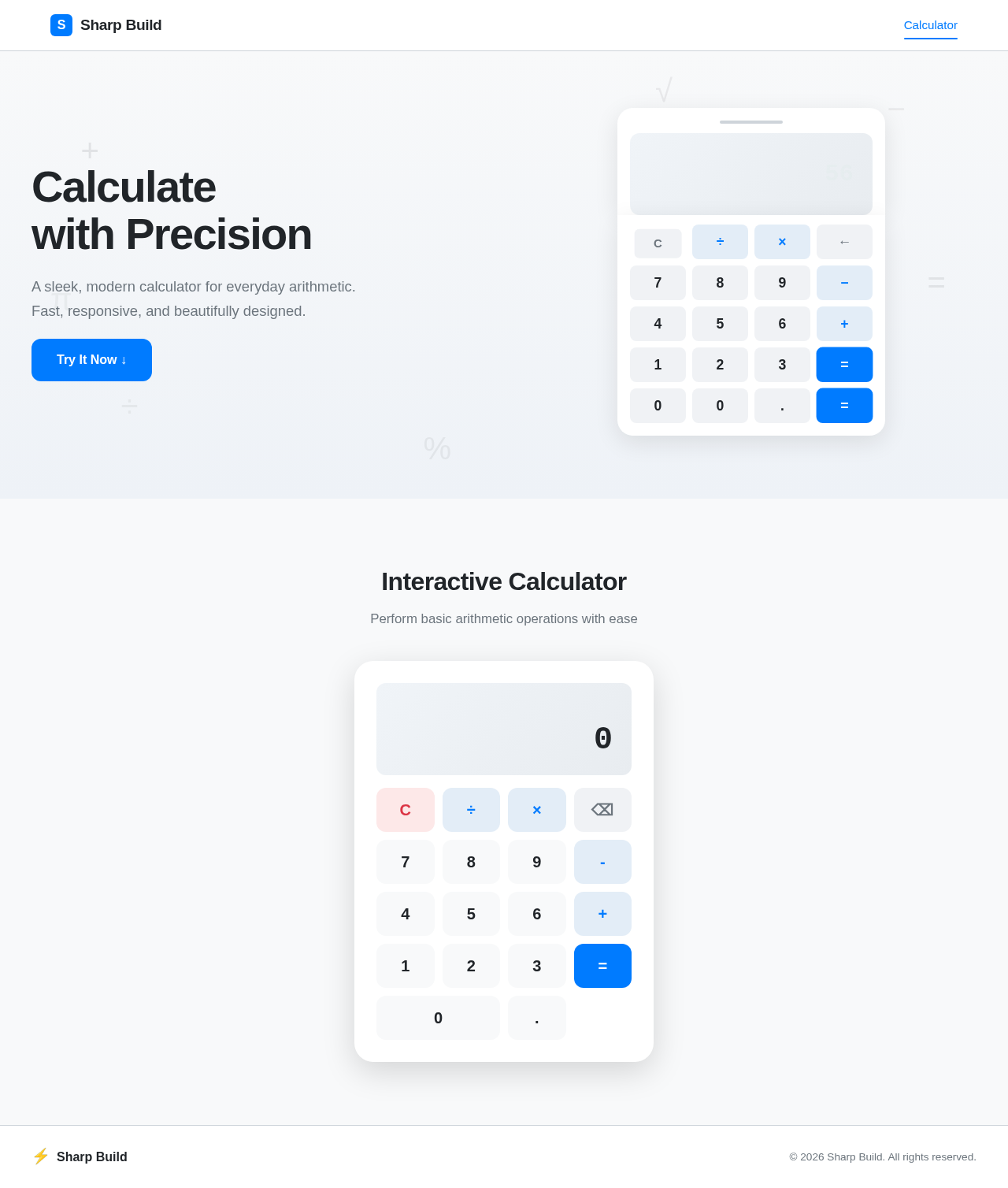
The sharp-build project will deliver a web-based calculator application that is user-friendly and accessible. The application will be designed to perform basic arithmetic operations and will be optimized for performance and usability.
Functional Requirements as Story Points
- As a User, I should be able to perform basic arithmetic operations such as addition, subtraction, multiplication, and division.
- As a User, I should be able to clear the current input or result to start a new calculation.
- As a User, I should be able to view the current input and result on the calculator display.
- As a User, I should be able to use the calculator on both desktop and mobile devices.
User Personas
- User: An individual looking to perform basic arithmetic calculations quickly and efficiently on a web-based platform.
Page 2 of 4
Core User Flows
- User opens the calculator application.
- User inputs numbers and selects an arithmetic operation.
- User views the result on the calculator display.
- User clears the input to perform a new calculation.
Visuals Colors and Theme
- primary: #007BFF (a shade of blue for the main interface elements)
- primary_light: #66B2FF (a lighter tint of the primary color for hover states)
- secondary: #6C757D (a neutral grey for secondary elements)
- accent: #28A745 (a green color for emphasis on CTAs and active states)
- highlight: #FFC107 (a yellow color for notifications and active indicators)
- bg: #F8F9FA (a light grey for the page background)
- surface: #FFFFFF (white for card/panel backgrounds)
- text: #212529 (a dark grey for primary text)
- text_muted: #6C757D (a softer grey for secondary text)
- border: #CED4DA (a subtle grey for borders)
Signature Design Concept
The sharp-build calculator will feature an interactive design where the buttons appear to press down when clicked, providing a tactile feedback experience. The calculator will have a sleek, modern look with rounded buttons and a digital display that mimics a physical calculator. The interface will be responsive, adjusting seamlessly between desktop and mobile views. The design will use motion/react for smooth animations and transitions, enhancing the user experience with subtle movements as buttons are pressed and results are displayed.
Page 3 of 4
Landing Hero Motion Brief
The landing page will feature a dynamic animation where numbers and operations flow into the calculator display, demonstrating the input and calculation process. This animation will loop every 10 seconds, showing numbers being entered, calculated, and results displayed. The animation will be built using motion/react for smooth transitions and will be responsive to user interactions, such as hovering over buttons to see them animate slightly.
Interaction Model & Motion Direction
- Interaction Model: Animated
- The calculator will have moderate scroll-triggered reveals and hover transitions, providing a polished and interactive experience.
- Motion Direction: The landing page will include a continuous 2D motion loop, with animations triggered by user interactions.
Non-Functional Requirements
- The application must load within 2 seconds on a standard internet connection.
- The calculator should be accessible and usable on all modern browsers and devices.
- The design should adhere to accessibility standards, ensuring usability for all users.
Tech Stack
- Frontend: React for Web
- Backend: Not applicable (single-page application)
- Database: Not applicable (single-page application)
- Local Orchestration: Docker for development environment
Page 4 of 4
Assumptions and Constraints
- The calculator will only perform basic arithmetic operations.
- The application will be a single-page design, focusing on simplicity and ease of use.
- The project will not require a backend or database integration.
Glossary
- Arithmetic Operations: Basic mathematical operations including addition, subtraction, multiplication, and division.
- CTA: Call to Action, typically a button or link that prompts user interaction.
- Responsive Design: An approach to web design that makes web pages render well on a variety of devices and window or screen sizes.
 Diya Trivedi
No comments yet. Be the first!