

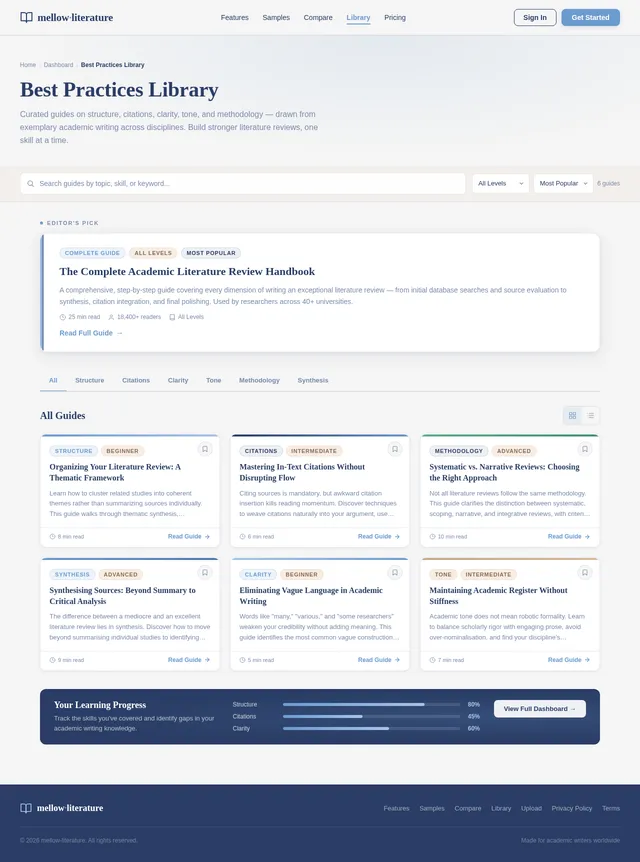
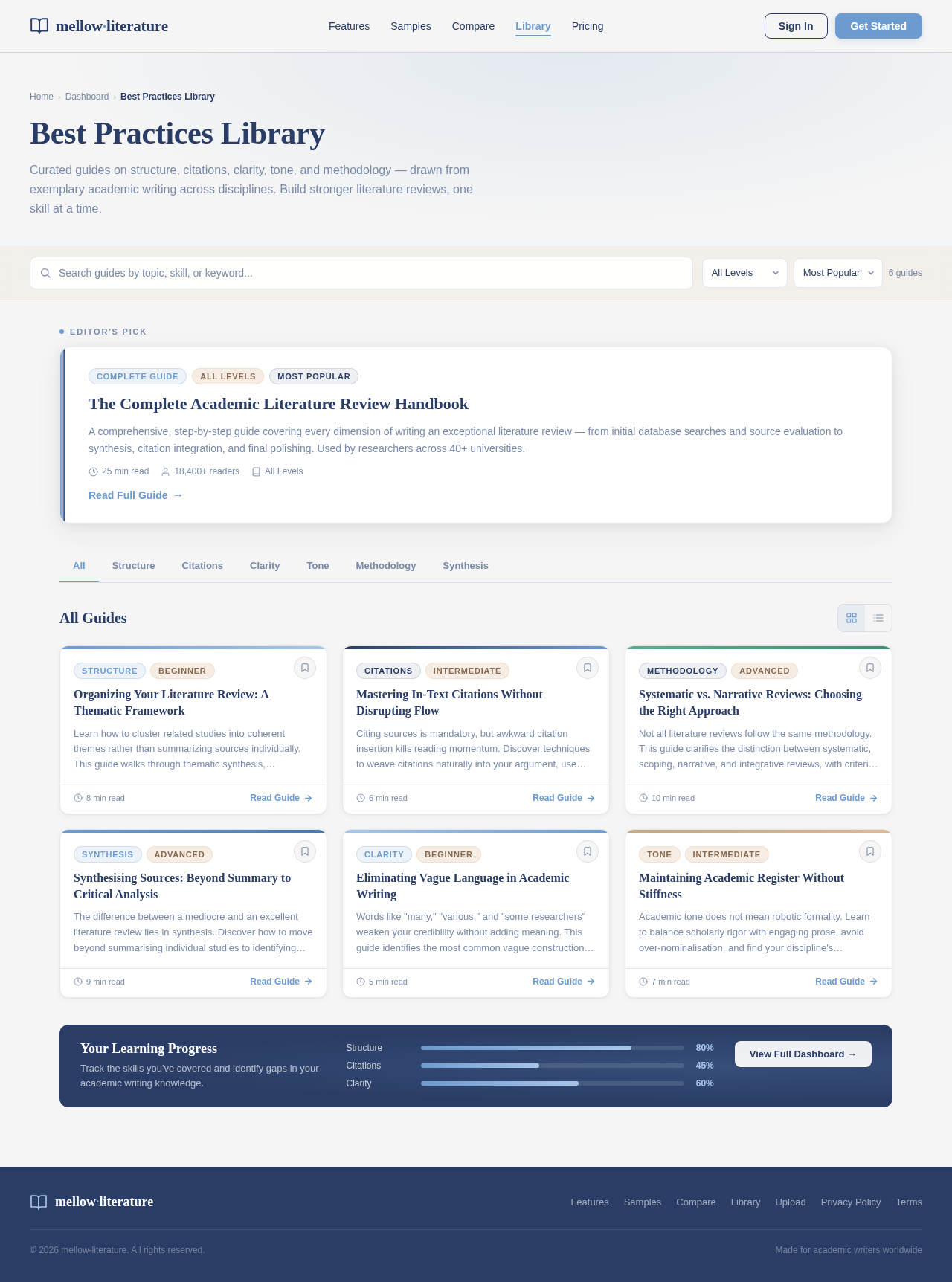
The Complete Academic Literature Review Handbook
A comprehensive, step-by-step guide covering every dimension of writing an exceptional literature review — from initial database searches and source evaluation to synthesis, citation integration, and final polishing. Used by researchers across 40+ universities.
All Guides
Organizing Your Literature Review: A Thematic Framework
Learn how to cluster related studies into coherent themes rather than summarizing sources individually. This guide walks through thematic synthesis, chronological arrangement, and hybrid approaches used in leading journals.
Mastering In-Text Citations Without Disrupting Flow
Citing sources is mandatory, but awkward citation insertion kills reading momentum. Discover techniques to weave citations naturally into your argument, use signal phrases strategically, and avoid common citation stacking errors.
Systematic vs. Narrative Reviews: Choosing the Right Approach
Not all literature reviews follow the same methodology. This guide clarifies the distinction between systematic, scoping, narrative, and integrative reviews, with criteria to help you select the correct approach for your research question.
Synthesising Sources: Beyond Summary to Critical Analysis
The difference between a mediocre and an excellent literature review lies in synthesis. Discover how to move beyond summarising individual studies to identifying patterns, contradictions, gaps, and implications across the literature.
Eliminating Vague Language in Academic Writing
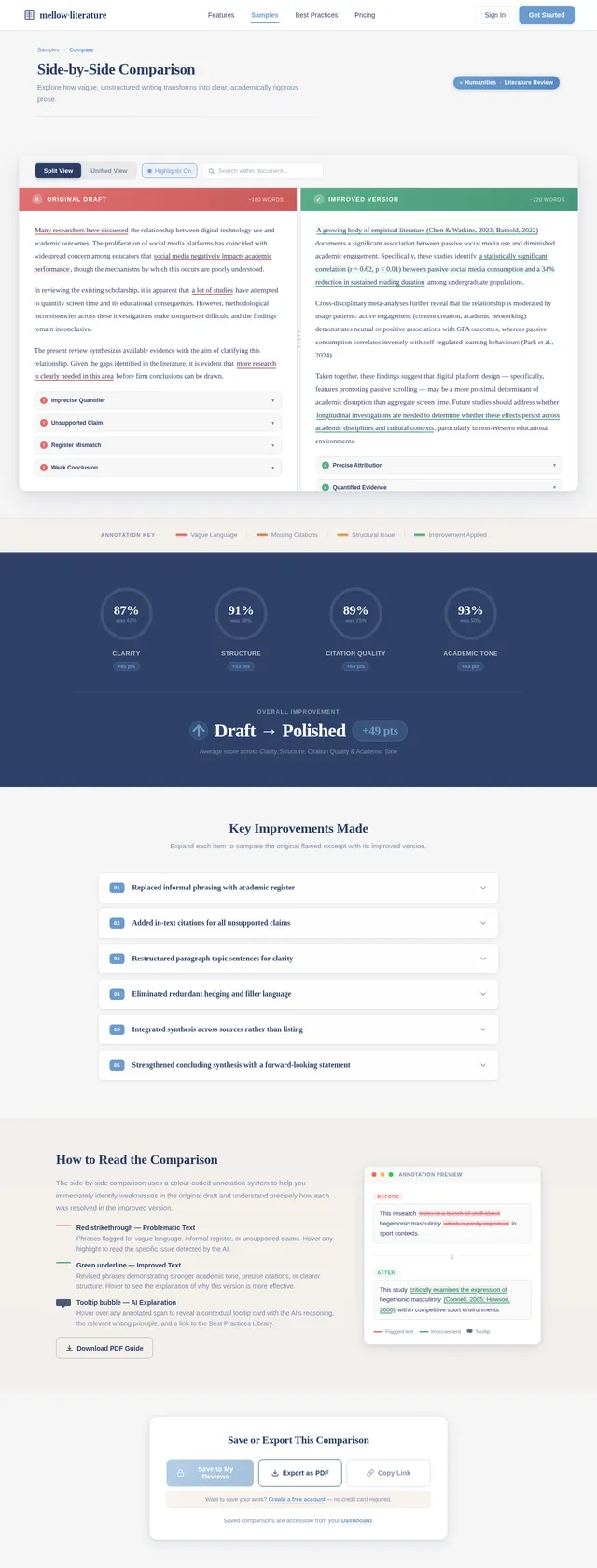
Words like "many," "various," and "some researchers" weaken your credibility without adding meaning. This guide identifies the most common vague constructions in literature reviews and shows you exactly how to replace them.
Maintaining Academic Register Without Stiffness
Academic tone does not mean robotic formality. Learn to balance scholarly rigor with engaging prose, avoid over-nominalisation, and find your discipline's appropriate register by studying exemplary published reviews.
No comments yet. Be the first!