happy-pain
 Anup
AnupI want pain management website based on Numerical Rating Scale (NPRS) (0-10): The most common tool, where 0 is no pain and 10 is the worst possible pain. patient should have option select the number between 1 to 10 as per severity of pain. and once they select the pain, message will go to pain management nurse, that how much is the pain, regular pain medication patient having, last medication taken and time and nurse can message back the treatment.

Comments (0)
Sign in to leave a comment
Project Tasks20
Implement Theme & Design Structure
As a developer, I want to implement the global theme, color palette, and design structure across all existing scaffold pages (home, login, signup, welcome, dashboard/overview, dashboard/ai-assistant, dashboard/settings) so that they visually align with the mock-design pages. Apply the happy-pain design tokens: primary #4A90E2, secondary #A3D9A5, accent #F5A623, background #F8F8F8, text #4A4A4A. Set up global CSS variables, font (Inter), and shared component styles. Remove any scaffold pages that are not part of the user flows (e.g. ai-assistant, welcome pages if not in flow). This task must be completed independently before all other frontend tasks.
Build Landing Page
As a user, I want to use the frontend Landing page so I can view the happy-pain home page, understand the platform's purpose, and navigate to Sign Up or Log In. Implement all sections from the existing Landing (v2) JSX design: NavBar, Hero with interactive NPRS pain scale visualization, NurseAvailabilityBanner, FeatureHighlights, InteractivePainScale, HowItWorks, UserPersonas, Testimonials, TrustAndSecurity, CallToAction, and Footer. The hero section must include the signature micro-interaction animated pain slider (0–10 with emoji faces and color transitions). Links to Auth: Sign Up and Auth: Log In pages.
Build Auth Pages
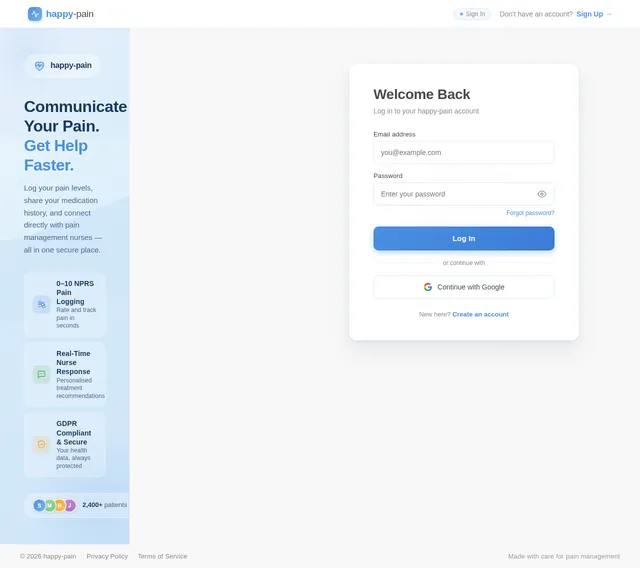
As a user, I want to use the frontend Auth pages so I can sign up as a new patient or log in as an existing patient or nurse. Implement Login and Sign Up pages based on the existing Auth (v2) JSX design. Login page: email/password form, role selector (Patient/Nurse), 'Forgot password' link, link to Sign Up. Sign Up page: name, email, password, role selection (Patient/Nurse), GDPR consent checkbox, submit CTA. On success: patients are redirected to Dashboard: View History; nurses are redirected to Dashboard: View Patient Alerts.
Build Patient Dashboard Page
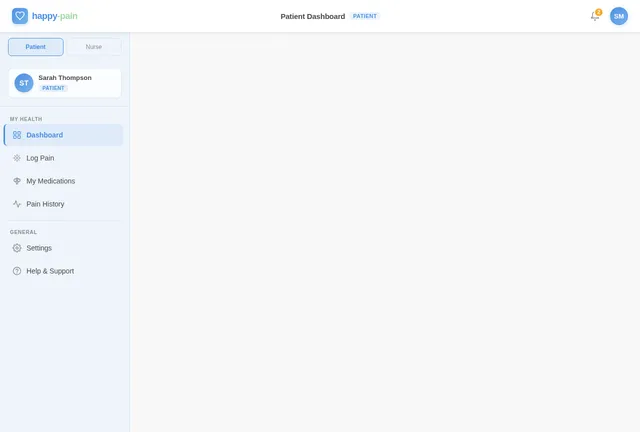
As a patient, I want to use the frontend Dashboard page so I can view my pain and medication history, see past pain logs with timestamps, and navigate to the Pain Logger to submit a new report. Implement based on existing Dashboard (v2) JSX design. Includes: pain history chart/list, recent medication logs, quick-action 'Log Pain Now' CTA, notifications panel for nurse responses. Links to: Pain Logger page, Notifications page.
Build Nurse Dashboard Page
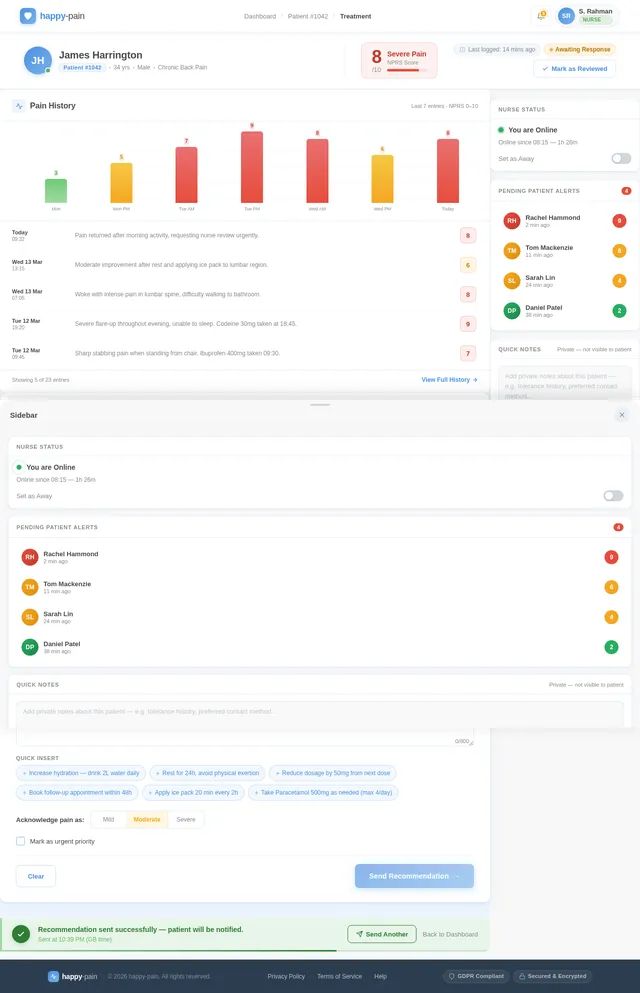
As a nurse, I want to use the frontend Dashboard page so I can view incoming patient alerts, see real-time pain level notifications, and navigate to individual patient reports. Implement based on existing Dashboard (v2) JSX design adapted for the nurse persona. Includes: patient alert list with NPRS severity indicators, nurse availability toggle, unread report badges, quick-navigate to Patient Report page. Links to: Patient Report: Review Pain Level.
Implement Pain Log API
As a patient, I want to use the backend API for logging pain so I can submit my NPRS pain level, pain context (location, type, notes), and timestamps to the server for persistent storage. Implement FastAPI endpoints: POST /pain-logs (create new log), GET /pain-logs (patient history), GET /pain-logs/{id} (single log detail). Store in MySQL via Alembic migration. Trigger nurse notification on successful log creation.
Implement Nurse Availability API
As a patient, I want to use the backend API for nurse availability so I can see on the Landing page and Pain Logger whether a nurse is currently online and available to respond. Implement FastAPI endpoints: GET /nurses/availability (returns count of online nurses and status). Nurses update their status via PUT /nurses/me/status. Powers the real-time nurse availability indicator on the Landing page and Sidebar.
Build Pain Logger Page
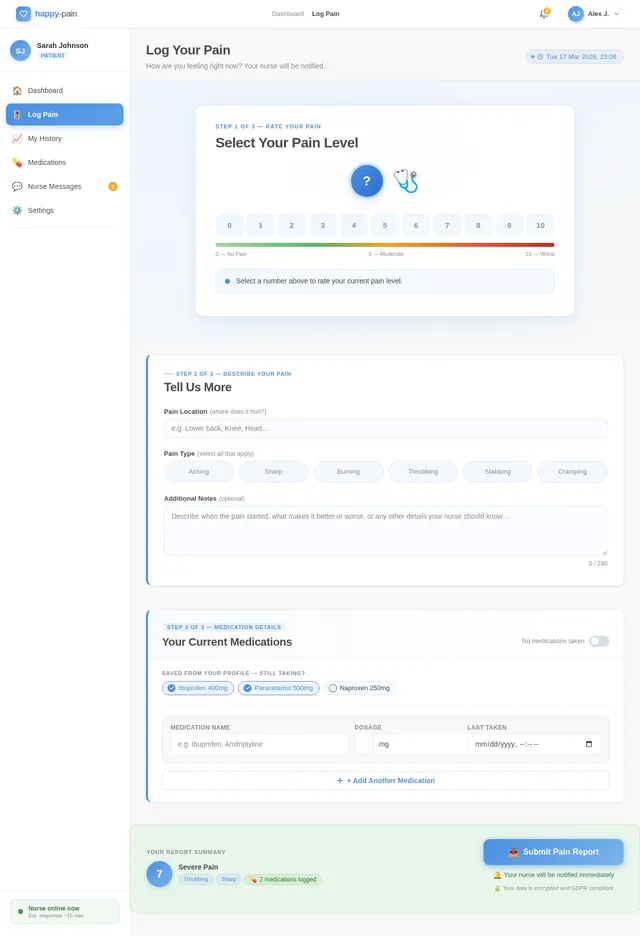
As a patient, I want to use the frontend Pain Logger page so I can select my NPRS pain level (0–10) using the interactive slider, describe pain context, and proceed to the medication entry step. Implement based on existing Pain Logger (v2) JSX design. Includes: TopBar with breadcrumb, Sidebar navigation, NPRS slider with emoji faces and dynamic color transitions (green→amber→red), pain context form (location, type, notes), and step-by-step flow. On completion of step 1, navigates to Medication page.
Build Notifications Page
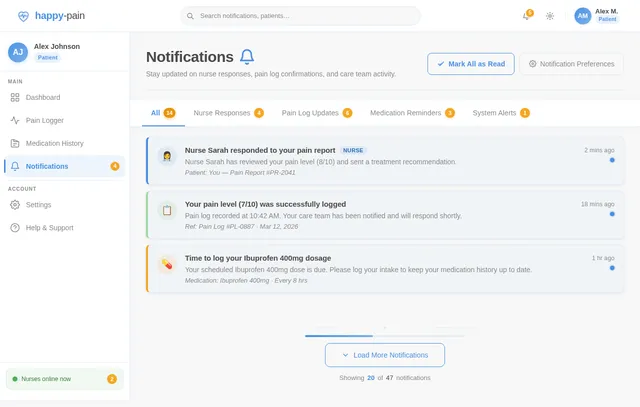
As a patient, I want to use the frontend Notifications page so I can view nurse treatment recommendations and responses to my pain reports. Implement based on existing Notifications (v2) JSX design. Includes: list of notifications with nurse name, timestamp, recommendation text, read/unread status indicators, and links back to the relevant pain report. Navigation back to Dashboard.
Build Patient Report Page
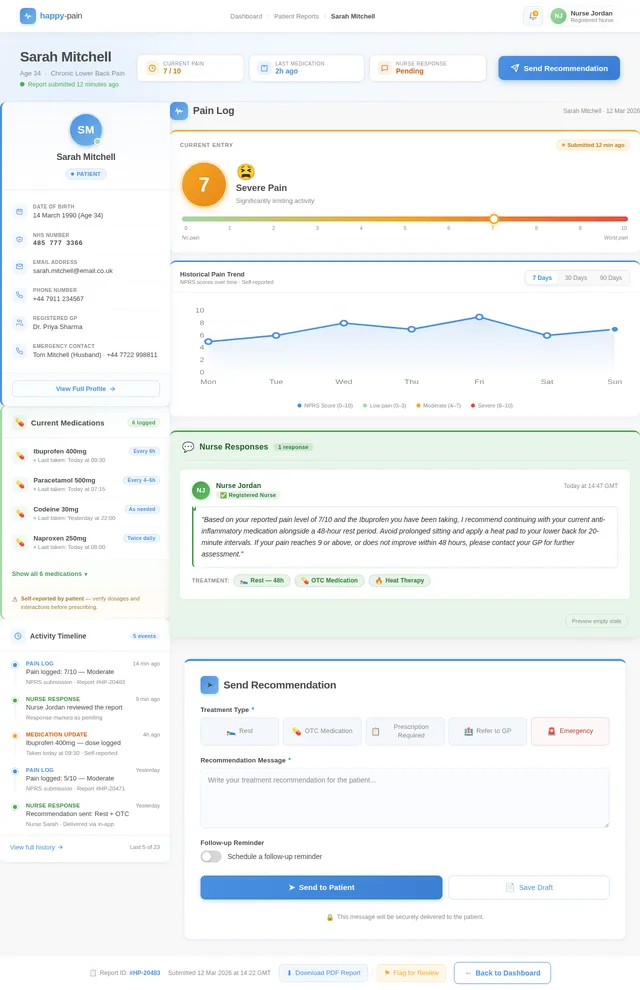
As a nurse, I want to use the frontend Patient Report page so I can review a patient's submitted pain level, pain context, and full medication history in one view before sending a treatment recommendation. Implement based on existing Patient Report (v2) JSX design. Includes: NPRS score display with color severity indicator, pain description and notes, medication table (name, dosage, last taken), timestamps. Links to: Treatment: Send Recommendation page.
Implement Medication API
As a patient, I want to use the backend API for medications so I can save, retrieve, and update my regular medications, dosages, and last-taken timestamps. Implement FastAPI endpoints: POST /medications (save new medication), GET /medications (list saved medications for patient), PUT /medications/{id} (update), DELETE /medications/{id} (remove). Persist in MySQL. Medication records are linked to pain logs on submission.
Implement Nurse Notification API
As a nurse, I want to use the backend API for notifications so I can receive real-time alerts when a patient submits a pain report, including their NPRS level, medication history, and last dosage. Implement FastAPI endpoints: GET /notifications (nurse's unread alerts), PUT /notifications/{id}/read (mark as read). Use WebSocket or polling for real-time delivery. Notifications include patient name, NPRS score, medication snapshot, and timestamp.
Build Medication Entry Page
As a patient, I want to use the frontend Medication page so I can enter and save my current medications, dosages, and last-taken timestamps before submitting my pain report. Implement based on existing Medication (v2) JSX design. Includes: pre-populated saved medications from profile (chip toggles), repeatable medication entry blocks (name, dosage, unit, datetime), 'No medications taken' toggle, 'Add Another Medication' button (max 5). On completion, navigates to Confirmation page.
Build Treatment Recommendation Page
As a nurse, I want to use the frontend Treatment page so I can compose and send a treatment recommendation back to the patient after reviewing their pain report. Implement based on existing Treatment (v2) JSX design. Includes: patient summary panel (NPRS level, medications), rich text or guided recommendation composer, AI-assisted suggestion panel (GPT-powered treatment options via LangChain), 'Send Recommendation' CTA, confirmation on send. After sending, navigates back to Dashboard: Monitor Patients.
Implement Treatment Recommendation API
As a nurse, I want to use the backend API for treatment recommendations so I can submit a recommendation for a patient's pain report and have it delivered as a notification to the patient. Implement FastAPI endpoints: POST /recommendations (create recommendation linked to pain log), GET /recommendations (patient's received recommendations). Trigger patient notification on creation. Integrate with AI suggestion endpoint.
Implement GDPR Data Compliance
As a user, I want the backend to comply with GDPR regulations so that my sensitive health data is stored securely and I can request data deletion or export. Implement: data encryption at rest for pain logs and medication records, consent flag on signup, data retention policy (5-year limit with automated cleanup via scheduled job), and a DELETE /users/me/data endpoint for right-to-erasure requests. Add privacy notice to signup and confirmation pages.
Build Confirmation Page
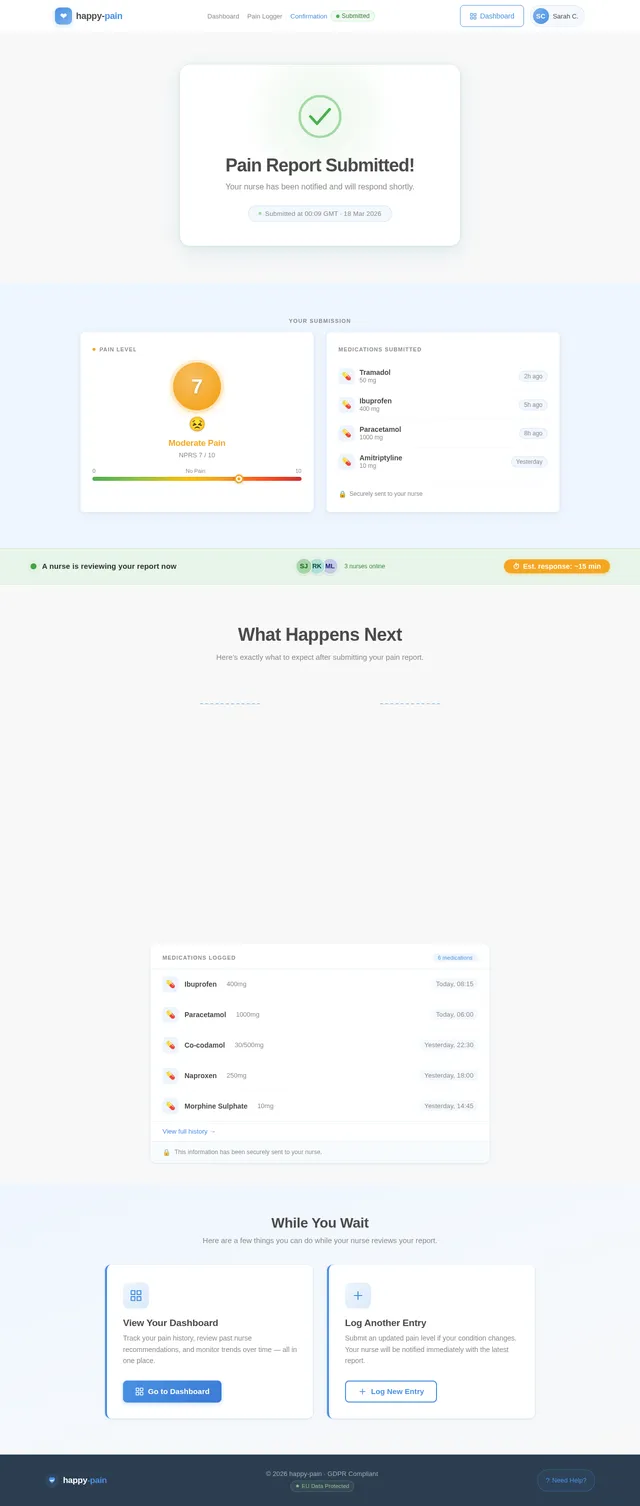
As a patient, I want to use the frontend Confirmation page so I can review my pain report summary and submit it to notify my nurse. Implement based on existing Confirmation (v2) JSX design. Includes: summary of selected NPRS level, pain type, medication count, 'Submit Pain Report' CTA with pulse animation and success state (green checkmark + 'Report Sent!'), privacy/GDPR note. On successful submission, navigates to Notifications page.
Implement AI Treatment Suggestion API
As a nurse, I want to use the AI API for treatment suggestions so I can receive GPT-powered contextual treatment recommendations based on a patient's NPRS score, pain type, and medication history. Implement a FastAPI endpoint POST /ai/suggest-treatment that calls GPT-5.2 via LiteLLM and LangChain, passing structured patient context. Return ranked treatment suggestions with explanations. Integrate into the Treatment Recommendation page's composer panel.
Implement Patient Notification API
As a patient, I want to use the backend API for notifications so I can receive real-time alerts when a nurse has sent a treatment recommendation in response to my pain report. Implement FastAPI endpoint GET /patient/notifications (list unread recommendations/messages), PUT /patient/notifications/{id}/read. Integrate with the Notifications page. Support in-app messaging delivery as per SRD assumptions.
Integrate APIs into Frontend Pages
As a developer, I want to connect all frontend pages to their corresponding backend APIs so that the full patient and nurse user flows are functional end-to-end. Wire up: Landing page nurse availability indicator → /nurses/availability; Pain Logger → POST /pain-logs; Medication page → GET/POST /medications; Confirmation page → submission trigger; Notifications page → GET /patient/notifications; Nurse Dashboard → GET /notifications; Patient Report → GET /pain-logs/{id}; Treatment page → POST /recommendations + POST /ai/suggest-treatment. Use React Query or Axios for data fetching.
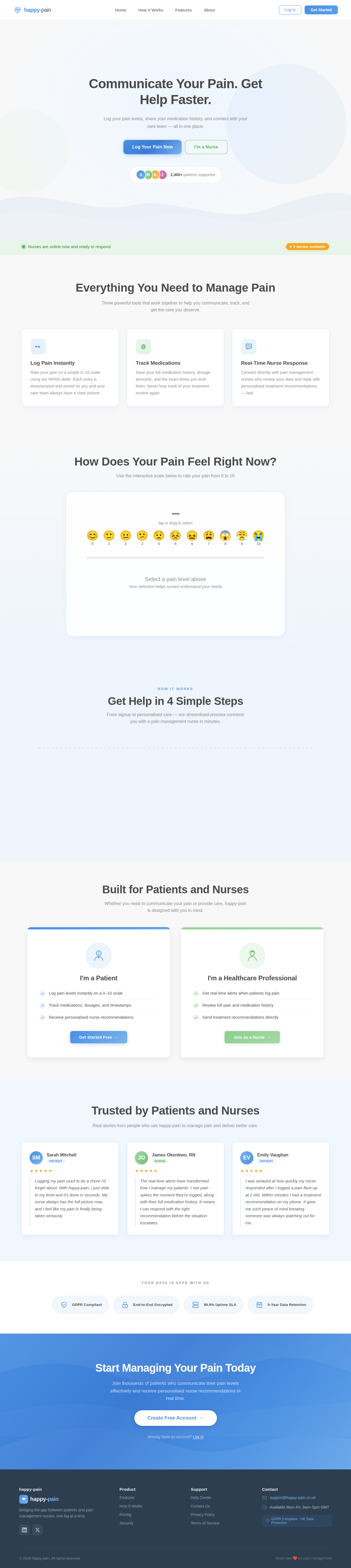
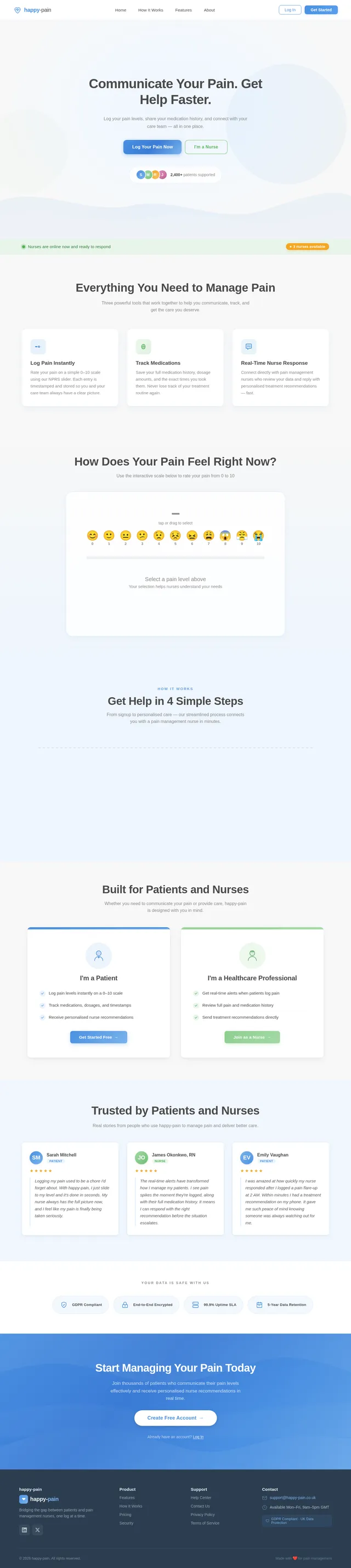
Communicate Your Pain. Get Help Faster.
Log your pain levels, share your medication history, and connect with your care team — all in one place.
Everything You Need to Manage Pain
Three powerful tools that work together to help you communicate, track, and get the care you deserve.
Log Pain Instantly
Rate your pain on a simple 0–10 scale using our NPRS slider. Each entry is timestamped and stored so you and your care team always have a clear picture.
Track Medications
Save your full medication history, dosage amounts, and the exact times you took them. Never lose track of your treatment routine again.
Real-Time Nurse Response
Connect directly with pain management nurses who review your data and reply with personalised treatment recommendations — fast.
How Does Your Pain Feel Right Now?
Use the interactive scale below to rate your pain from 0 to 10
Select a pain level above
Your selection helps nurses understand your needs
Preview only — create an account to save your pain logs
How It Works
Get Help in 4 Simple Steps
From signup to personalised care — our streamlined process connects you with a pain management nurse in minutes.
Create Your Account
Sign up in seconds with just your email. Your profile stays private, secure, and ready for your care team.
Log Your Pain Level
Use our simple 0–10 NPRS scale to rate your pain. Add notes about timing and triggers for better context.
Add Medication Details
Record your current medications, dosages, and when you last took them so nurses have the full picture.
Receive Nurse Recommendations
A pain management nurse reviews your data and sends personalised treatment recommendations directly to you.
Built for Patients and Nurses
Whether you need to communicate your pain or provide care, happy-pain is designed with you in mind.
I'm a Patient
- Log pain levels instantly on a 0–10 scale
- Track medications, dosages, and timestamps
- Receive personalised nurse recommendations
I'm a Healthcare Professional
- Get real-time alerts when patients log pain
- Review full pain and medication history
- Send treatment recommendations directly
Trusted by Patients and Nurses
Real stories from people who use happy-pain to manage pain and deliver better care.
Logging my pain used to be a chore I'd forget about. With happy-pain, I just slide to my level and it's done in seconds. My nurse always has the full picture now, and I feel like my pain is finally being taken seriously.
The real-time alerts have transformed how I manage my patients. I see pain spikes the moment they're logged, along with their full medication history. It means I can respond with the right recommendation before the situation escalates.
I was amazed at how quickly my nurse responded after I logged a pain flare-up at 2 AM. Within minutes I had a treatment recommendation on my phone. It gave me such peace of mind knowing someone was always watching out for me.
Your Data Is Safe With Us
Start Managing Your Pain Today
Join thousands of patients who communicate their pain levels effectively and receive personalised nurse recommendations in real time.
No comments yet. Be the first!