happy-pain
 Anup
AnupI want pain management website based on Numerical Rating Scale (NPRS) (0-10): The most common tool, where 0 is no pain and 10 is the worst possible pain. patient should have option select the number between 1 to 10 as per severity of pain. and once they select the pain, message will go to pain management nurse, that how much is the pain, regular pain medication patient having, last medication taken and time and nurse can message back the treatment.

Comments (0)
Sign in to leave a comment
System Requirements
System Requirements Document (SRD) for happy-pain
1. Introduction
The happy-pain project is a pain management website designed to provide a seamless and efficient way for patients to communicate their pain levels to healthcare professionals, specifically pain management nurses. The system is based on the Numerical Rating Scale (NPRS), a widely used tool where patients rate their pain on a scale from 0 (no pain) to 10 (worst possible pain). The platform will enable patients to log their pain levels, medication history, and timestamps, while allowing nurses to respond with appropriate treatment recommendations. This document outlines the functional and non-functional requirements for the system.
2. System Overview
The happy-pain system will serve as a bridge between patients and pain management nurses. Patients will input their pain levels using the NPRS scale and provide details about their regular medications, last dosage, and time. This information will be stored for future use, ensuring a personalized and efficient experience. Nurses will receive notifications about the patient's pain status and medication history, enabling them to provide timely and accurate treatment recommendations. The system will prioritize user-friendliness, data security, and seamless communication.
Key features include:
- A simple and intuitive interface for patients to log pain levels and medication details.
- Notifications to nurses with relevant patient information.
- A secure data persistence mechanism to save patient information for future use.
- A responsive design to ensure accessibility across devices.
3. Functional Requirements
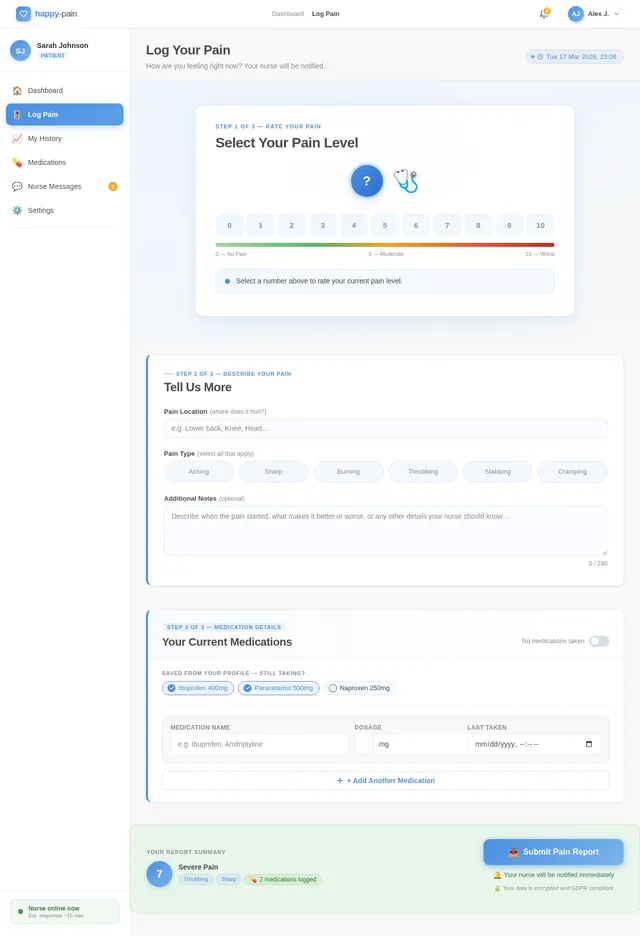
- As a Patient, I should be able to log my pain level using the NPRS scale (0-10).
- As a Patient, I should be able to input and save my regular medications, last dosage, and time.
- As a Patient, I should be able to view my pain and medication history.
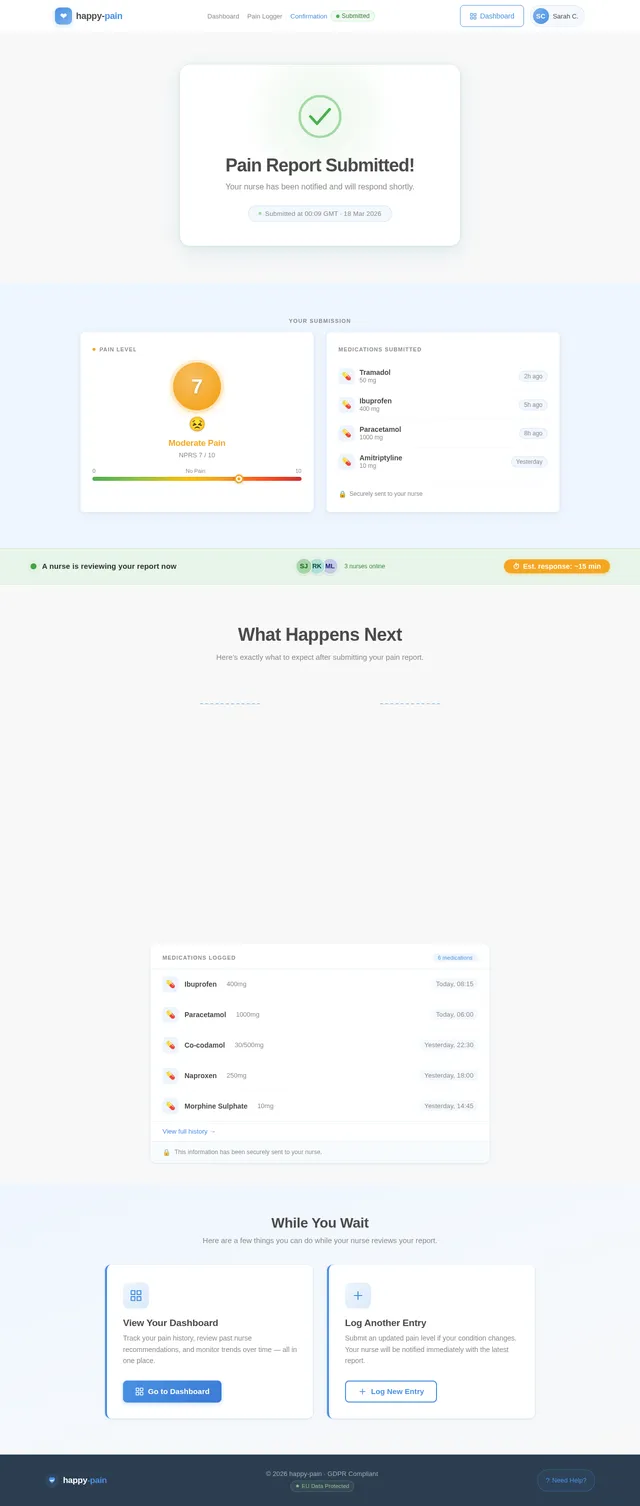
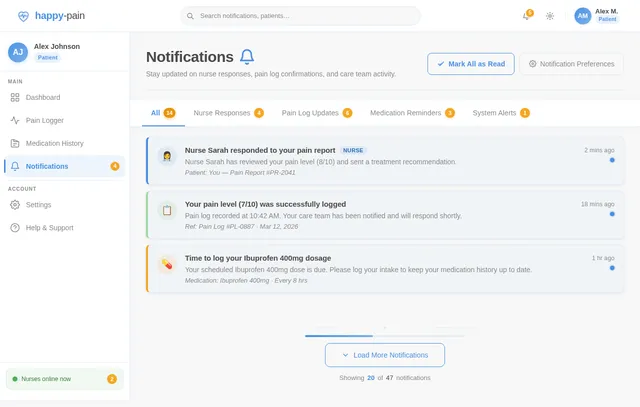
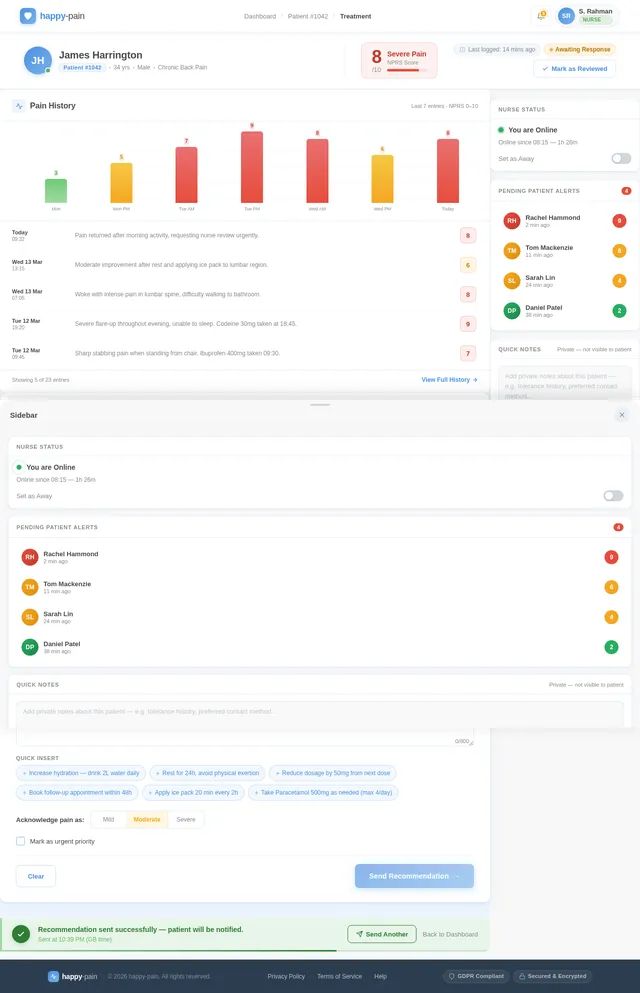
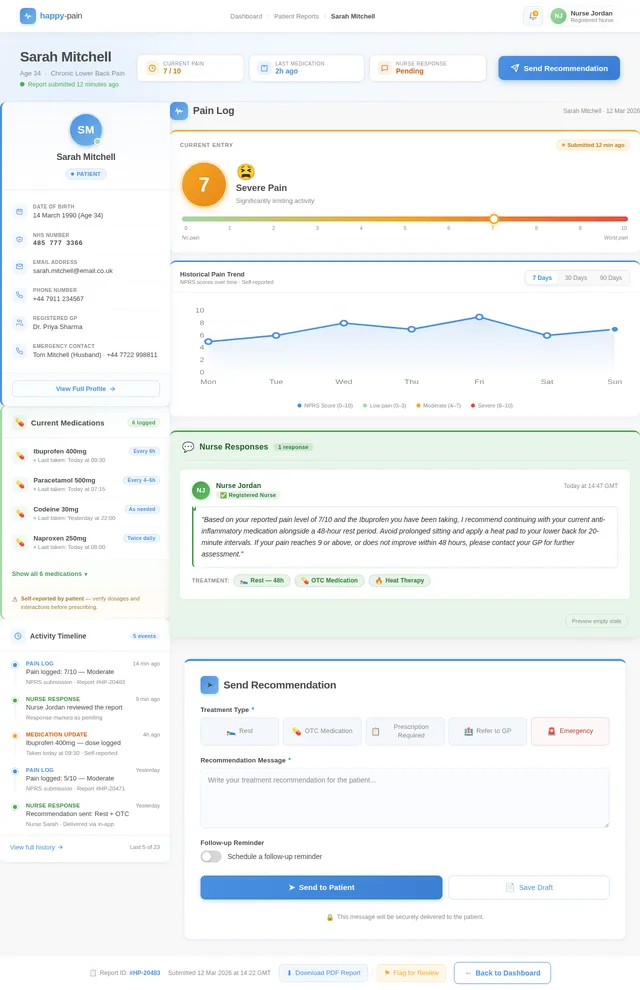
- As a Nurse, I should receive notifications about the patient's pain level, medication history, and last dosage.
- As a Nurse, I should be able to send treatment recommendations back to the patient.
- As a Patient, I should receive notifications when a nurse responds with treatment recommendations.
4. User Personas
1. Patient
- Description: Individuals experiencing pain who need to communicate their pain levels and medication details to healthcare professionals.
- Goals: Log pain levels, save medication history, and receive timely treatment recommendations.
- Pain Points: Difficulty tracking medication history and communicating pain levels effectively.
2. Nurse
- Description: Pain management professionals responsible for monitoring patient pain levels and providing treatment recommendations.
- Goals: Receive accurate patient data and respond with appropriate treatment recommendations.
- Pain Points: Delays in receiving patient information and lack of context for treatment decisions.
5. Visuals Colors and Theme
The happy-pain platform will use a calming and professional color palette to ensure a soothing user experience. The proposed color scheme includes:
- Primary Colors: Soft blue (#4A90E2) for trust and calmness.
- Secondary Colors: Light green (#A3D9A5) for health and healing.
- Accent Colors: Warm orange (#F5A623) for notifications and alerts.
- Background: Off-white (#F8F8F8) for a clean and minimalistic look.
- Text: Dark gray (#4A4A4A) for readability.
6. Signature Design Concept
The happy-pain homepage will feature an interactive pain scale visualization. The user will see a horizontal slider with numbers from 0 to 10, each represented by a unique icon or emoji (e.g., smiling face for 0, crying face for 10). As the user moves the slider, the background color will subtly change to reflect the severity of the pain (e.g., green for low pain, red for high pain).
When the user selects a pain level, a micro-interaction animation will display a ripple effect, and a pop-up will prompt them to log their medication details. The homepage will also feature a real-time nurse availability indicator, showing whether a nurse is online to respond immediately. This dynamic and engaging design will make the platform memorable and user-friendly.
7. Non-Functional Requirements
- The system must ensure data security and comply with GDPR regulations, given the sensitive nature of patient data.
- The system should support high availability, with a 99.9% uptime guarantee.
- The platform must be responsive and accessible on both desktop and mobile devices.
- Data persistence must be implemented to save patient information for future use.
- Notifications must be delivered in real-time with minimal latency.
8. Tech Stack
- Frontend: React for Web
- Backend: Python with FastAPI
- Database (RDBMS): MySQL with Alembic for migrations
- AI Models: GPT 5.2 for user-friendly responses
- AI Tools: Langchain, Litellm for LLM Routing
- Orchestration: Docker and docker-compose for local development, Kubernetes for server-side orchestration
9. Assumptions and Constraints
- The system assumes that patients and nurses have access to internet-enabled devices.
- The platform will operate in the GB timezone by default.
- Notifications will be sent via email or in-app messaging, depending on user preferences.
- The system will store medication history and pain logs for up to 5 years, in compliance with healthcare data retention policies.
10. Glossary
- NPRS: Numerical Rating Scale, a tool for assessing pain levels on a scale from 0 to 10.
- GDPR: General Data Protection Regulation, a legal framework for data protection and privacy in the European Union.
- Micro-interaction: A small, subtle animation or feedback that enhances user experience.
- Real-time Nurse Availability Indicator: A feature showing whether a nurse is currently online to respond to patient queries.
This document reflects the updated requirements for the happy-pain project, incorporating the data persistence functionality as requested. Let me know if there are any additional changes or clarifications needed, Anup!
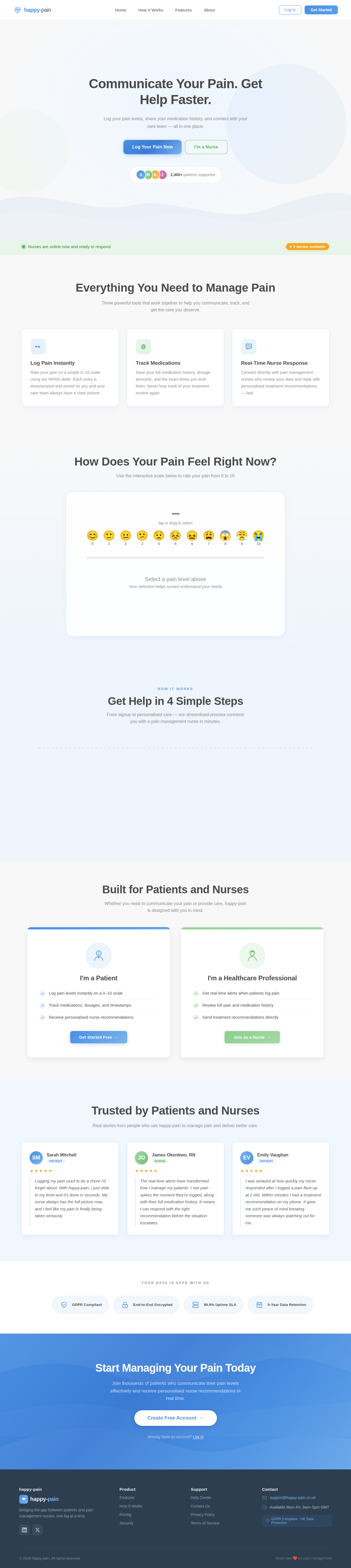
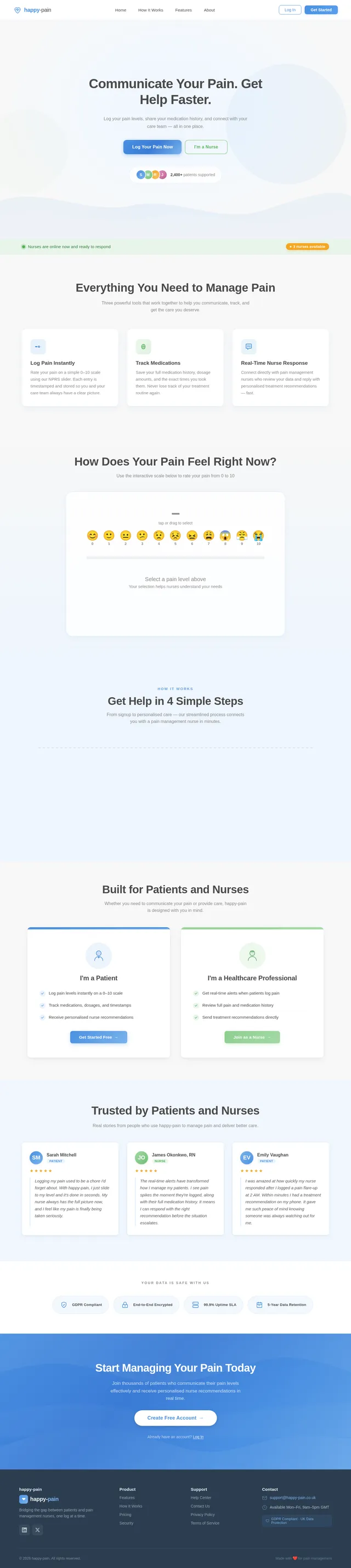
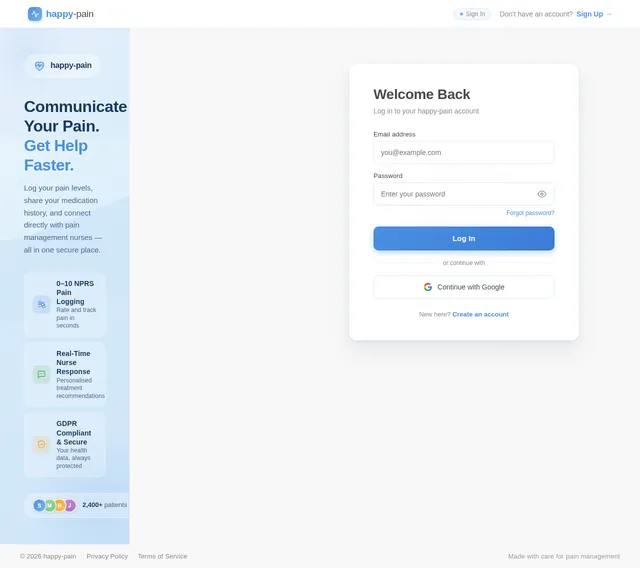
Communicate Your Pain. Get Help Faster.
Log your pain levels, share your medication history, and connect with your care team — all in one place.
Everything You Need to Manage Pain
Three powerful tools that work together to help you communicate, track, and get the care you deserve.
Log Pain Instantly
Rate your pain on a simple 0–10 scale using our NPRS slider. Each entry is timestamped and stored so you and your care team always have a clear picture.
Track Medications
Save your full medication history, dosage amounts, and the exact times you took them. Never lose track of your treatment routine again.
Real-Time Nurse Response
Connect directly with pain management nurses who review your data and reply with personalised treatment recommendations — fast.
How Does Your Pain Feel Right Now?
Use the interactive scale below to rate your pain from 0 to 10
Select a pain level above
Your selection helps nurses understand your needs
Preview only — create an account to save your pain logs
How It Works
Get Help in 4 Simple Steps
From signup to personalised care — our streamlined process connects you with a pain management nurse in minutes.
Create Your Account
Sign up in seconds with just your email. Your profile stays private, secure, and ready for your care team.
Log Your Pain Level
Use our simple 0–10 NPRS scale to rate your pain. Add notes about timing and triggers for better context.
Add Medication Details
Record your current medications, dosages, and when you last took them so nurses have the full picture.
Receive Nurse Recommendations
A pain management nurse reviews your data and sends personalised treatment recommendations directly to you.
Built for Patients and Nurses
Whether you need to communicate your pain or provide care, happy-pain is designed with you in mind.
I'm a Patient
- Log pain levels instantly on a 0–10 scale
- Track medications, dosages, and timestamps
- Receive personalised nurse recommendations
I'm a Healthcare Professional
- Get real-time alerts when patients log pain
- Review full pain and medication history
- Send treatment recommendations directly
Trusted by Patients and Nurses
Real stories from people who use happy-pain to manage pain and deliver better care.
Logging my pain used to be a chore I'd forget about. With happy-pain, I just slide to my level and it's done in seconds. My nurse always has the full picture now, and I feel like my pain is finally being taken seriously.
The real-time alerts have transformed how I manage my patients. I see pain spikes the moment they're logged, along with their full medication history. It means I can respond with the right recommendation before the situation escalates.
I was amazed at how quickly my nurse responded after I logged a pain flare-up at 2 AM. Within minutes I had a treatment recommendation on my phone. It gave me such peace of mind knowing someone was always watching out for me.
Your Data Is Safe With Us
Start Managing Your Pain Today
Join thousands of patients who communicate their pain levels effectively and receive personalised nurse recommendations in real time.
No comments yet. Be the first!