sonic-restaurant
Create a detailed 7-slide PowerPoint presentation outline for my business project. The restaurant is called "Crab and More". Use the following details: Slide 1: Title Slide - Restaurant Name: "Crab and More". Location: Beit Wazan Street. High-end Seafood. Slide 2: Concept & USP - Explain the unique marine decorations and interactive table-side food serving. Slide 3: Funding - Mention that the business is started using 10 years of personal savings. Slide 4: Target Customers - Focus on "Wealthy Families" and providing a luxury experience. Slide 5: Staffing & Salaries - We have 15 professional employees. Mention high salaries (Head Chef: $2,000, Waiters: $600 + Tips). Slide 6: Menu Highlights - Mention 3 main dishes: King Crab Legs, Lobster Thermidor, and "The Ocean Pearl" dessert. Slide 7: Creative Advertising - Describe the 3D Billboard with a giant lobster claw and the slogan: "Our Seafood is FRESHER than this!" Slide 1: Title Slide - Restaurant Name: "Crab and More". Location: Beit Wazan Street. High-end Seafood. Slide 2: Concept & USP - Explain the unique marine decorations and interactive table-side food serving. Slide 3: Funding - Mention that the business is started using 10 years of personal savings. Slide 4: Target Customers - Focus on "Wealthy Families" and providing a luxury experience. Slide 5: Staffing & Salaries - We have 15 professional employees. Mention high salaries (Head Chef: $2,000, Waiters: $600 + Tips). Slide 6: Menu Highlights - Mention 3 main dishes: King Crab Legs, Lobster Thermidor, and "The Ocean Pearl" dessert. Slide 7: Creative Advertising - Describe the 3D Billboard with a giant lobster claw and the slogan: "Our Seafood is FRESHER than this!" "Create an extensive, luxury 3-page Menu for my seafood restaurant 'Crab and More'. The menu should be very detailed with prices in Dollars ($). Target wealthy families. Include 6 Starters, 10 Main Courses (specializing in Crab, Lobster, and Fresh Fish), 5 Side Dishes, and 5 High-end Desserts. For each item, write a mouth-watering description. The prices should be high-end (Main courses between $60 - $150). Format it as a professional restaurant menu."
Comments (0)
Sign in to leave a comment
System Requirements
System Requirements Document (SRD) for Sonic-Restaurant
Slide 1: Introduction
Title: Sonic-Restaurant
- Prepared for: Toleen Saadeh
- Location: Palestine (PS)
- Purpose: To outline the system requirements for the Sonic-Restaurant project, a digital solution for managing a high-end restaurant experience tailored to the local market.
Slide 2: System Overview
Overview of Sonic-Restaurant
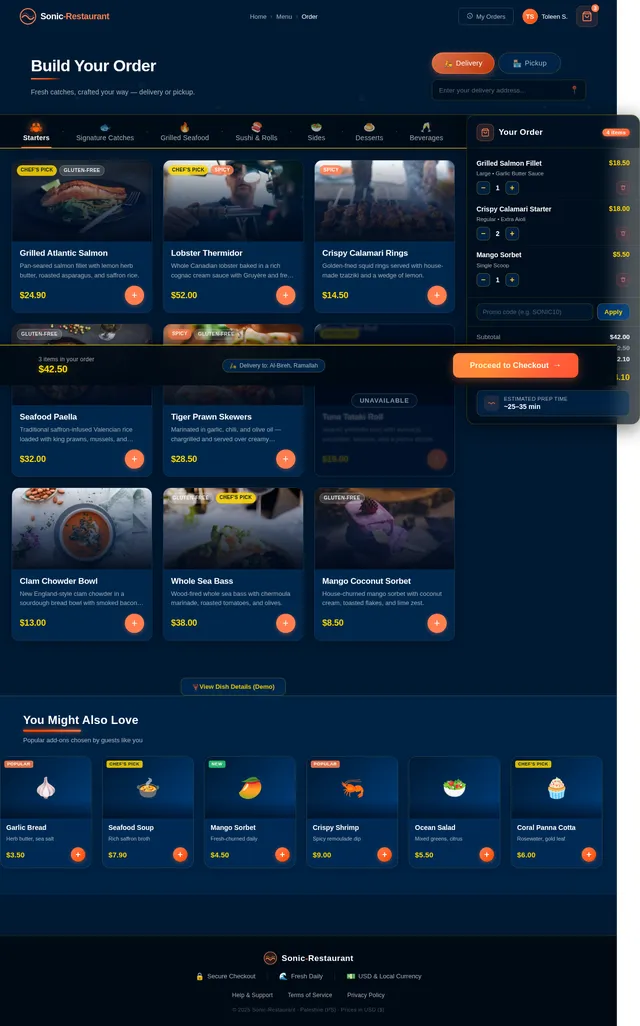
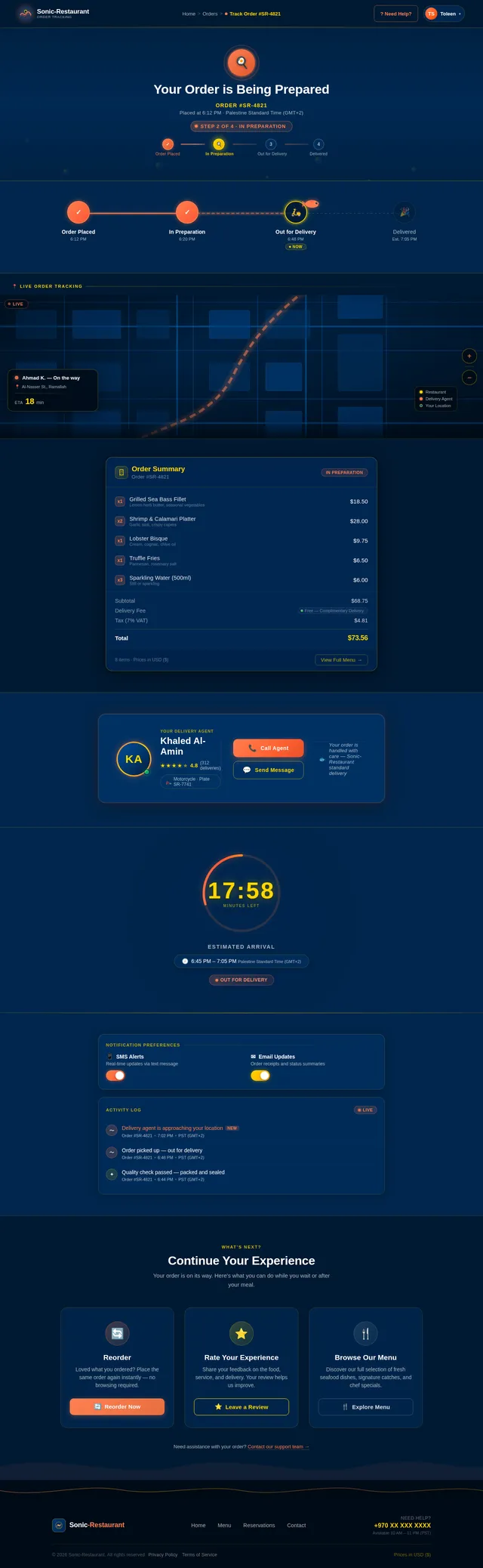
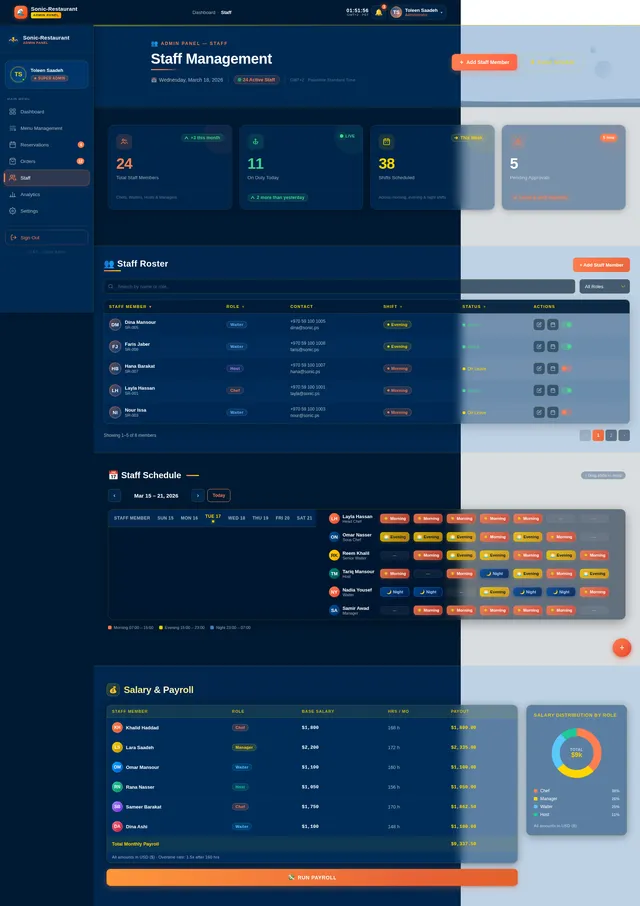
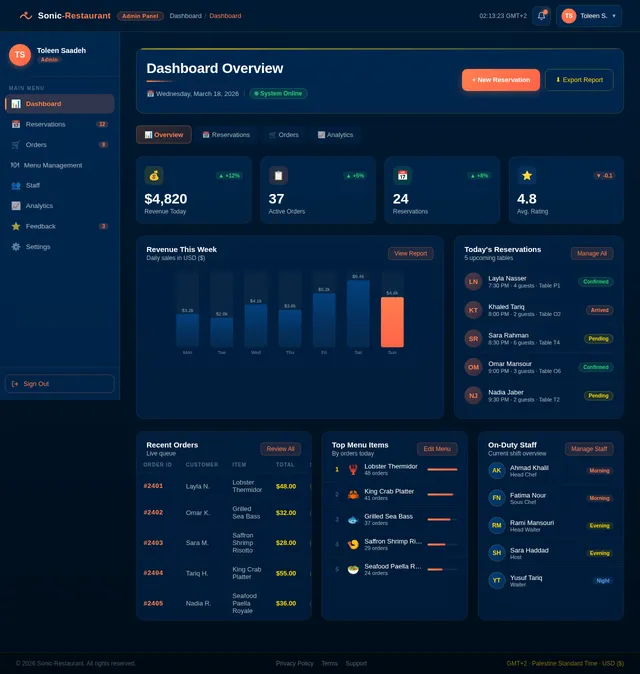
- Sonic-Restaurant is a digital platform designed to enhance the dining experience for customers and streamline operations for restaurant staff and management.
- Key Features:
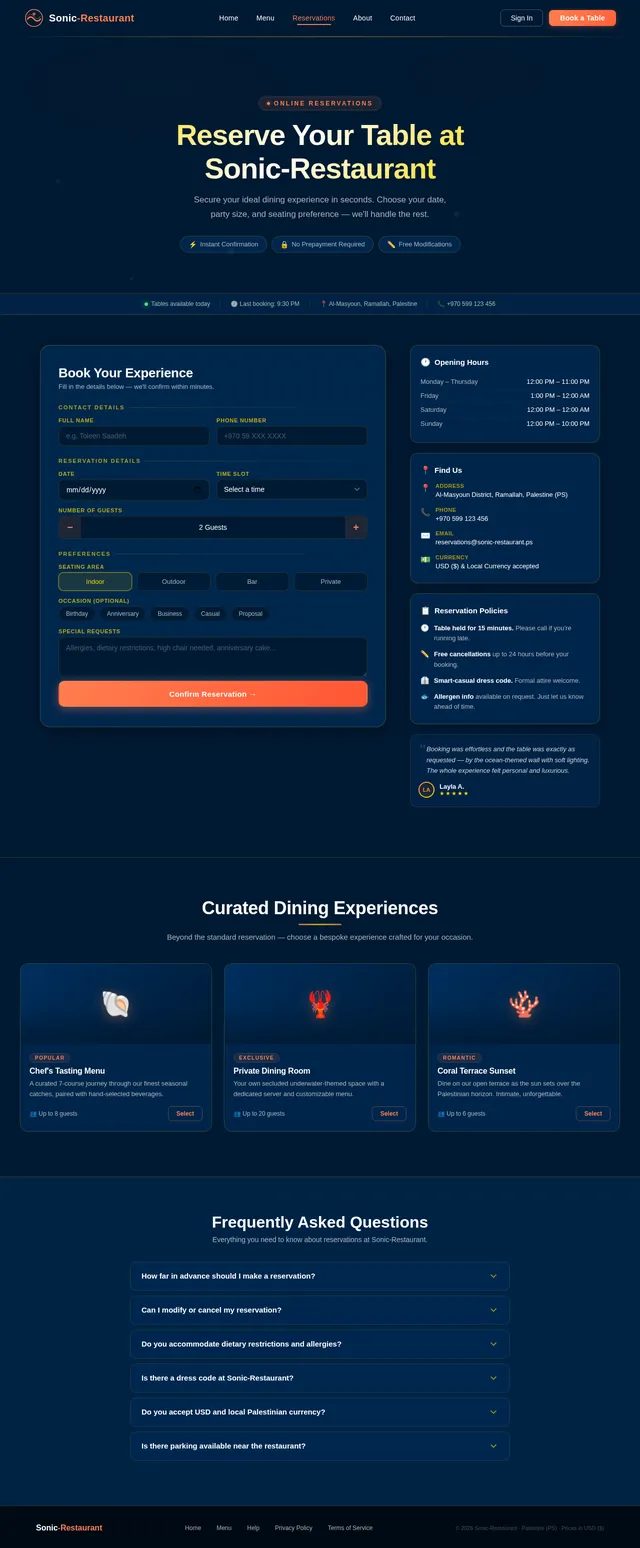
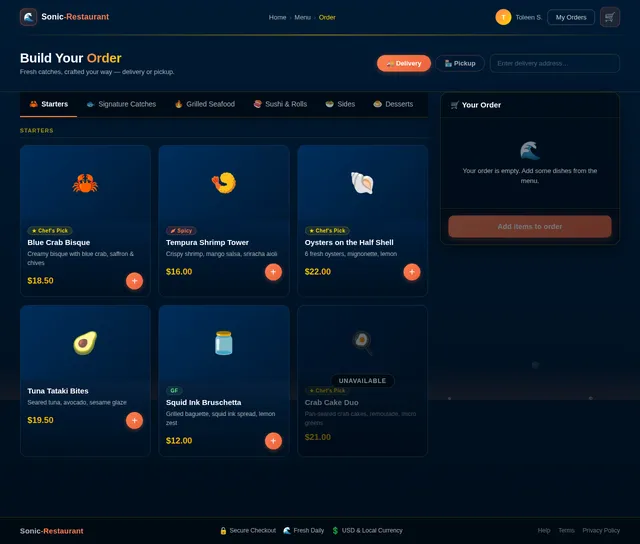
- Online reservation system
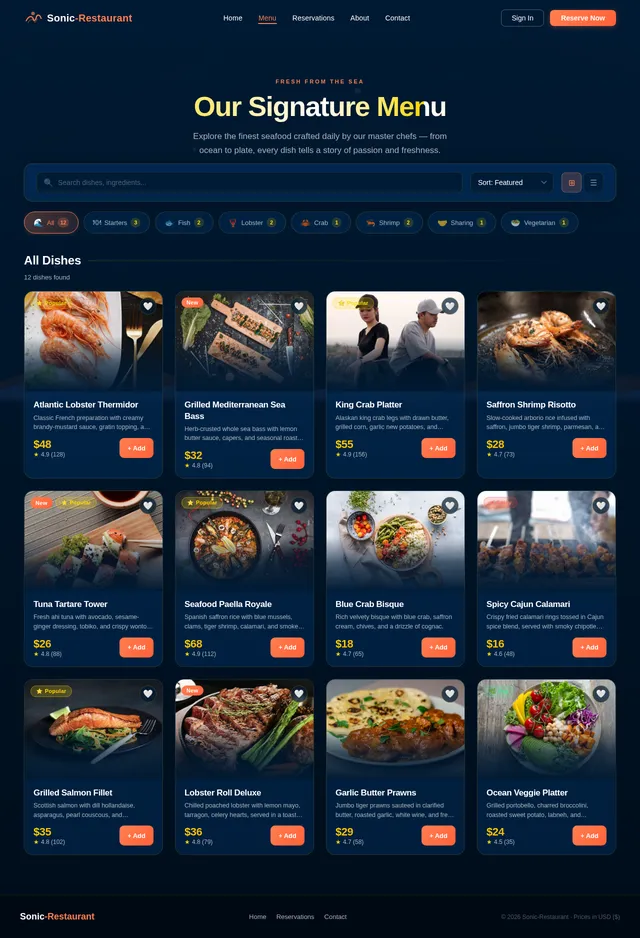
- Interactive digital menu
- Order tracking and management
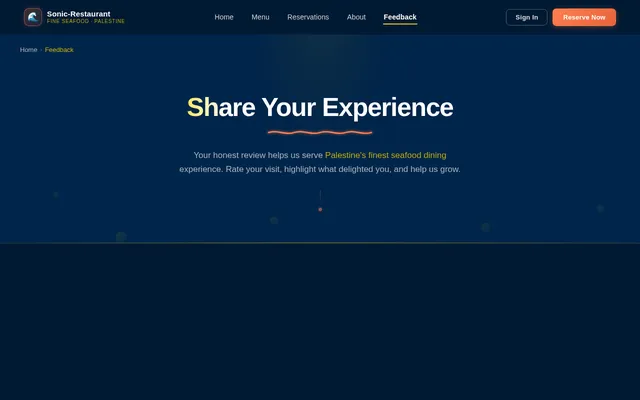
- Customer feedback system
- Integration with local payment gateways (supporting USD and local currency)
- Locale-Specific Defaults:
- Currency: USD ($)
- Timezone: Palestine Standard Time (GMT+2)
Slide 3: Functional Requirements
User Stories
- As a User:
- I should be able to browse the menu with detailed descriptions and images.
- I should be able to make a reservation online.
- I should be able to order food for delivery or pickup.
- I should be able to track my order status in real-time.
- I should be able to leave feedback and rate my experience.
- As an Admin:
- I should be able to manage reservations and customer orders.
- I should be able to update the menu items and prices.
- I should be able to view analytics and reports on sales and customer feedback.
- I should be able to manage staff schedules and salaries.
- As a Guest:
- I should be able to view the menu without logging in.
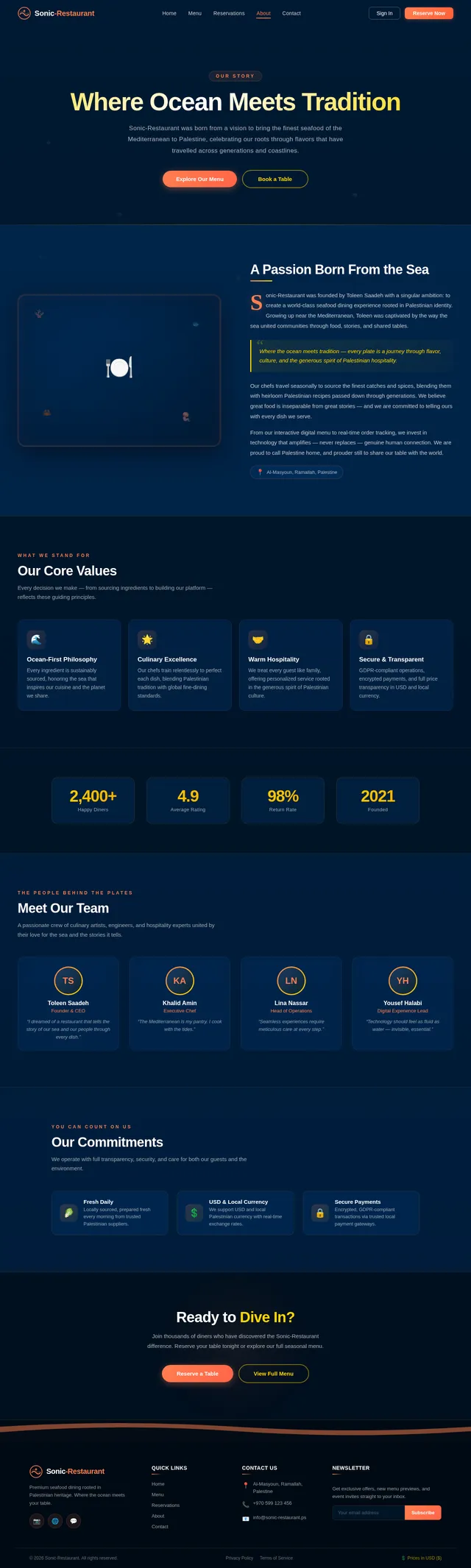
- I should be able to explore the restaurant's theme and concept.
Slide 4: User Personas
Types of Users
- Admin:
- Role: Manages restaurant operations, staff, and analytics.
- Needs: Efficient tools for managing reservations, orders, and reports.
- Registered User:
- Role: Regular customer who uses the platform for reservations, orders, and feedback.
- Needs: Seamless user experience and personalized recommendations.
- Guest:
- Role: Casual visitor exploring the restaurant's offerings.
- Needs: Easy access to menu and restaurant information.
Slide 5: Visuals Colors and Theme
Proposed Color Scheme
- Primary Colors:
- Deep Blue (#003366): Represents trust and professionalism.
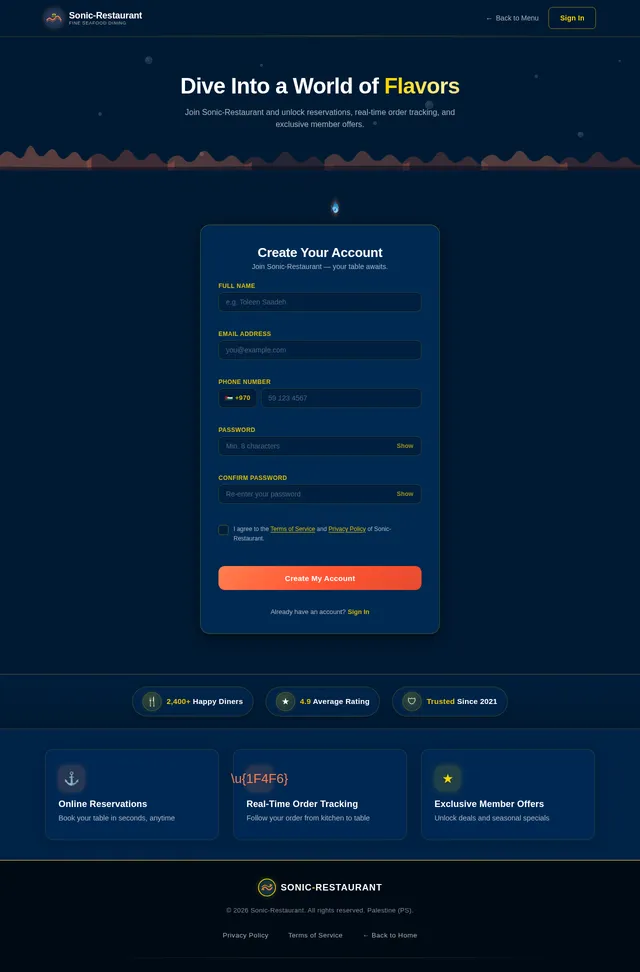
- Coral (#FF7F50): Adds warmth and vibrancy, reflecting the restaurant's seafood theme.
- Accent Colors:
- Gold (#FFD700): Symbolizes luxury and high-end service.
- White (#FFFFFF): Ensures clarity and elegance.
- Background:
- Subtle wave patterns or marine textures to evoke the ocean theme.
Slide 6: Signature Design Concept
Bold Design Idea: Interactive Ocean-Themed Homepage
- Concept:
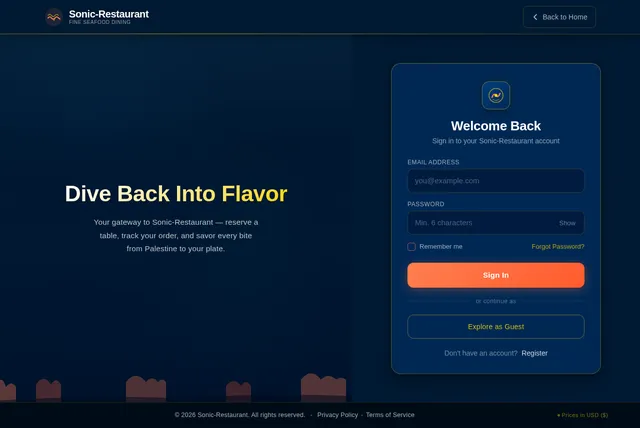
- The homepage will feature a 3D underwater scene where users can explore different sections of the website as if diving into the ocean.
- Details:
- Animations: Schools of fish swimming across the screen, coral reefs subtly glowing, and bubbles rising as users scroll.
- Interactive Elements: Clicking on a crab or lobster will reveal menu highlights, while tapping on a treasure chest will showcase special offers.
- Transitions: Smooth, fluid transitions mimicking the movement of water.
- Micro-Interactions: Hovering over menu items will cause them to "ripple" like water.
- First Impression:
- Users will feel immersed in a luxurious underwater world, setting the tone for a high-end dining experience.
Slide 7: Non-Functional Requirements
Performance and Reliability
- The system must handle up to 500 concurrent users without performance degradation.
- Ensure 99.9% uptime for critical functionalities like reservations and order management.
Security
- Implement secure payment gateways with encryption.
- Protect user data with GDPR-compliant measures.
Scalability
- The platform should be scalable to accommodate future expansions, such as additional restaurant locations or features.
Slide 8: Tech Stack
Recommended Technologies
- Frontend:
- React for Web
- React Native for Mobile App
- Backend:
- Python with FastAPI
- Database:
- MySQL or MariaDB (RDBMS)
- Alembic for migrations
- AI Models:
- GPT 5.2 for user-friendly responses
- AI Tools:
- Langchain for conversational AI
- Orchestration:
- Docker for local development
- Kubernetes for server-side orchestration
Slide 9: Assumptions and Constraints
Assumptions
- Users will primarily access the platform via mobile devices.
- The restaurant operates in Palestine, so local payment gateways and currency must be supported.
- High-speed internet is available for seamless operation.
Constraints
- Limited budget for initial development.
- Compliance with local regulations for online transactions and data privacy.
Slide 10: Glossary
Key Terms
- RDBMS: Relational Database Management System.
- FastAPI: A modern web framework for building APIs with Python.
- Docker: A tool for containerizing applications.
- Kubernetes: A system for automating deployment, scaling, and management of containerized applications.
- GDPR: General Data Protection Regulation, ensuring data privacy and protection.
This PowerPoint outline is tailored to your Sonic-Restaurant project, Toleen. You can now input this content into presentation software to create a visually stunning and professional deck. Let me know if you'd like further refinements!
No comments yet. Be the first!