


Impact Reports
Measure, analyse and communicate the real-world outcomes of your CSR partnerships.
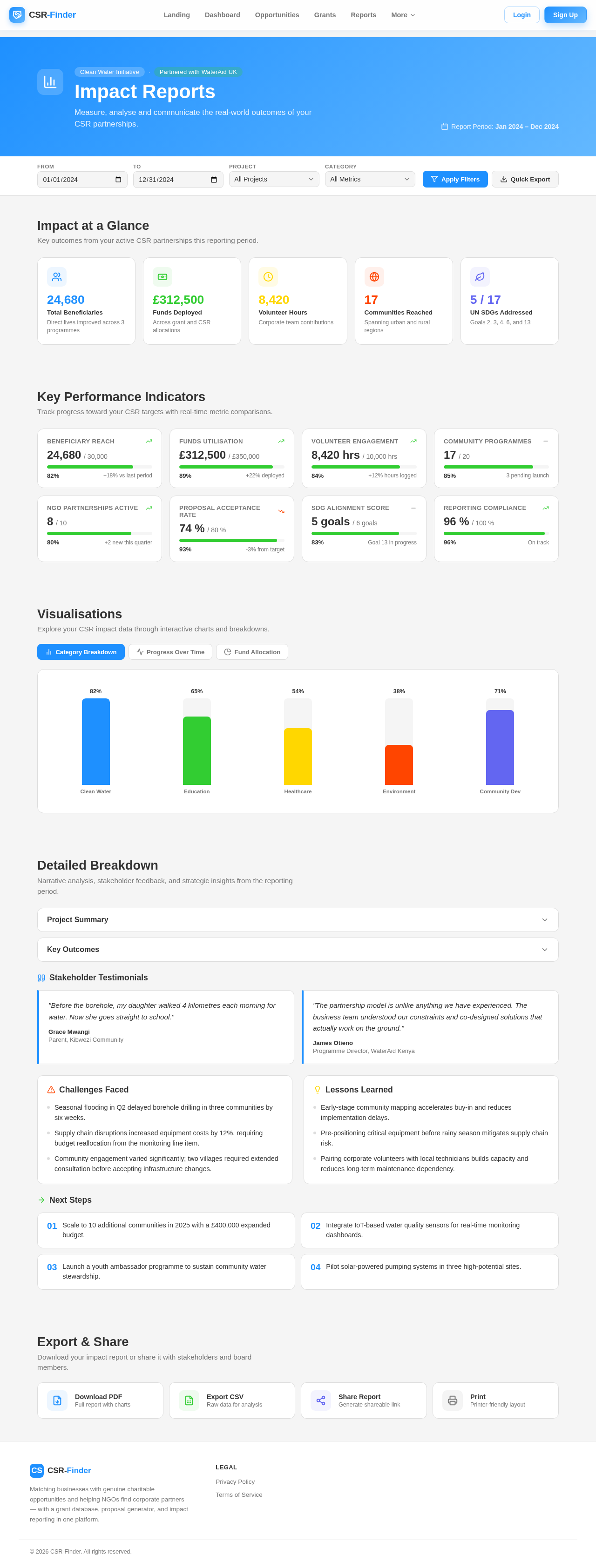
Impact at a Glance
Key outcomes from your active CSR partnerships this reporting period.
Key Performance Indicators
Track progress toward your CSR targets with real-time metric comparisons.
Visualisations
Explore your CSR impact data through interactive charts and breakdowns.
Detailed Breakdown
Narrative analysis, stakeholder feedback, and strategic insights from the reporting period.
The Clean Water Initiative, launched in January 2024 in partnership with WaterAid UK, set out to provide sustainable access to safe drinking water across 20 underserved communities in sub-Saharan Africa. Over the 12-month reporting period, the programme has directly benefited 24,680 individuals through the installation of 34 boreholes, rehabilitation of 12 existing water points, and distribution of 5,200 household water filtration units. Corporate volunteer teams contributed 8,420 hours across three deployment missions, significantly reducing operational costs while building meaningful employee engagement with the cause.
Waterborne disease incidence in target communities dropped by 47% within six months of intervention. School attendance among girls aged 8–15 increased by 23%, directly attributed to reduced time spent collecting water. Average household water expenditure fell from 18% to 4% of income, freeing resources for nutrition and education. Five communities established elected water management committees, ensuring long-term sustainability beyond the programme's direct involvement.
Stakeholder Testimonials
"Before the borehole, my daughter walked 4 kilometres each morning for water. Now she goes straight to school."
"The partnership model is unlike anything we have experienced. The business team understood our constraints and co-designed solutions that actually work on the ground."
Challenges Faced
- Seasonal flooding in Q2 delayed borehole drilling in three communities by six weeks.
- Supply chain disruptions increased equipment costs by 12%, requiring budget reallocation from the monitoring line item.
- Community engagement varied significantly; two villages required extended consultation before accepting infrastructure changes.
Lessons Learned
- Early-stage community mapping accelerates buy-in and reduces implementation delays.
- Pre-positioning critical equipment before rainy season mitigates supply chain risk.
- Pairing corporate volunteers with local technicians builds capacity and reduces long-term maintenance dependency.
Export & Share
Download your impact report or share it with stakeholders and board members.

No comments yet. Be the first!