topaz-ai
 umang suthar
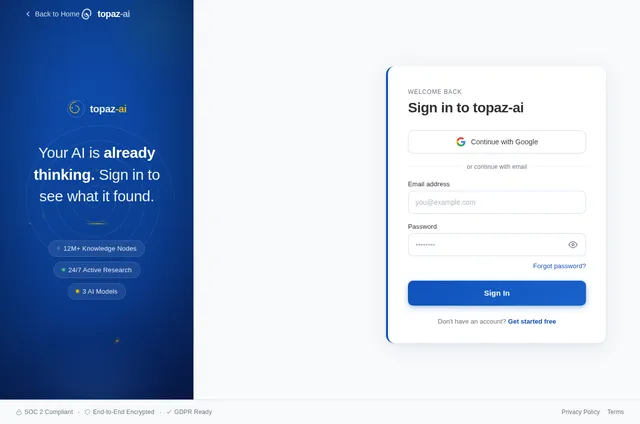
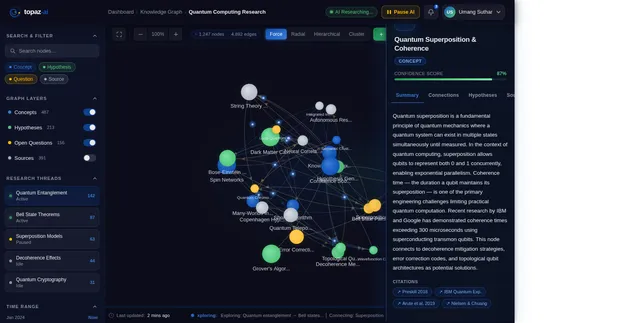
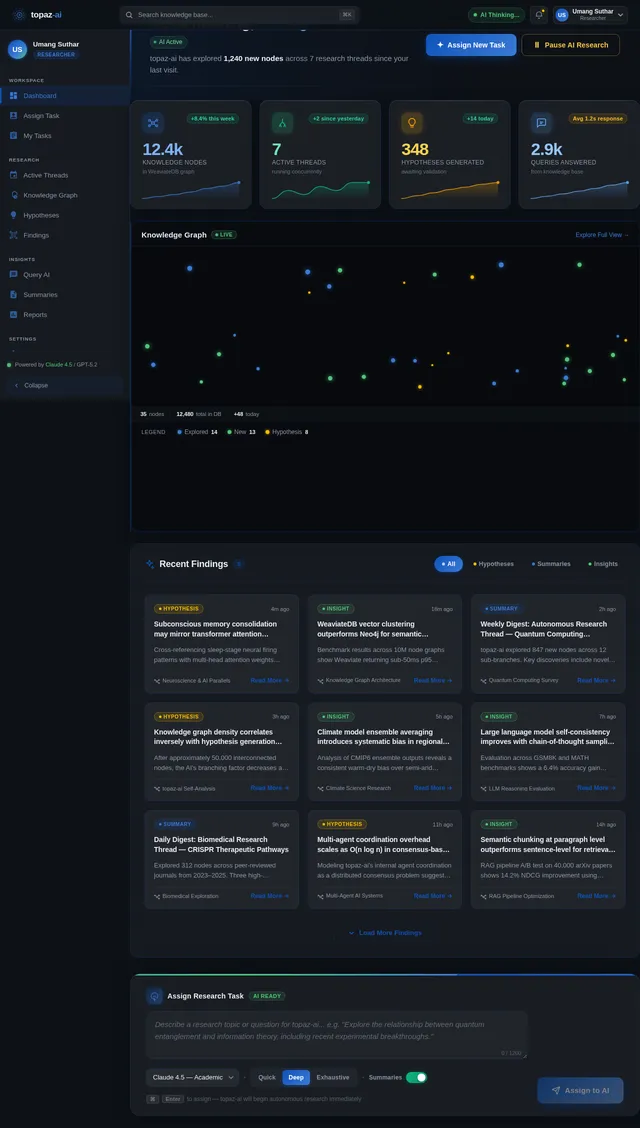
I am thinking to build a AI system which basically do the sub concious thiniking as much as possible and keep increasing it's own knowledge by it self.. Like humans have.. how human brain works.. it keeps running in sub concious mind keep thinking all possibilities and cases and increasing it's knowledge by keep searching all over the world.. I need similar capabilities in the system. where system keeps doing the research and increasing it's knowleged.. For now to store the new knowledge we can use custom graph system and store the data in the weaviate service. So basically user came and give the task.. our sub concious AI keeps doing it's reaseach and keeps gethering the knowledge, prepare all possibilities and cases and keep doing it in that domain and this keep going till everything is covered.. also same like human let's say our system search xyz thing and found pqr then it should keep go and gether information about pqr as well and keep going on... now if user came back and ask anything now system should give reply from already researched and gethered knowledge ... if system found it doesn't have knowledge then it should start doing research in that direction.. user should be able to stop this sub concious ai to perform research whereever user wants but otherwise it should keep going on


Comments (0)
Sign in to leave a comment
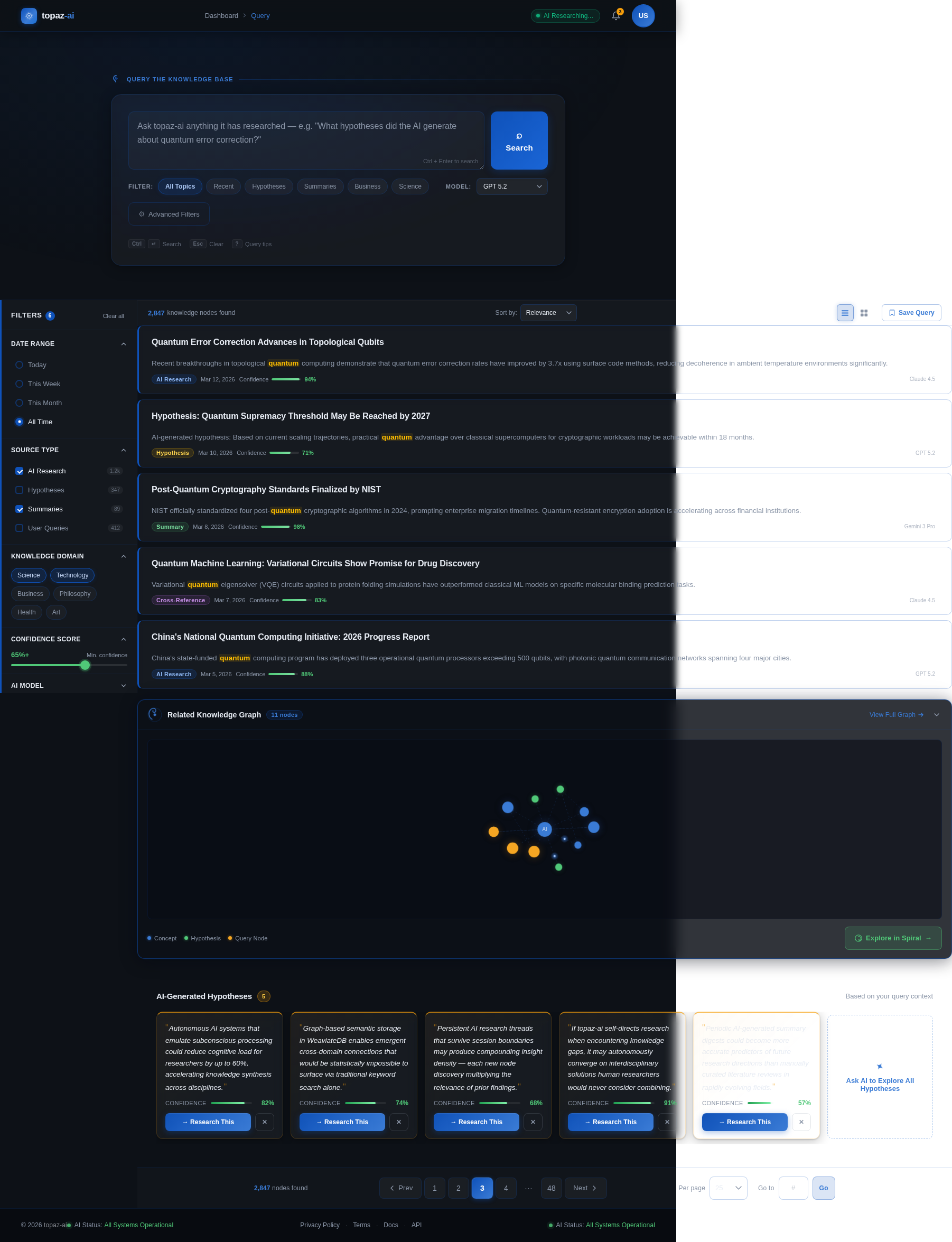
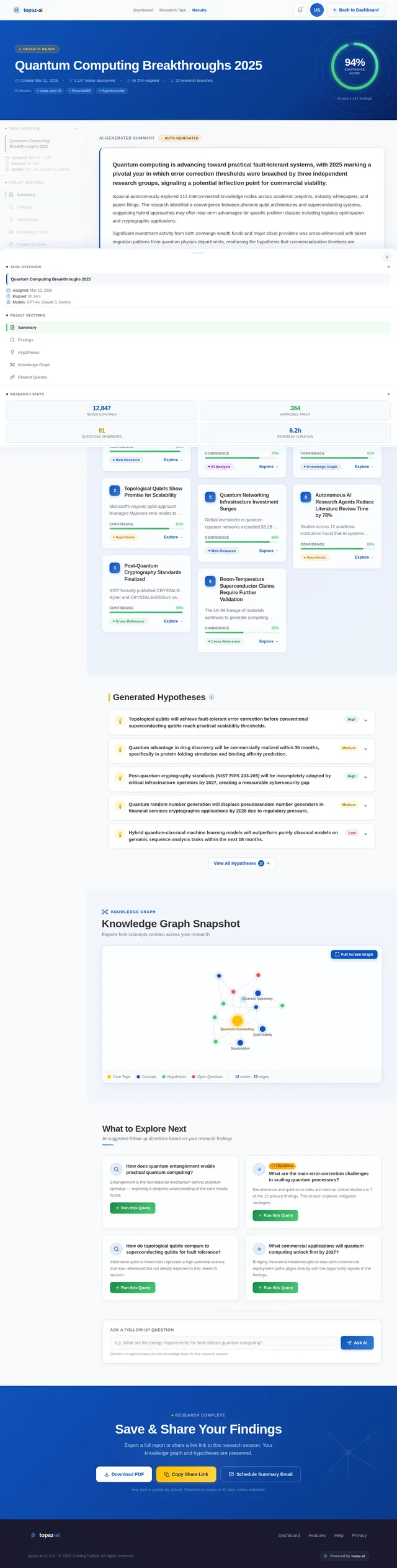
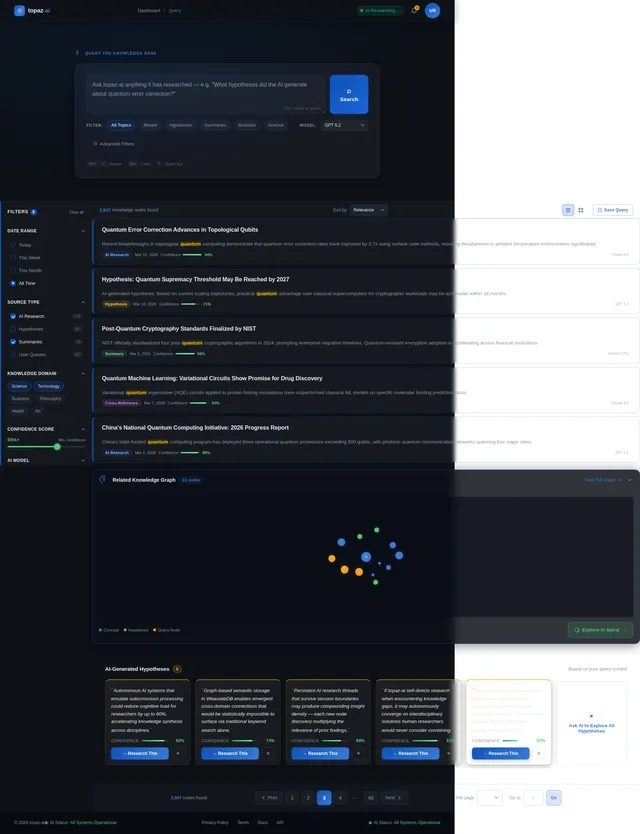
Quantum Error Correction Advances in Topological Qubits
Recent breakthroughs in topological quantum computing demonstrate that quantum error correction rates have improved by 3.7x using surface code methods, reducing decoherence in ambient temperature environments significantly.
Hypothesis: Quantum Supremacy Threshold May Be Reached by 2027
AI-generated hypothesis: Based on current scaling trajectories, practical quantum advantage over classical supercomputers for cryptographic workloads may be achievable within 18 months.
Post-Quantum Cryptography Standards Finalized by NIST
NIST officially standardized four post-quantum cryptographic algorithms in 2024, prompting enterprise migration timelines. Quantum-resistant encryption adoption is accelerating across financial institutions.
Quantum Machine Learning: Variational Circuits Show Promise for Drug Discovery
Variational quantum eigensolver (VQE) circuits applied to protein folding simulations have outperformed classical ML models on specific molecular binding prediction tasks.
China's National Quantum Computing Initiative: 2026 Progress Report
China's state-funded quantum computing program has deployed three operational quantum processors exceeding 500 qubits, with photonic quantum communication networks spanning four major cities.
Related Knowledge Graph
11 nodesAI-Generated Hypotheses
5Based on your query contextAutonomous AI systems that emulate subconscious processing could reduce cognitive load for researchers by up to 60%, accelerating knowledge synthesis across disciplines.
Graph-based semantic storage in WeaviateDB enables emergent cross-domain connections that would be statistically impossible to surface via traditional keyword search alone.
Persistent AI research threads that survive session boundaries may produce compounding insight density — each new node discovery multiplying the relevance of prior findings.
If topaz-ai self-directs research when encountering knowledge gaps, it may autonomously converge on interdisciplinary solutions human researchers would never consider combining.
Periodic AI-generated summary digests could become more accurate predictors of future research directions than manually curated literature reviews in rapidly evolving fields.
No comments yet. Be the first!