smart-project

byelon musk

what can you do? and how are you different than other GPTs

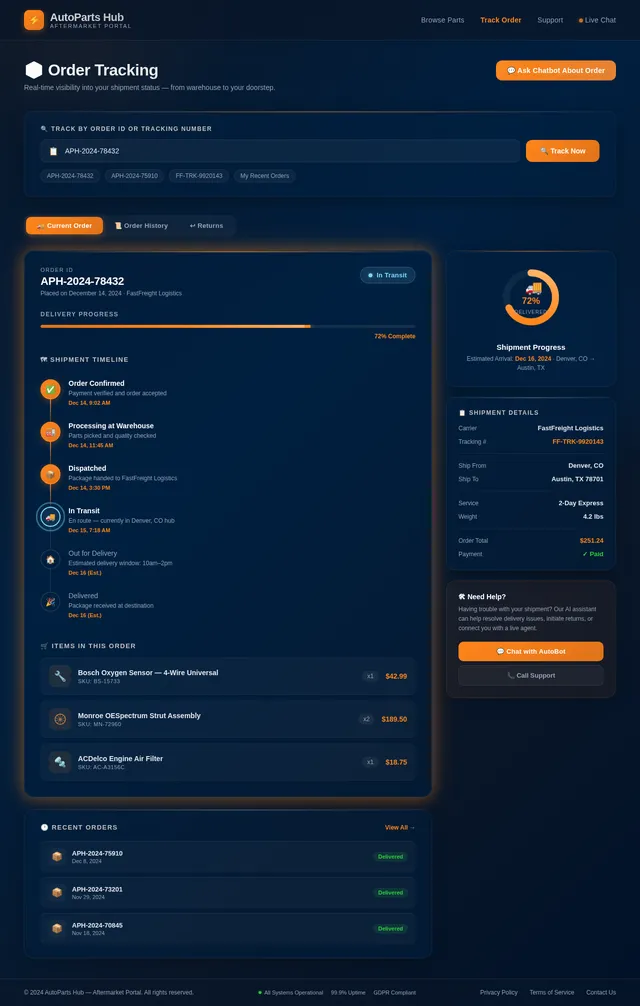
LoginOrder Tracking
Login

Comments (0)

No comments yet. Be the first!

System Requirements

System Requirement Document
Page 1 of 3

System Requirements Document (SRD)

1. Introduction

This document outlines the system requirements for developing a chatbot tailored for automotive aftermarket portals. The chatbot will serve as an all-in-one assistant, providing customer support, answering FAQs, assisting with order tracking, offering product recommendations, and guiding users to relevant parts or services. The chatbot will be text-based to ensure simplicity and accessibility.

2. System Overview

The automotive chatbot will be a text-based virtual assistant designed to enhance customer support for aftermarket portals. It will streamline user interactions by addressing a wide range of queries, including FAQs, order-related support, and product recommendations. The chatbot will integrate seamlessly with existing aftermarket systems and provide a user-friendly interface for efficient communication.

3. Functional Requirements as Story Points

  • As a User, I should be able to ask FAQs and receive accurate responses.
  • As a User, I should be able to track my orders through the chatbot.
  • As a User, I should be able to receive product recommendations based on my queries.
  • As a User, I should be able to resolve issues related to orders or services through the chatbot.
  • As a User, I should be guided to relevant parts or services based on my input.
  • As a User, I should be able to interact with the chatbot in a text-based format.

4. User Personas

  • User: A customer using the aftermarket portal to find parts, track orders, or resolve issues. They value quick and accurate responses to their queries.
  • Admin: A portal administrator responsible for managing the chatbot's integration, monitoring its performance, and updating its knowledge base as needed.

5. Visuals Colors and Theme

The chatbot interface will follow a sleek and modern automotive-inspired theme:

  • Primary Colors: Midnight Blue (#001F3F) and Metallic Silver (#C0C0C0) to reflect the automotive industry.
  • Accent Colors: Vibrant Orange (#FF851B) for highlights and call-to-action buttons.
  • Background: Light Gray (#F5F5F5) for a clean and professional look.
  • Font: Sans-serif fonts like Open Sans or Roboto for readability.
Page 2 of 3

6. Signature Design Concept

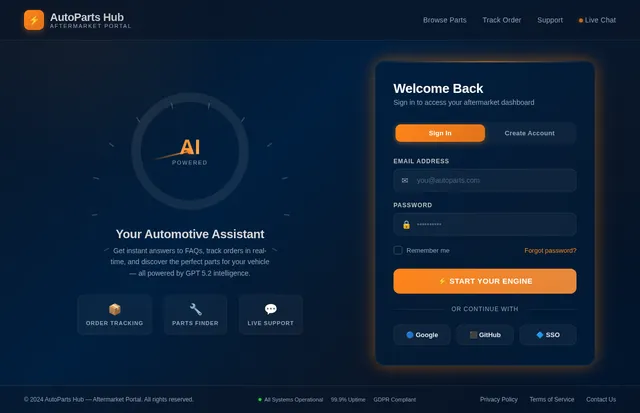
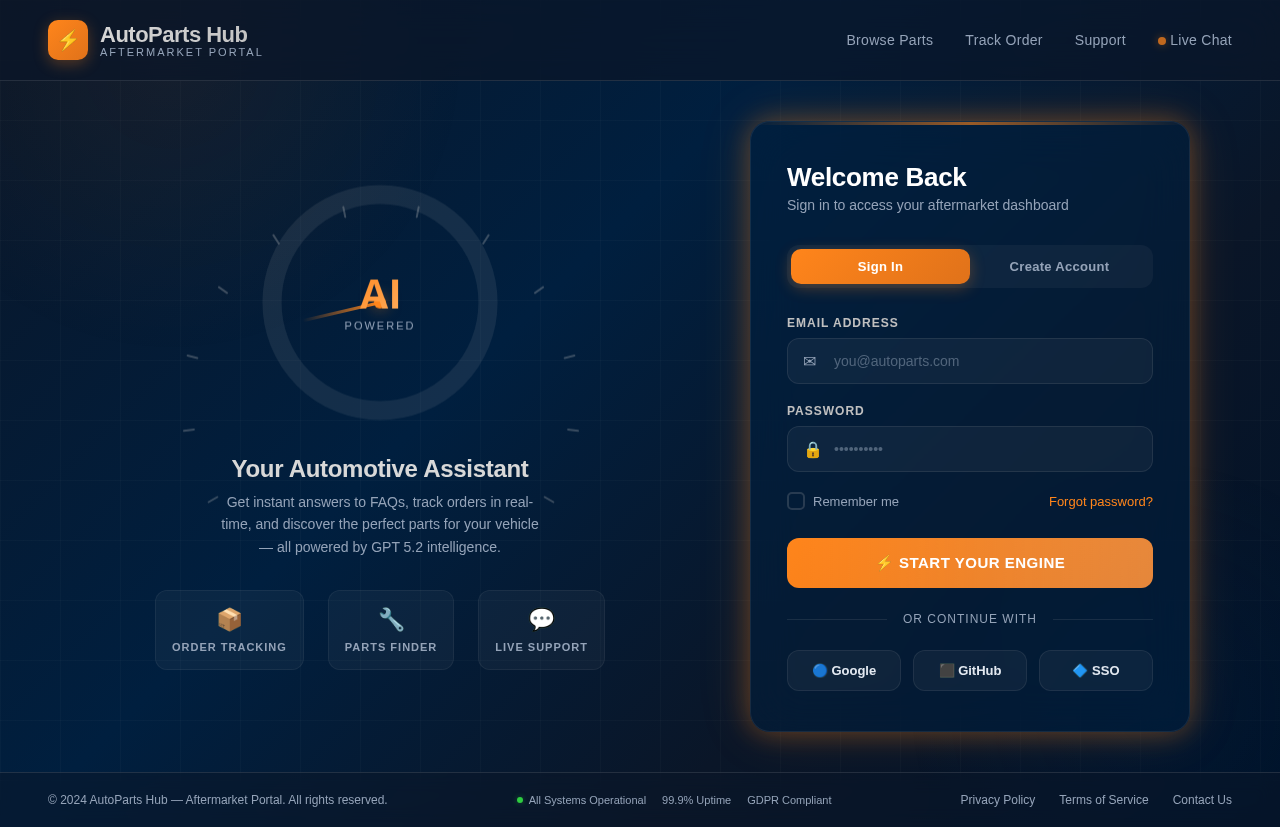
The chatbot's landing page and interface will feature a "Dashboard-Inspired Design". The homepage will resemble a car's digital dashboard, complete with interactive widgets and animations.

Details:

  • Homepage Design: The landing page will have a sleek, futuristic dashboard aesthetic. Users will see a central "speedometer" animation that dynamically updates as they type their query, symbolizing the chatbot's processing speed.
  • Animations: Subtle animations will mimic the movement of car dials and gauges, creating a sense of motion and energy.
  • Micro-Interactions: Buttons and icons will respond with smooth transitions, such as glowing effects or slight "click" animations, resembling the tactile feedback of pressing a car button.
  • Chat Interface: The chat window will appear as a pop-up "console" on the dashboard, with a glowing border and a typing indicator that looks like a pulsing engine light.
  • Color Shifts: The interface will subtly shift colors between the primary Midnight Blue and Metallic Silver as users interact, creating a dynamic and engaging experience.

This design will make the chatbot feel like an integral part of the automotive ecosystem, leaving a lasting impression on users.

7. Non-Functional Requirements

  • The chatbot must respond to user queries within 2 seconds.
  • The system should handle up to 10,000 concurrent users without performance degradation.
  • The chatbot should maintain 99.9% uptime.
  • The chatbot must comply with data privacy regulations such as GDPR.
  • The chatbot should be easily scalable to accommodate future growth.

8. Tech Stack

  • Frontend: React for the web interface.
  • Backend: Python with FastAPI for handling chatbot logic and API integration.
  • Database: MySQL for structured data storage, using Alembic for migrations.
  • AI Models: GPT 5.2 for user-friendly responses.
  • AI Tools: Langchain for managing conversational flows.
  • Local Orchestration: Docker and docker-compose for containerization.
  • Server-Side Orchestration: Kubernetes for scalability and deployment.

9. Assumptions and Constraints

  • The chatbot will only support text-based interactions; no voice capabilities will be implemented.
  • The chatbot will integrate with existing aftermarket portal systems via APIs.
  • The system will rely on a stable internet connection for real-time responses.
  • The chatbot's knowledge base will require periodic updates to stay relevant.
Page 3 of 3

10. Glossary

  • Aftermarket Portal: An online platform where customers can purchase automotive parts and services.
  • Chatbot: A software application designed to simulate human conversation.
  • FAQs: Frequently Asked Questions.
  • GDPR: General Data Protection Regulation, a legal framework for data protection and privacy.
  • Micro-Interactions: Small, subtle design elements that provide feedback to users during interactions.

This updated SRD incorporates the user's request to specify that the chatbot will be text-based and enhances the overall design and functionality to align with the project's goals.

Login design preview
Login: Sign In
Admin Dashboard: View Overview
Admin Dashboard: Monitor Performance
Analytics: View Metrics
Knowledge Base: Update Content
Knowledge Base: Add FAQ
Knowledge Base: Edit Entry
Integration Settings: Manage APIs
Integration Settings: Configure Portal
User Logs: Review Conversations
User Logs: Flag Issues