proud-parking
 Nebiyu Tefera
I want to build a parking app systems such that when the user opens the app then it will show the available parking places and the numbers with the live numbers then he can select the parking place and order and then that will be confirmed by the parking service giver admin then he will pay some thing for the reservation to make sure he is going to come, then when the user arrived the service parking will immiditly started by the parking service giver admin, then it will count then finally whent he user outs then he can finish his time then after the continue to the remaining payment,.....here users can see a live slot numbers remaining and also on a reserved status,....and the admin should update it so fastl incase if there are people comein without booking ....and etc can you do this in detail to implement it in african cities


Comments (0)
Sign in to leave a comment
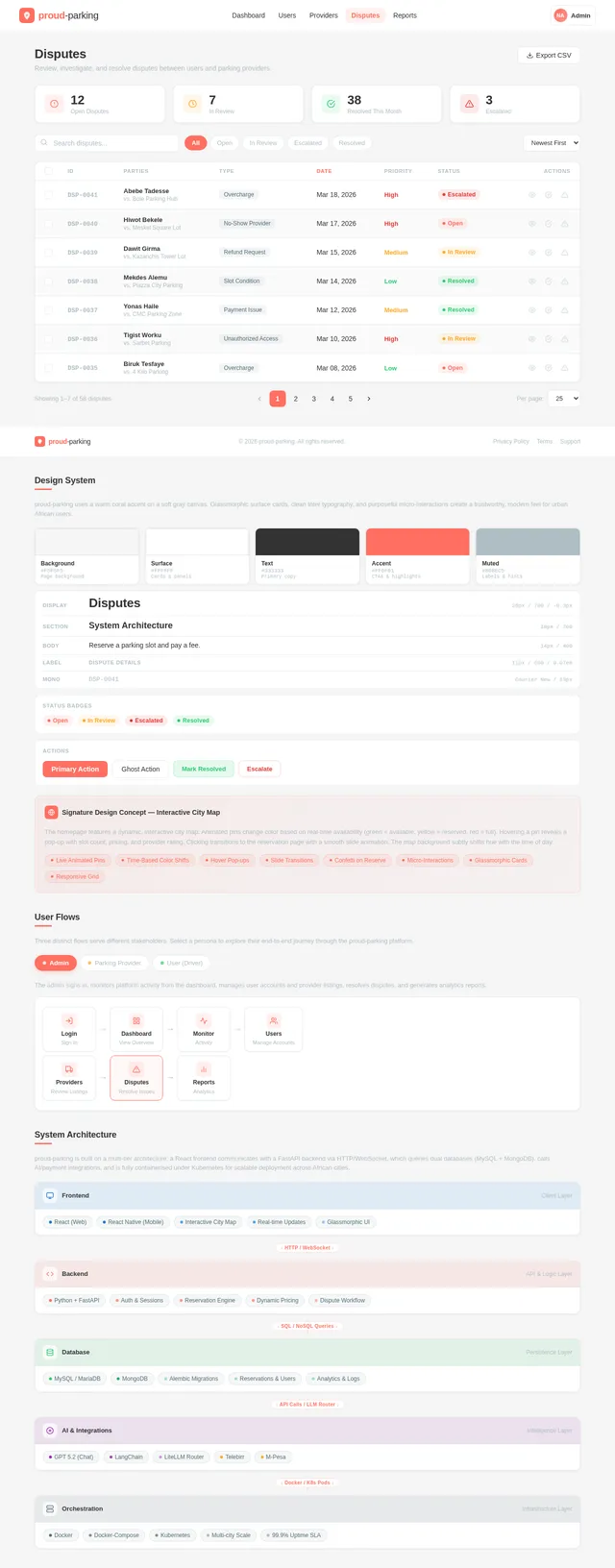
System Requirements
System Requirements Document (SRD)
Project Name: proud-parking
1. Introduction
The proud-parking system is a modern parking management solution designed to address the challenges of finding and reserving parking spaces in urban African cities. Developed with efficiency, profitability, and scalability in mind, this system connects users and parking service providers through a streamlined, registration-based platform. By leveraging real-time updates, automated workflows, and dynamic pricing, proud-parking aims to revolutionize parking services in Ethiopia and beyond.
This document outlines the system requirements, user flows, design concepts, and architecture necessary to implement the proud-parking system effectively.
2. System Overview
The proud-parking system is a digital platform that facilitates parking reservations and management. It consists of three main user groups:
- Users: Individuals searching for parking spaces, reserving slots, and making payments.
- Parking Providers: Businesses or individuals offering parking spaces, managing availability, and handling reservations.
- Admins: System administrators overseeing platform operations, resolving disputes, and ensuring smooth functionality.
Key features include:
- Real-time parking availability updates.
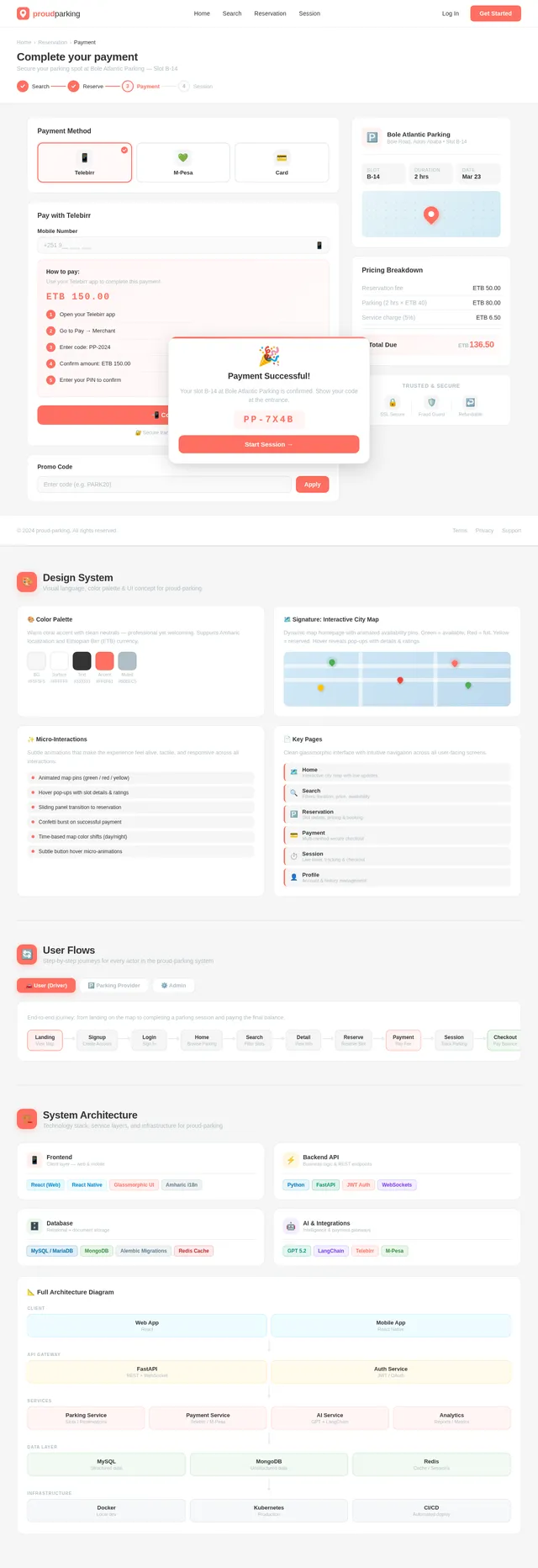
- Reservation and payment processing.
- Dynamic pricing for peak hours.
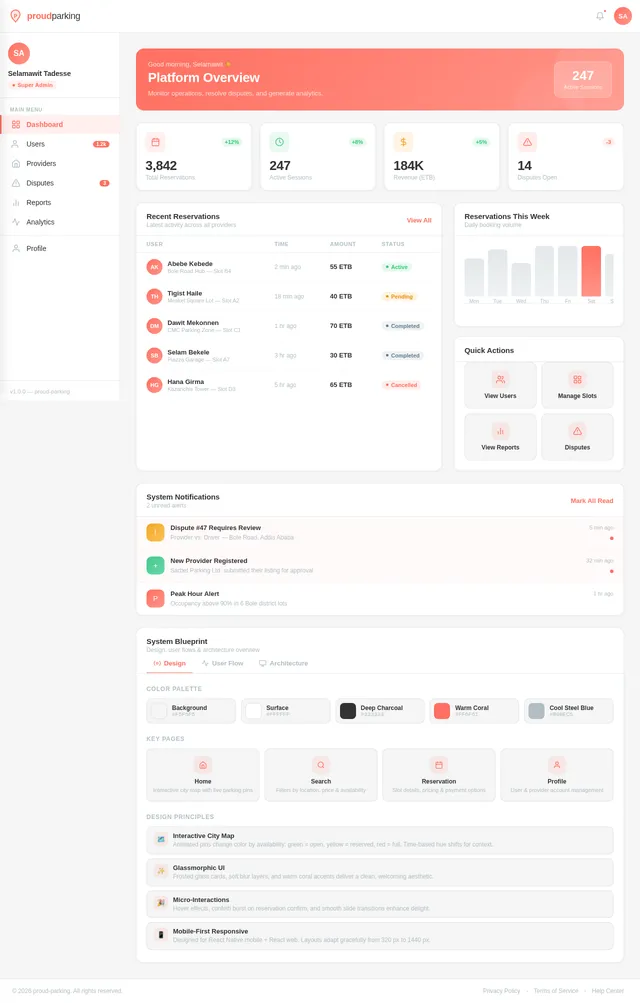
- Admin dashboards for analytics and slot management.
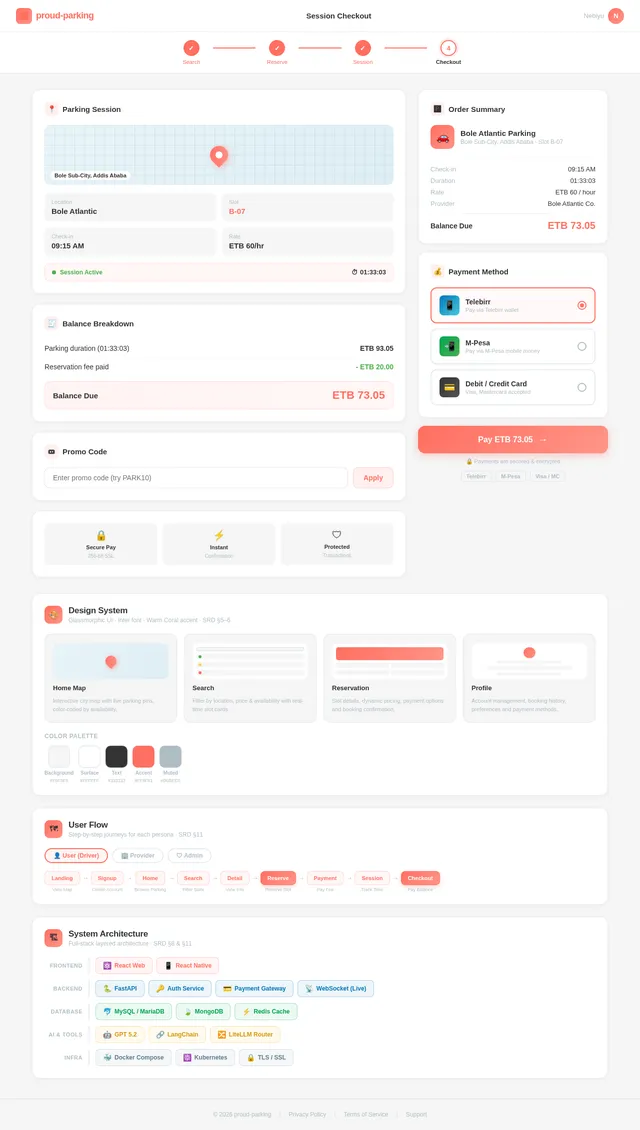
- Integration with local payment systems like Telebirr and M-Pesa.
3. Functional Requirements
User Stories:
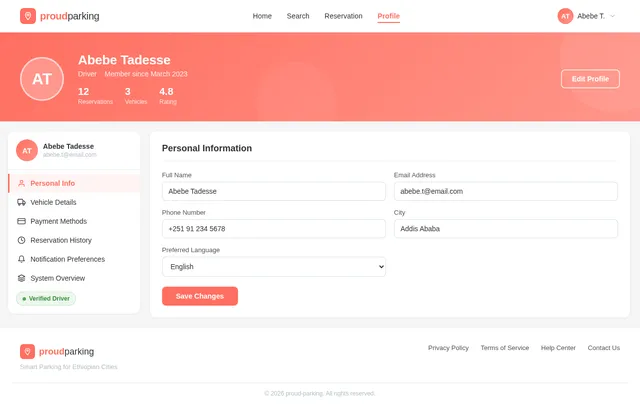
- As a User, I should be able to register and create a profile.
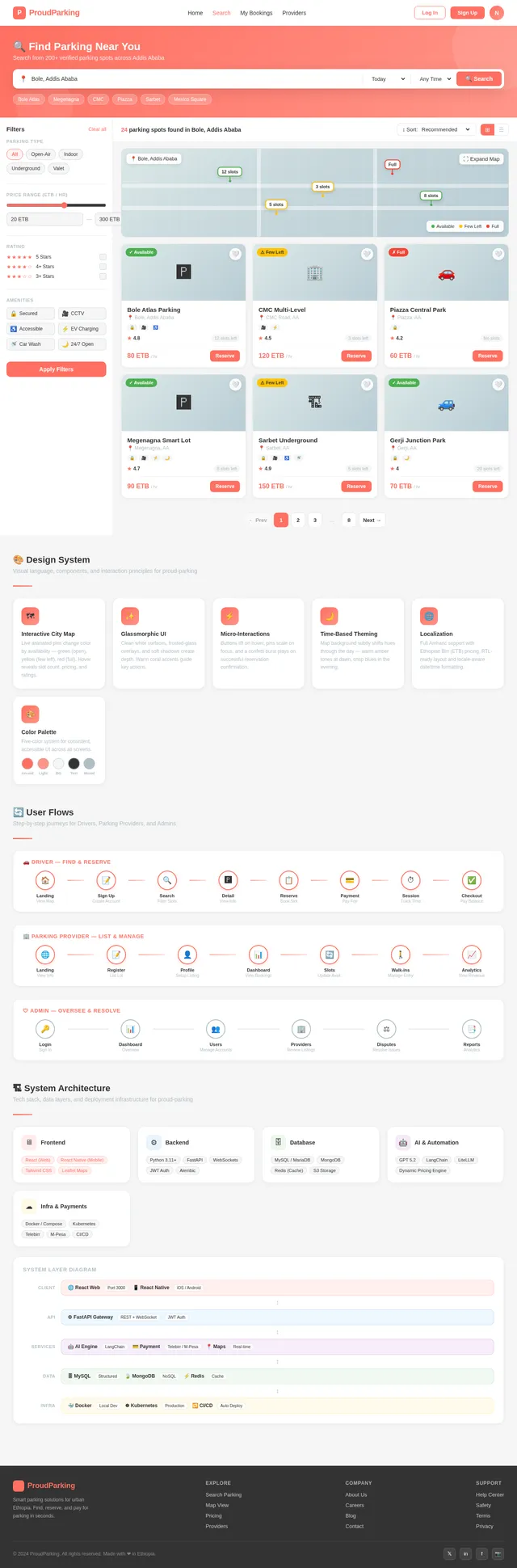
- As a User, I should be able to search for available parking spaces with live updates.
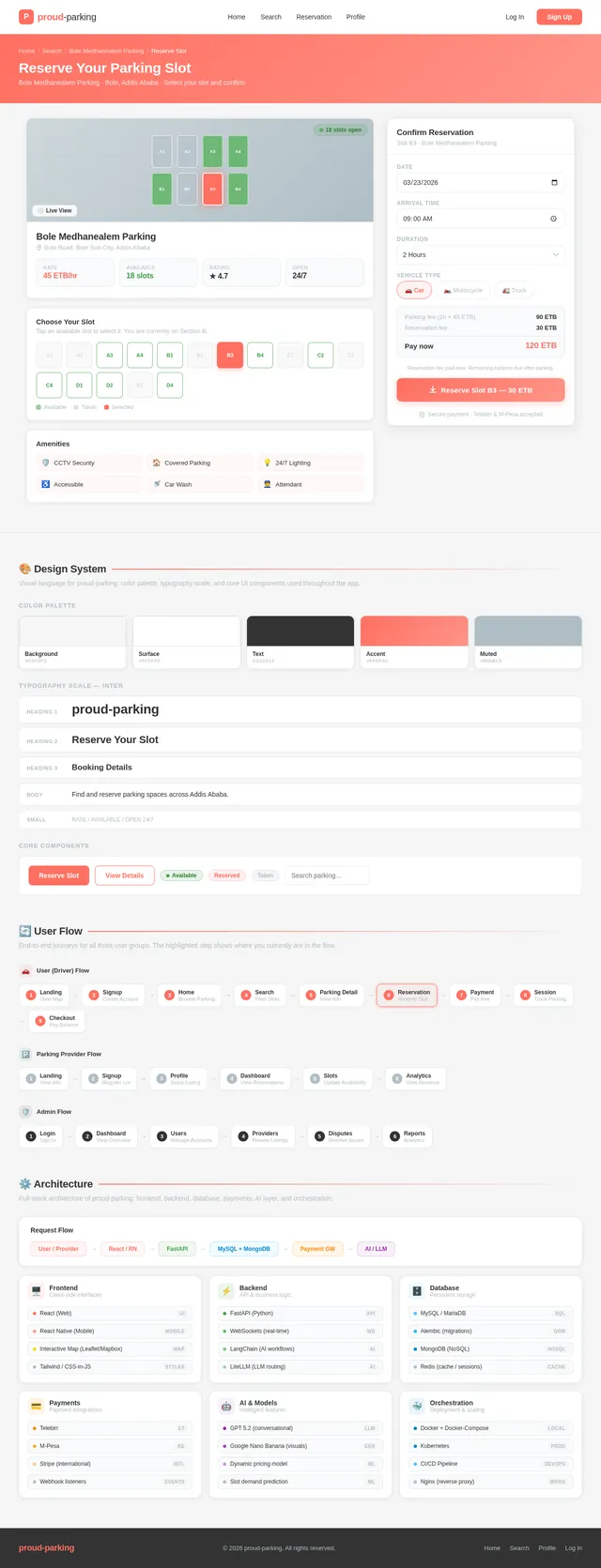
- As a User, I should be able to reserve a parking slot and pay a reservation fee.
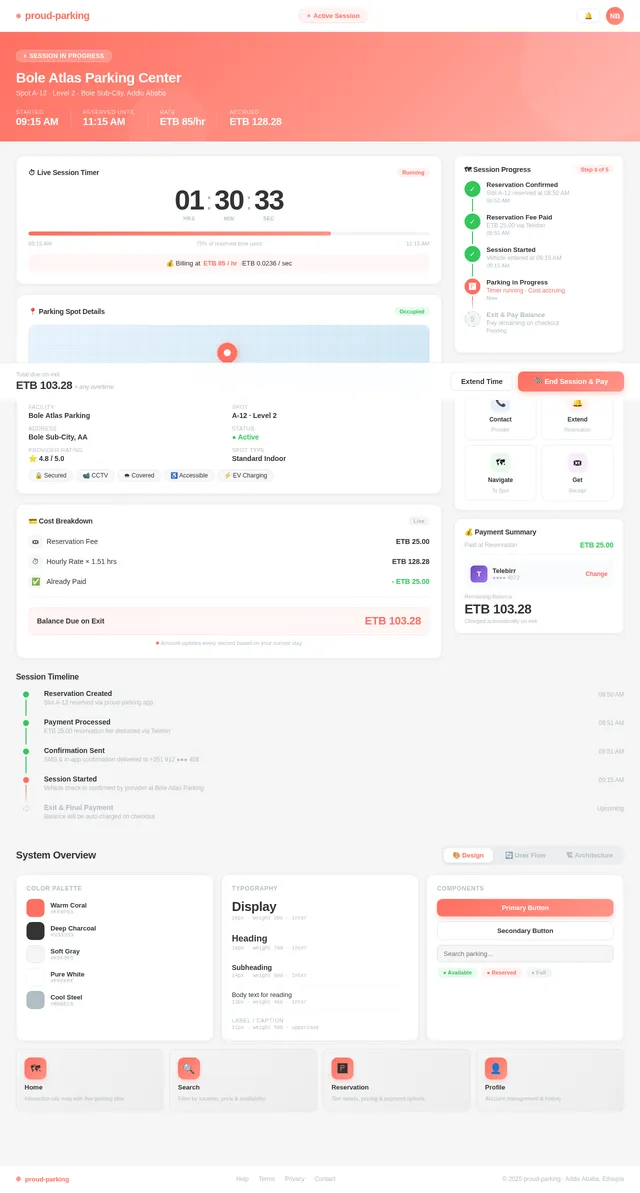
- As a User, I should be able to track my reservation and remaining payment.
- As a User, I should be able to finish my parking session and pay the remaining balance.
- As a Parking Provider, I should be able to register and create a profile for my parking service.
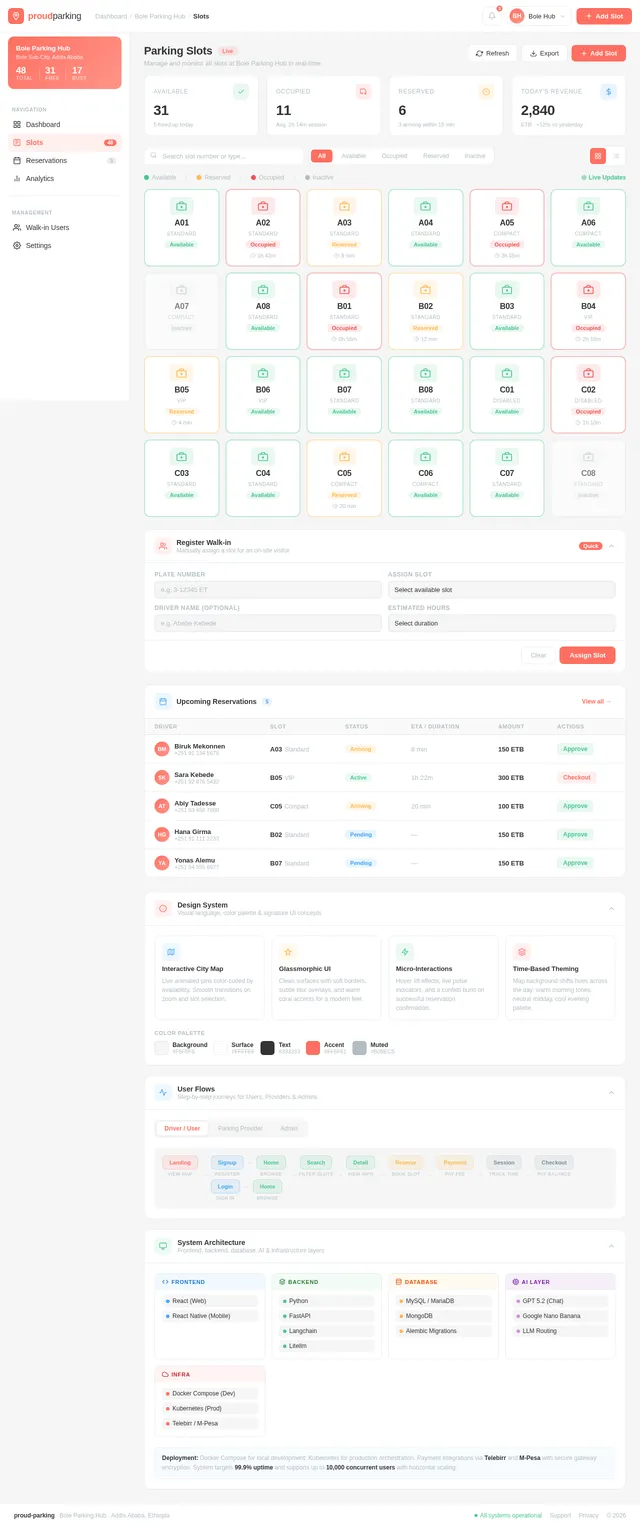
- As a Parking Provider, I should be able to update slot availability in real-time.
- As a Parking Provider, I should be able to manage reservations and handle walk-ins.
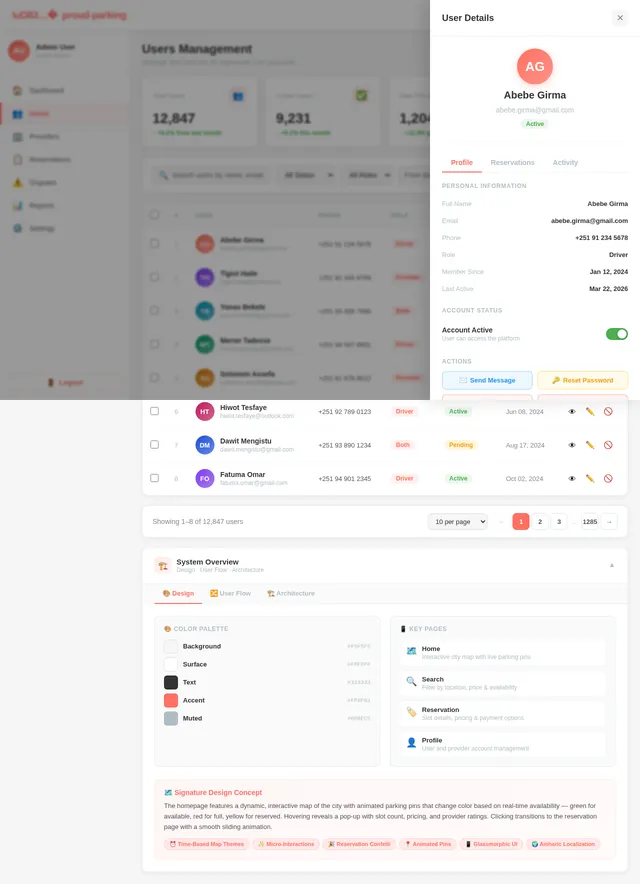
- As an Admin, I should be able to oversee platform operations and resolve disputes.
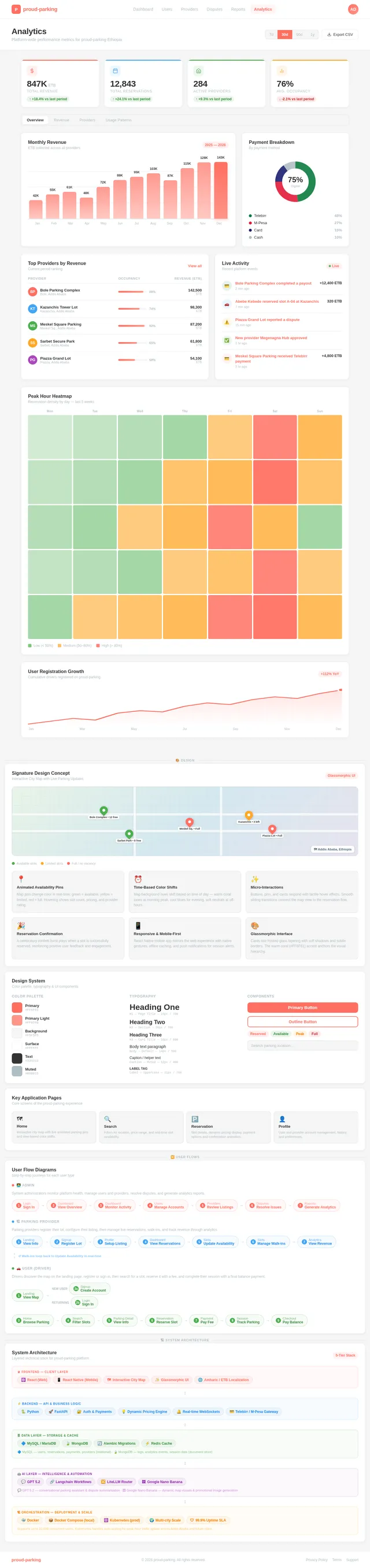
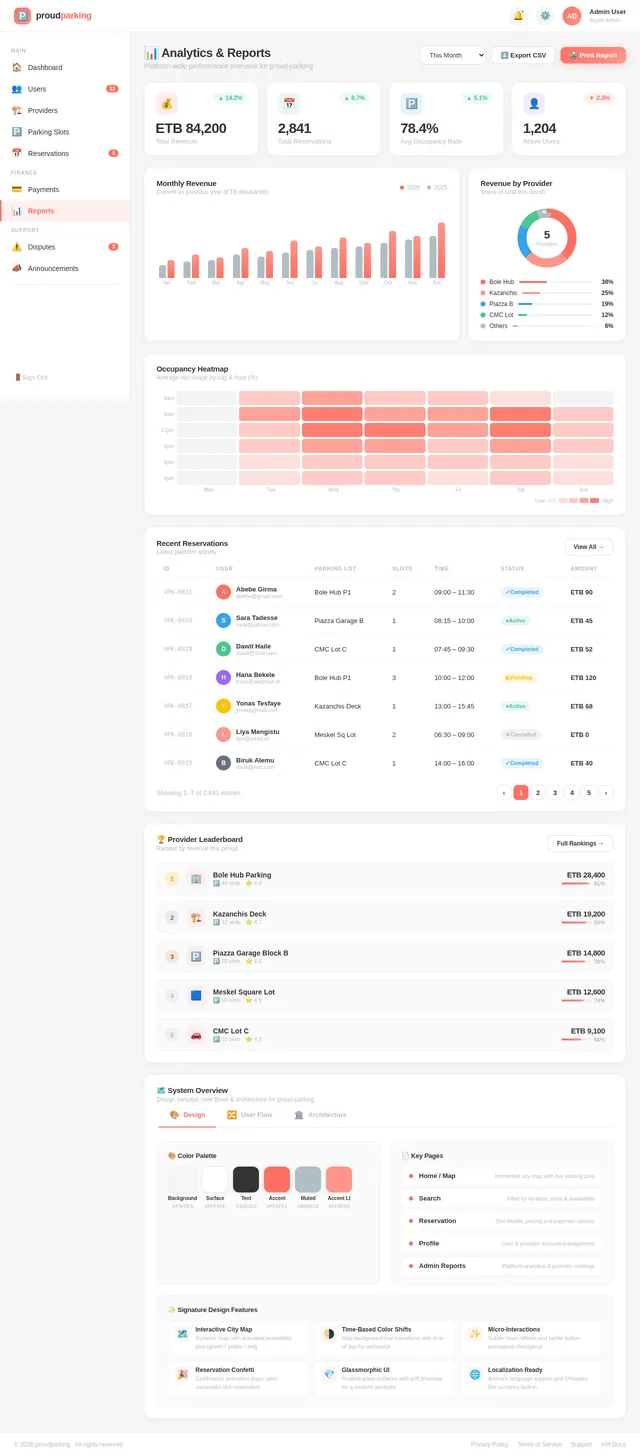
- As an Admin, I should be able to generate analytics reports for parking providers.
4. User Personas
1. User (Driver)
- Description: Individuals looking for convenient parking spaces in urban areas.
- Goals: Find parking quickly, reserve slots, and make payments seamlessly.
- Pain Points: Difficulty finding parking during peak hours, lack of real-time updates.
2. Parking Provider
- Description: Businesses or individuals offering parking spaces for rent.
- Goals: Maximize revenue, manage slots efficiently, and handle reservations.
- Pain Points: Managing walk-ins, updating slot availability, and handling disputes.
3. Admin
- Description: System administrators ensuring smooth platform operations.
- Goals: Oversee the system, resolve disputes, and provide analytics.
- Pain Points: Ensuring real-time updates and resolving conflicts between users and providers.
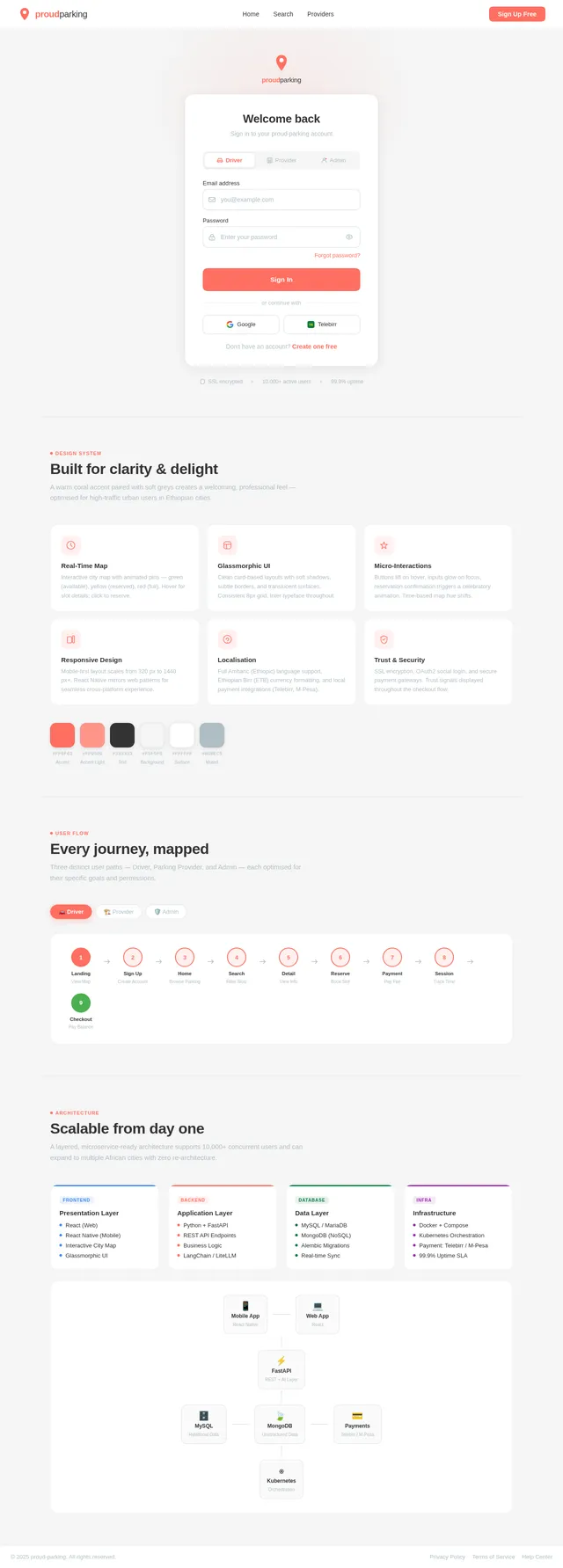
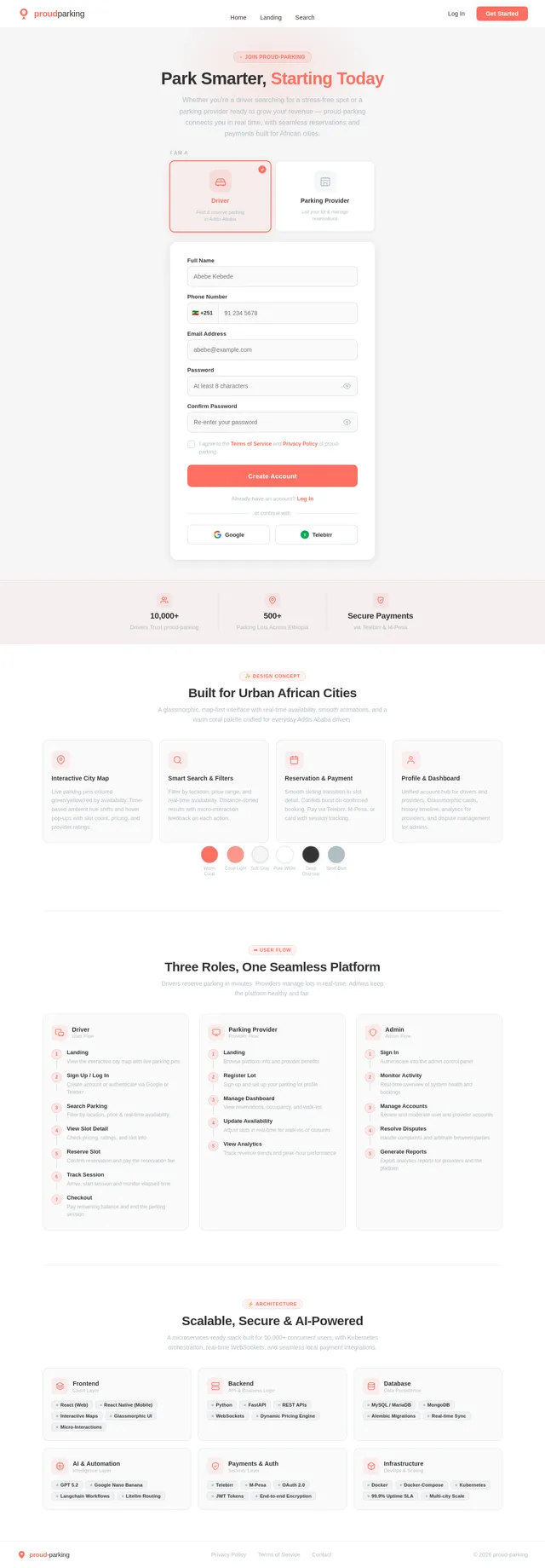
5. Visuals Colors and Theme
Color Palette:
- Background: #F5F5F5 (Soft Gray)
- Surface: #FFFFFF (Pure White)
- Text: #333333 (Deep Charcoal)
- Accent: #FF6F61 (Warm Coral)
- Muted Tones: #B0BEC5 (Cool Steel Blue)
Theme:
The proud-parking app will use a clean, modern design with a focus on usability. The warm coral accent provides a welcoming feel, while the muted tones ensure a professional and trustworthy aesthetic.
6. Signature Design Concept
Interactive City Map with Live Parking Updates
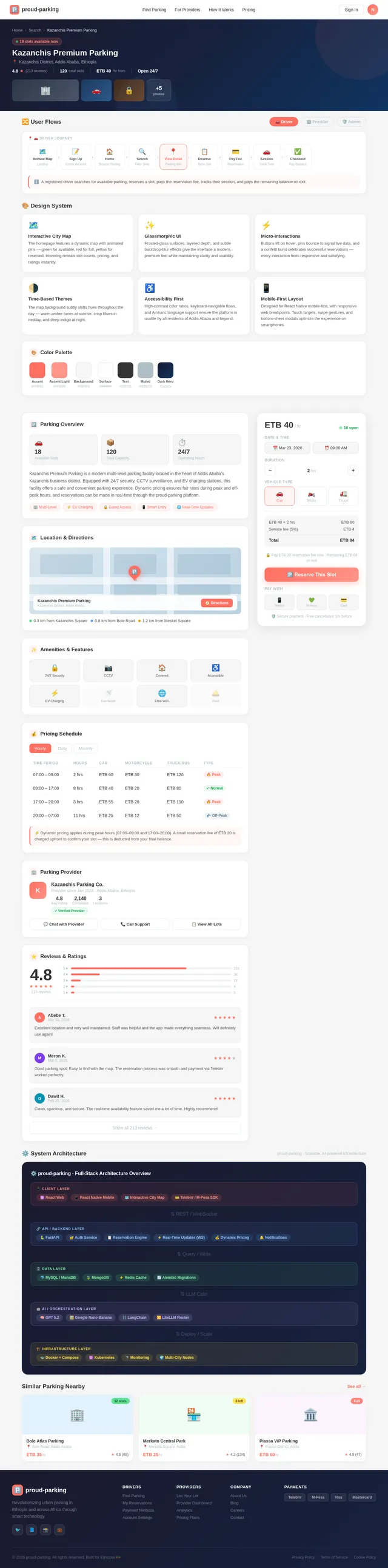
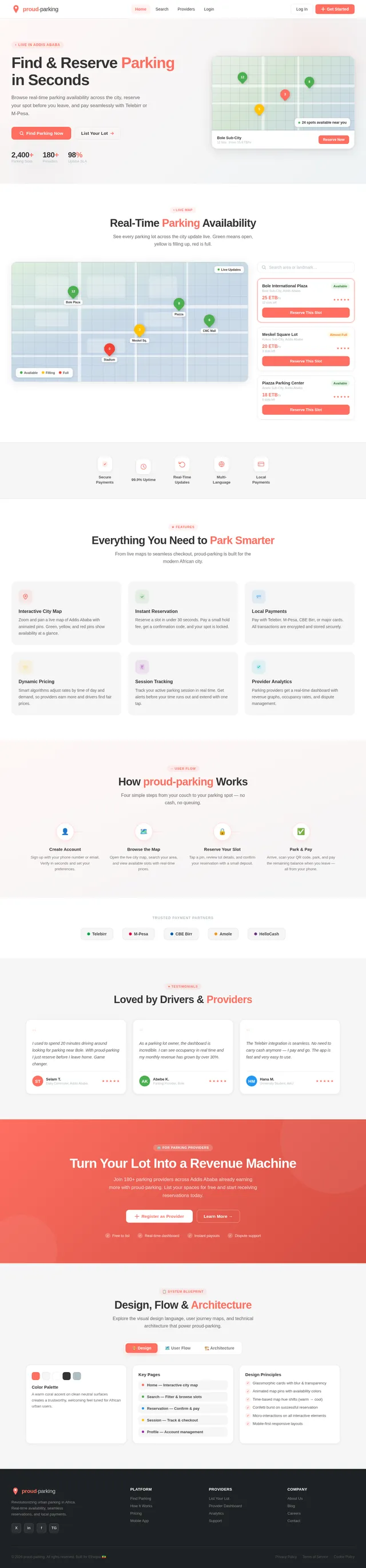
The homepage will feature a dynamic, interactive map of the city. Users can zoom in and out to view parking locations, each represented by animated pins that change color based on availability (e.g., green for available, red for full, yellow for reserved).
Hovering over a pin will display a pop-up with details like the number of slots available, pricing, and provider ratings. Clicking a pin will transition to a reservation page with a smooth sliding animation.
Additional features:
- Time-Based Color Shifts: The map background subtly changes hues based on the time of day (e.g., warm tones for morning, cool tones for evening).
- Micro-Interactions: Buttons and icons will have subtle hover effects, creating a tactile feel.
- Reservation Confirmation Animation: When a user reserves a slot, a celebratory animation (e.g., confetti burst) will play, enhancing user satisfaction.
7. Non-Functional Requirements
- Performance: The system must handle up to 10,000 concurrent users without lag.
- Scalability: The architecture should support expansion to multiple cities.
- Security: Implement secure payment gateways and data encryption.
- Availability: Ensure 99.9% uptime for critical services.
- Localization: Support multiple languages and currencies, starting with Amharic and Ethiopian Birr.
8. Tech Stack
Frontend:
- React for Web
- React Native for Mobile App
Backend:
- Python
- FastAPI
Database:
- MySQL or MariaDB for relational data (use Alembic for migrations).
- MongoDB for NoSQL data.
AI Models:
- GPT 5.2 for user-friendly responses.
- Google Nano Banana for image generation.
AI Tools:
- Langchain for workflow automation.
- Litellm for LLM routing.
Orchestration:
- Docker and Docker-Compose for local development.
- Kubernetes for server-side orchestration.
9. Assumptions and Constraints
Assumptions:
- Users and parking providers will have access to smartphones and stable internet connections.
- Local payment systems like Telebirr and M-Pesa will be integrated seamlessly.
- Parking providers will actively update slot availability.
Constraints:
- Limited adoption in areas with poor internet connectivity.
- Initial reliance on manual updates by parking providers before IoT integration.
10. Glossary
- IoT (Internet of Things): Devices like sensors or cameras used for real-time slot tracking.
- Dynamic Pricing: Adjusting parking fees based on demand and time of day.
- Reservation Fee: A small fee paid by users to confirm their parking slot.
- Admin Dashboard: A control panel for system administrators to oversee operations.
- Micro-Interactions: Subtle animations or effects that enhance user experience.
11. Design, User Flow, and Architecture
Design:
The app will feature a clean, glassmorphic interface with intuitive navigation. Key pages include:
- Home: Interactive city map with live parking updates.
- Search: Filters for location, price, and availability.
- Reservation: Slot details, pricing, and payment options.
- Profile: User and provider account management.
User Flow:
- User Registration: Create an account, verify via email/phone, and set preferences.
- Search Parking: Enter location, view live availability, and select a slot.
- Reserve Slot: Confirm reservation, pay a fee, and receive confirmation.
- Parking Session: Start session upon arrival, track time, and pay remaining balance.
- Provider Workflow: Register, list parking spaces, update availability, and manage reservations.
- Admin Oversight: Monitor system, resolve disputes, and generate analytics.
Architecture:
- Frontend: React/React Native for responsive design.
- Backend: FastAPI for API management and business logic.
- Database: MySQL for structured data and MongoDB for unstructured data.
- AI Integration: GPT 5.2 for conversational interfaces and Google Nano Banana for dynamic visuals.
- Orchestration: Kubernetes for scalable deployment.
Nebiyu, this document provides a comprehensive foundation for proud-parking. Let me know if you'd like to refine any section further or dive deeper into implementation details!

Find Parking
in Seconds
Real-time parking availability across Ethiopian cities — reserve your spot before you arrive.
Spot Reserved!
Bole Road, Addis Ababa
Meskel Square Parking
12 slots available · 40 ETB/hr
10,000+ Drivers
Trust proud-parking
See Parking Availability in Real Time
Explore live parking locations across Addis Ababa. Hover over any pin to see details like available slots, pricing, and ratings.
Parking Made Simple
Find, reserve, and park in three easy steps. No more circling the block.
Search
Enter your location and view live parking availability across the city in real time.
Reserve
Select an available slot and pay a small reservation fee to lock in your spot.
Park & Pay
Arrive at your reserved spot, start your session, and pay the remaining balance when done.
Everything You Need to Park Smarter
Powerful features designed for drivers and parking providers across Ethiopian cities.
Real-Time Availability
See exactly which parking spots are open right now with live-updating maps across Ethiopian cities.
Dynamic Pricing
Save money with off-peak rates or plan ahead for busy hours. Transparent pricing that adjusts to demand.
Instant Reservations
Reserve your parking spot in seconds before you even leave home. No more circling the block.
Local Payment Support
Pay seamlessly with Telebirr, M-Pesa, or card. Built for how Ethiopians actually pay.
Session Tracking
Monitor your active parking session in real time. Get reminders before your time runs out.
Provider Analytics
Parking providers get powerful dashboards with revenue insights, occupancy trends, and peak-hour data.
Grow Your Parking Business
Take full control of your parking operations with powerful tools built for providers in Addis Ababa and beyond.
- Manage slots in real time
- Handle walk-ins and reservations
- View revenue analytics
- Dynamic pricing controls
Trusted by Drivers and Providers Across Addis
Hear from the people who park smarter every day with proud-parking.
Pay Your Way
Seamlessly integrated with local and international payment systems
All transactions are encrypted and secure.
Start Parking Smarter Today
Join thousands of drivers and providers already using proud-parking to find, reserve, and manage parking across Ethiopian cities.
No comments yet. Be the first!