misty-ecommerce
 Devops Ninegravity
You are a senior full-stack software architect with deep expertise in e-commerce systems. I am building a complete clothing e-commerce website from scratch using the **MERN stack (MongoDB, Express, React, Node.js)**. I am at the very beginning — I need a full roadmap and architecture plan across three layers: **frontend**, **backend**, and **admin panel**. ## Project Requirements The platform must support: - Product catalog with size/color variants, filtering, and search - Shopping cart and full checkout flow - User authentication and account management - Order tracking and history - Product reviews and ratings - Payment gateway integration (Stripe and/or PayPal) - **Multi-vendor / seller support** (multiple sellers listing products on the platform) ## What I Need From You For each of the three layers — **Frontend (React)**, **Backend (Node.js/Express/MongoDB)**, and **Admin Panel** — provide: - Recommended packages and modules with `npm install` commands - Core features specific to this clothing e-commerce context (including multi-vendor logic) - A suggested folder/project structure - Key third-party integrations (Stripe/PayPal, image hosting, email, etc.) ## Architecture Decisions to Flag Where I'll need to make a call, walk me through the tradeoffs rather than deciding for me. This includes: - Multi-vendor architecture patterns (shared vs. isolated seller data models) - Monolith vs. modular structure for this scale - Image storage strategy (Cloudinary vs. S3 vs. self-hosted) - Authentication approach (JWT vs. sessions, seller vs. buyer roles) - Deployment options suited for a first launch ## Approach Start with a **high-level system overview** showing how the three layers connect and where multi-vendor complexity lives. Then walk through each layer in depth. Treat this as a collaborative planning session — after your initial breakdown, ask me clarifying questions to tailor the architecture to my specific scale, budget, and deployment preferences.
Comments (0)
Sign in to leave a comment
System Requirements
System Requirements Document (SRD)
Project Name: misty-ecommerce
1. Introduction
The purpose of this document is to outline the system requirements for misty-ecommerce, a comprehensive clothing e-commerce platform being developed using the MERN stack (MongoDB, Express, React, Node.js). The platform will cater to buyers, sellers, and administrators, providing a seamless shopping experience, robust seller management, and efficient backend operations.
This document will serve as a roadmap for the development of the platform, ensuring alignment across the frontend, backend, and admin panel layers. The platform will support multi-vendor functionality, enabling multiple sellers to list and manage their products while buyers enjoy a unified shopping experience.
Given the project's scope, the document also addresses architectural decisions, trade-offs, and deployment strategies to ensure scalability and maintainability.
2. System Overview
The misty-ecommerce platform will consist of three primary layers:
-
Frontend (React):
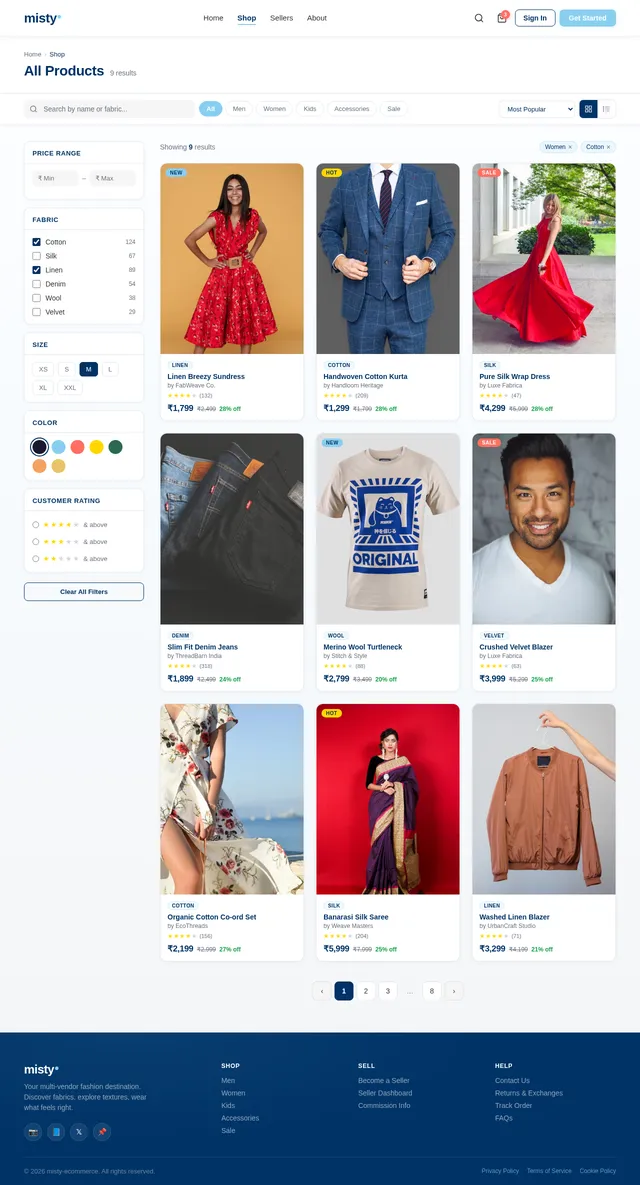
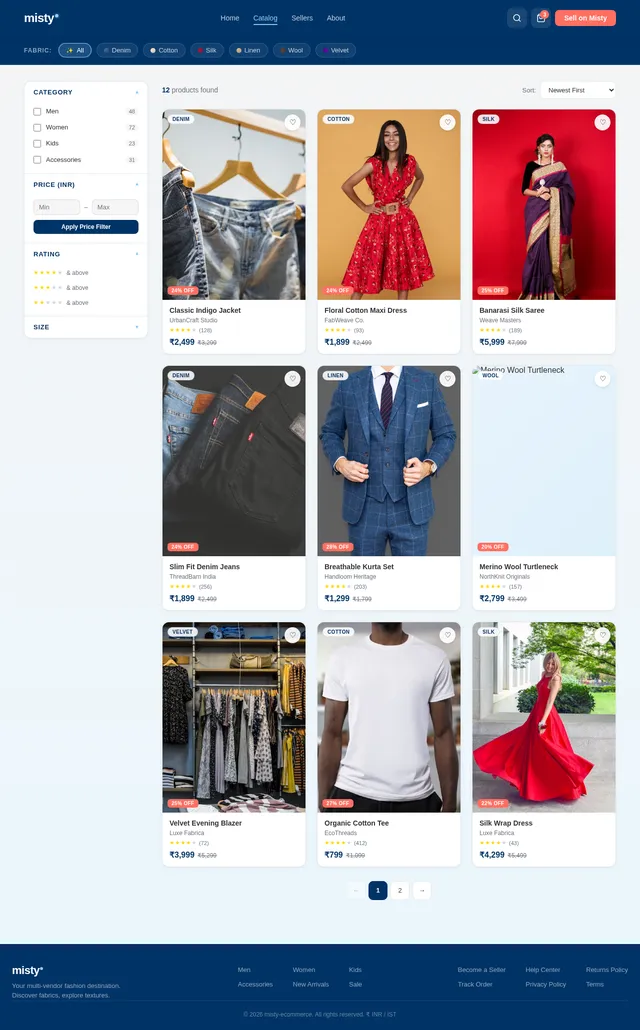
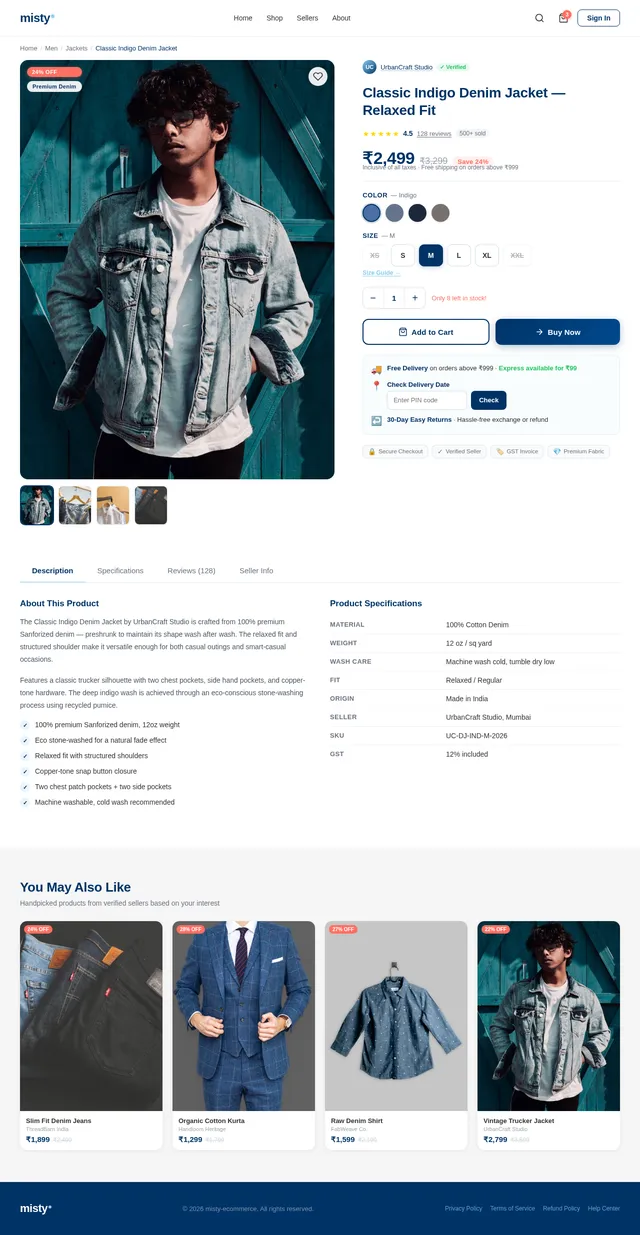
- A user-facing interface for buyers to browse products, manage carts, and complete purchases.
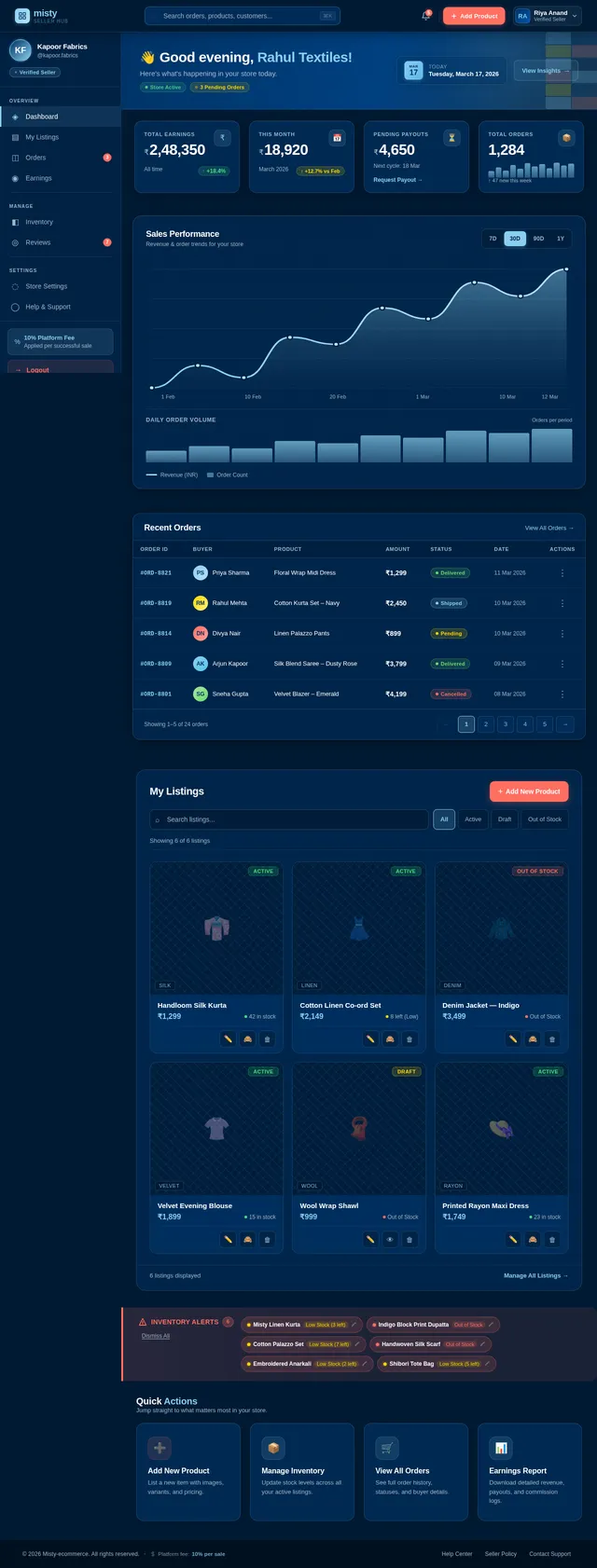
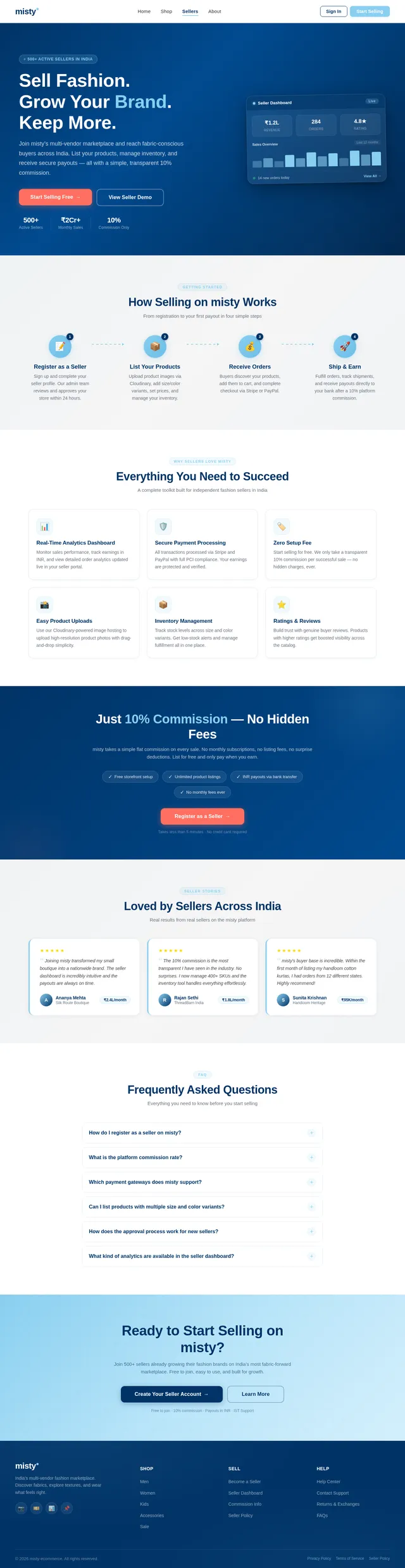
- A vendor-facing portal for sellers to manage their product listings and view analytics.
-
Backend (Node.js/Express/MongoDB):
- A robust API layer to handle authentication, product management, order processing, and multi-vendor logic.
- Integration with payment gateways (Stripe/PayPal) and image hosting services (Cloudinary/S3).
-
Admin Panel:
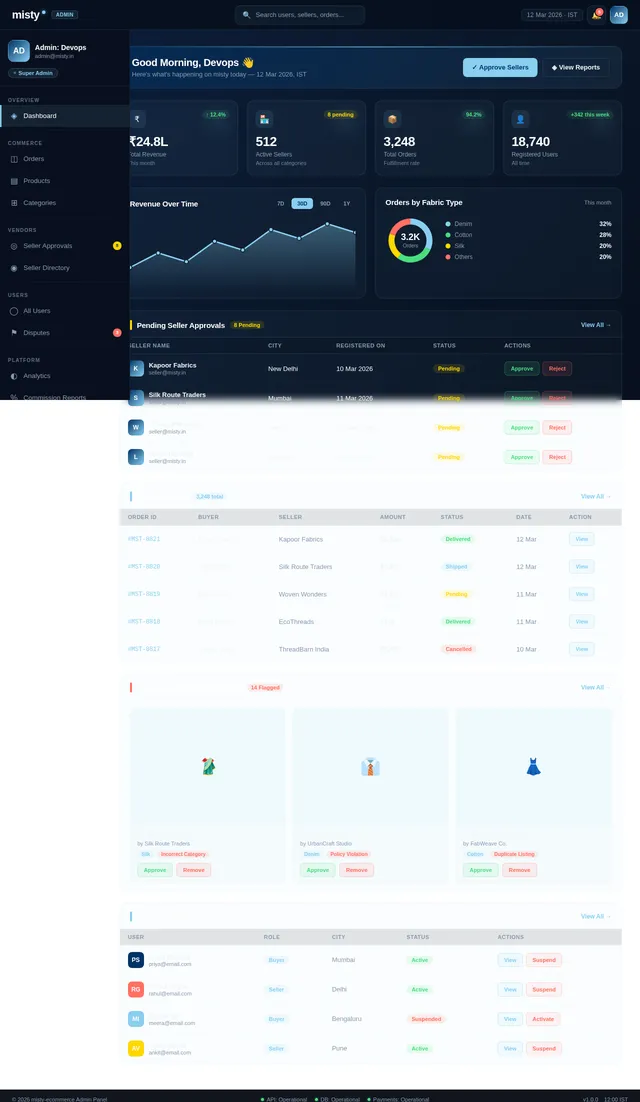
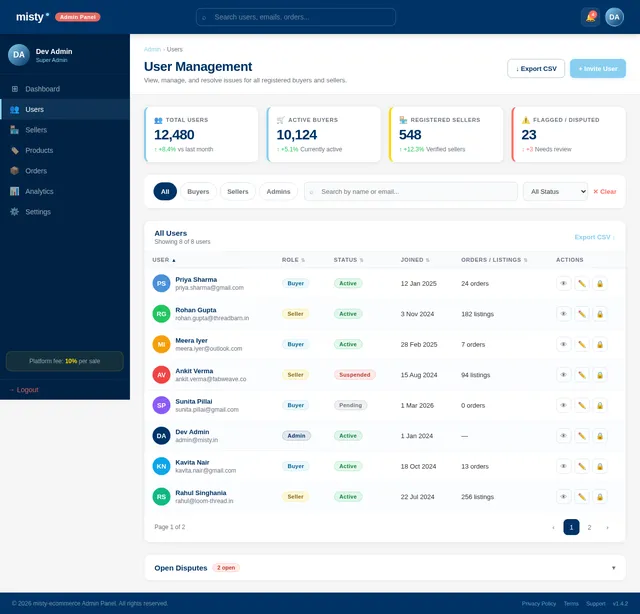
- A dashboard for administrators to manage users, sellers, products, and platform analytics.
The system will support:
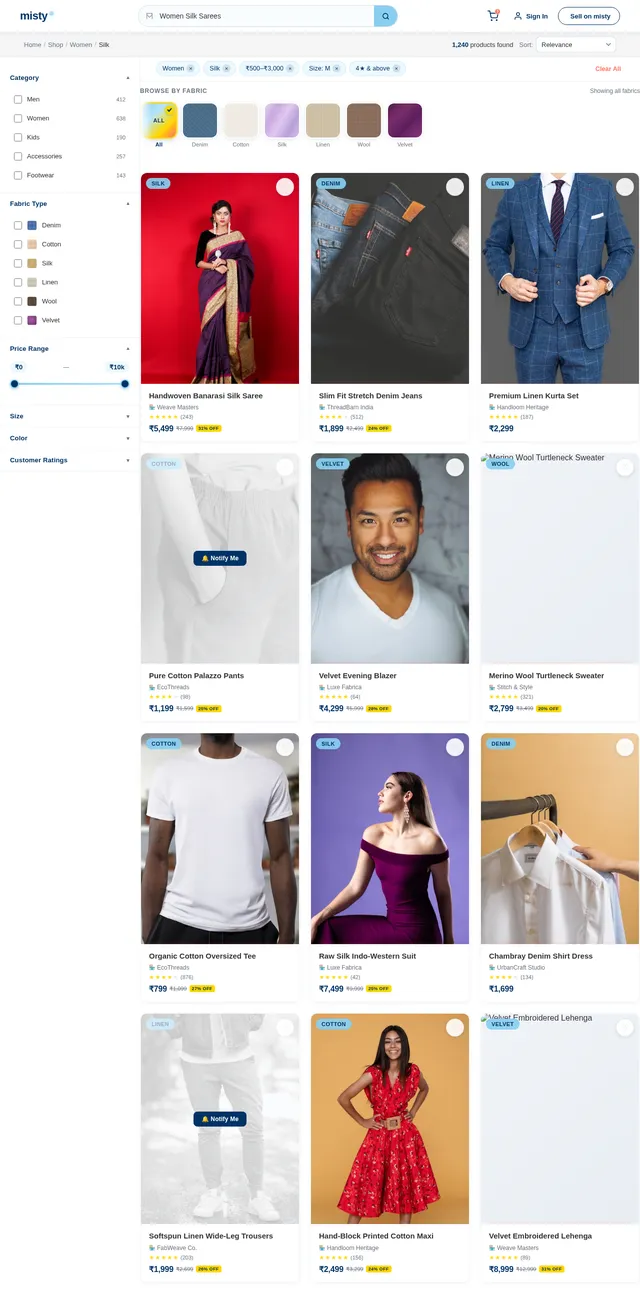
- Product catalog with size/color variants, filtering, and search.
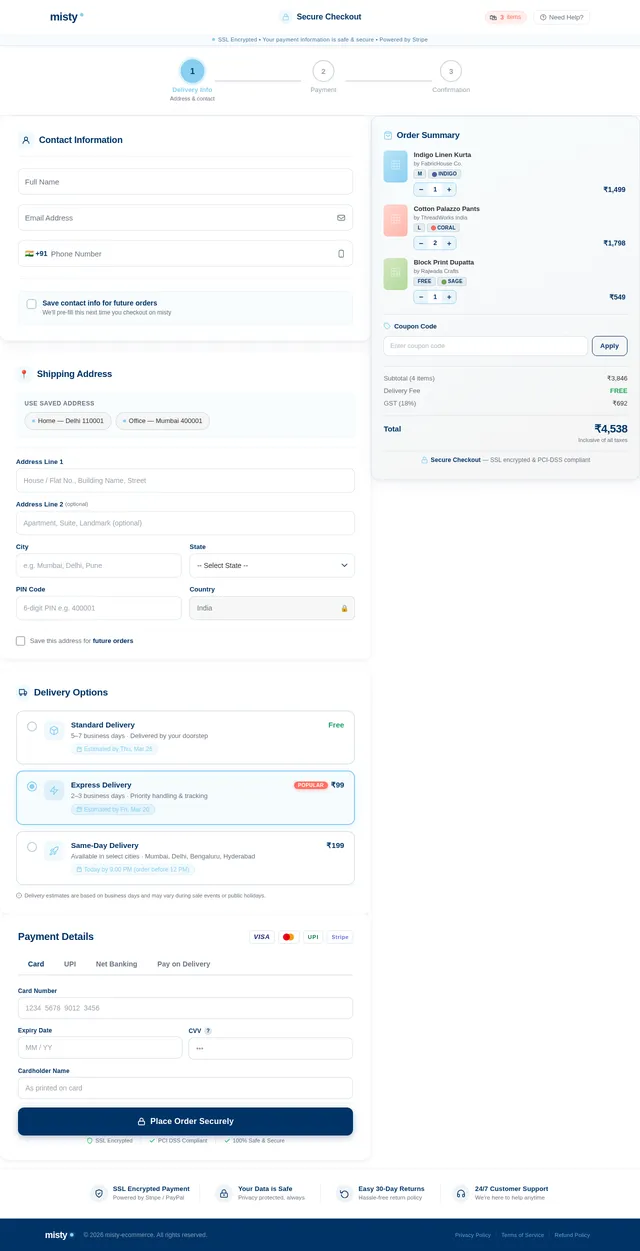
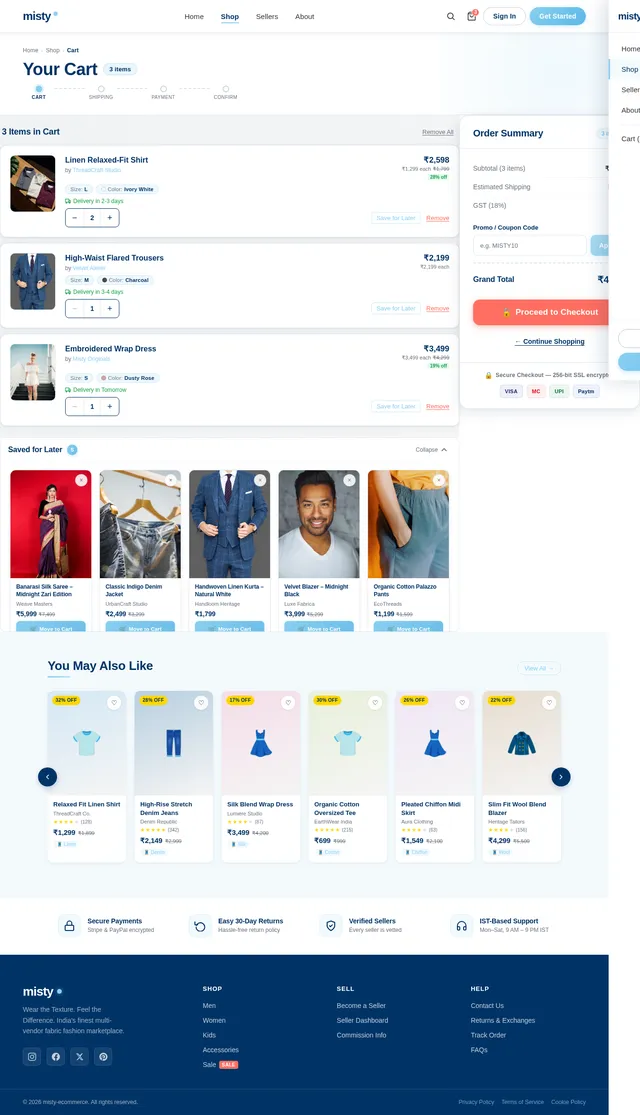
- Shopping cart and checkout flow.
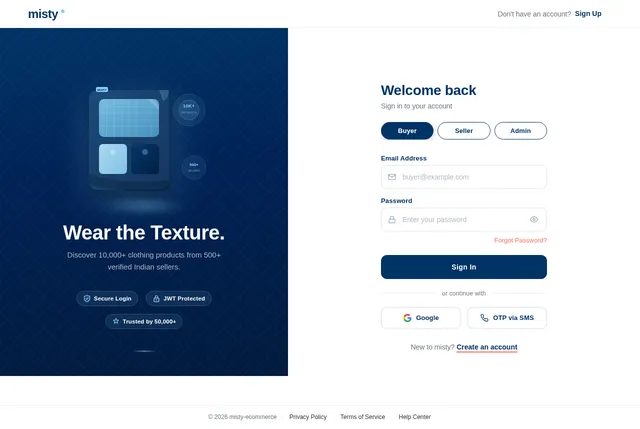
- User authentication and account management.
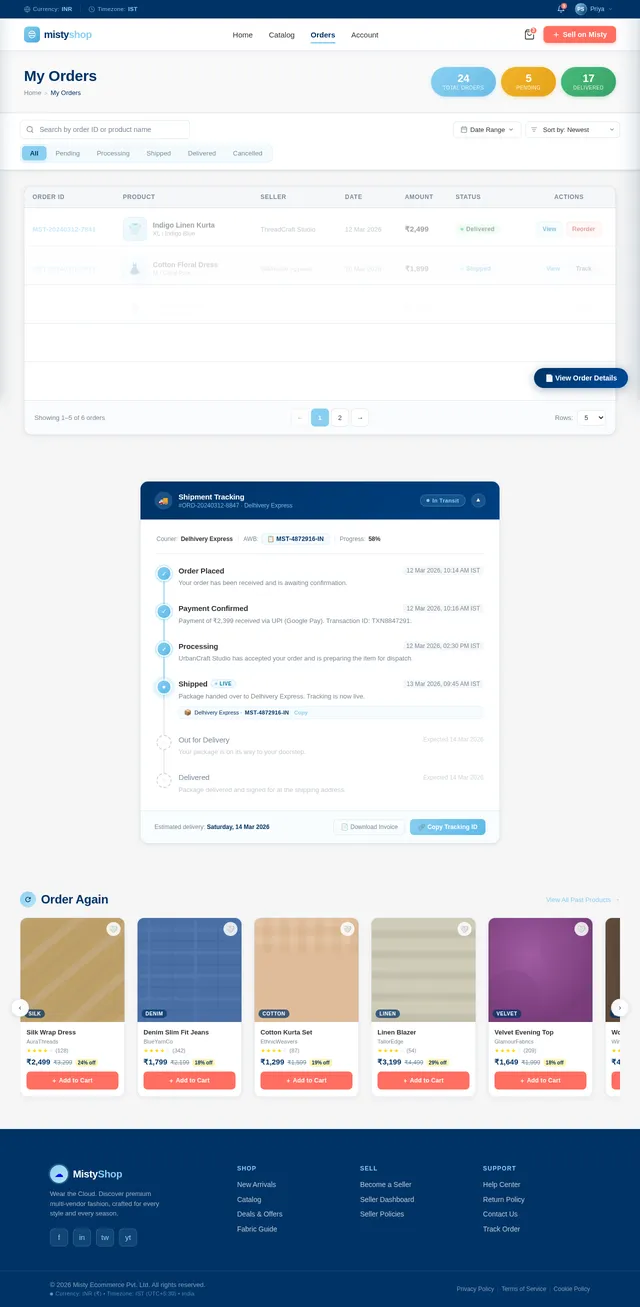
- Order tracking and history.
- Product reviews and ratings.
- Multi-vendor support with seller-specific dashboards.
- Payment gateway integration (Stripe/PayPal).
3. Functional Requirements
As a Buyer:
- I should be able to browse products with size and color variants.
- I should be able to filter and search for products by category, price, and ratings.
- I should be able to add products to a shopping cart and proceed to checkout.
- I should be able to track my orders and view order history.
- I should be able to leave reviews and ratings for purchased products.
As a Seller:
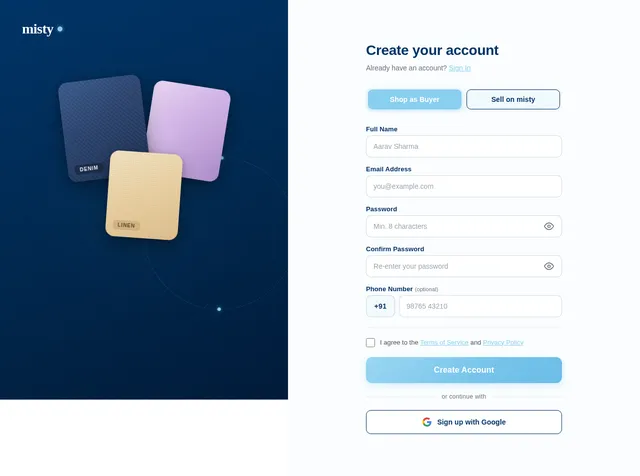
- I should be able to register as a seller and manage my product listings.
- I should be able to view my sales performance and earnings.
- I should be able to track orders placed for my products.
- I should be able to upload product images and manage inventory.
As an Admin:
- I should be able to approve or reject seller registrations.
- I should be able to moderate product listings and reviews.
- I should be able to view platform-wide analytics (e.g., total sales, vendor performance).
- I should be able to manage user accounts and resolve disputes.
4. User Personas
-
Buyer:
- Primary user of the platform.
- Browses products, adds items to the cart, and completes purchases.
-
Seller:
- Vendor who lists products on the platform.
- Manages inventory, tracks sales, and views earnings.
-
Admin:
- Oversees platform operations.
- Manages users, sellers, and product listings.
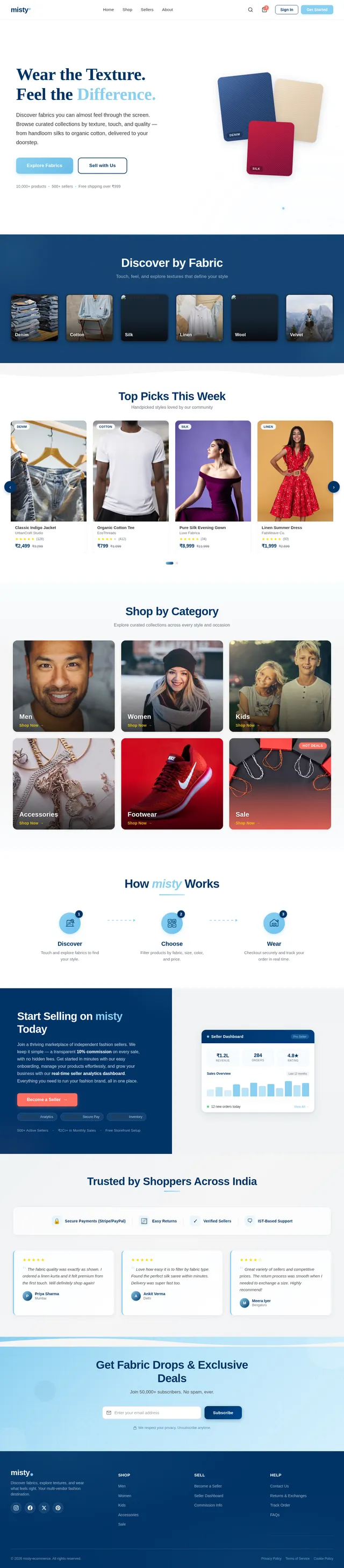
5. Visuals Colors and Theme
The misty-ecommerce platform will adopt a modern, clean, and vibrant design to enhance user engagement.
-
Primary Colors:
- Misty Blue (#89CFF0)
- Midnight Blue (#003366)
-
Accent Colors:
- Coral (#FF6F61)
- Soft Yellow (#FFD700)
-
Neutral Colors:
- White (#FFFFFF)
- Light Gray (#F5F5F5)
- Dark Gray (#333333)
The theme will focus on simplicity and elegance, ensuring a seamless user experience across all devices.
6. Signature Design Concept
Interactive Fabric Swatch Homepage:
The homepage will feature a dynamic fabric swatch interface where users can "touch" and explore different textures and patterns.
-
Visuals:
- A full-screen interactive grid of fabric swatches (e.g., denim, cotton, silk).
- Hovering over a swatch reveals a zoomed-in texture with product recommendations.
-
Animations:
- Smooth transitions between swatches.
- Micro-interactions like rippling effects when a swatch is clicked.
-
User Interaction:
- Clicking a swatch filters the product catalog by fabric type.
- A "Featured Products" carousel dynamically updates based on the selected swatch.
This concept will create a tactile and immersive experience, making the platform memorable and engaging.
7. Non-Functional Requirements
-
Performance:
- The platform should handle up to 10,000 concurrent users.
- API response times should not exceed 300ms under normal load.
-
Scalability:
- The system should support the addition of new vendors and products without significant performance degradation.
-
Security:
- All sensitive data (e.g., passwords, payment details) must be encrypted.
- Role-based access control to prevent unauthorized actions.
-
Availability:
- The platform should maintain 99.9% uptime.
-
Localization:
- Support for INR currency and Indian timezone (IST).
8. Tech Stack
Frontend:
- React
- Redux or React Query
- Axios
- Material UI
Backend:
- Node.js
- Express
- MongoDB
- Mongoose
- Multer (for file uploads)
- Stripe/PayPal SDKs
Admin Panel:
- React Admin
- Material UI
Deployment:
- Docker and Kubernetes for containerization and orchestration.
- Vercel for frontend hosting.
- AWS/GCP for backend and database hosting.
9. Assumptions and Constraints
- The platform will initially target the Indian market.
- Sellers are responsible for fulfilling orders and managing inventory.
- The platform will take a 10% commission on each sale.
- Initial deployment will use a monolithic architecture, with plans to refactor into microservices as the platform scales.
10. Glossary
- MERN Stack: MongoDB, Express, React, Node.js.
- Multi-Vendor: A platform where multiple sellers can list and sell products.
- JWT: JSON Web Token, used for authentication.
- IST: Indian Standard Time.
- INR: Indian Rupee.
This document provides a comprehensive roadmap for the development of misty-ecommerce. Let me know if you'd like to dive deeper into any specific section, Devops!
No comments yet. Be the first!