meta-qr
 Hackzilla Developer
build QR Code and named it Hackzilla QR
Comments (0)
Sign in to leave a comment
System Requirements
System Requirements Document (SRD)
Project Name: meta-qr
1. Introduction
The meta-qr project, also known as "Hackzilla QR," is a dynamic QR code generation system designed for individual users in Tanzania (TZ). The system enables users to create, customize, and manage QR codes for various purposes, including URLs, WiFi credentials, phone calls, SMS, email, and file/image upload links. With a focus on modern, futuristic design and high scan reliability, meta-qr aims to provide a seamless and user-friendly experience for generating personalized QR codes.
This document outlines the system requirements for the development of meta-qr, ensuring alignment with the project's goals and user expectations.
2. System Overview
The meta-qr system is a web-based platform that empowers users to generate dynamic QR codes with advanced customization options. The system will support the following key features:
- Generation of multiple QR code types (URL, WiFi, phone call, SMS, email, file/image upload links).
- Dynamic QR codes that allow content updates after creation.
- Customization options, including color schemes, logo embedding, and error correction levels.
- A futuristic and modern design aesthetic for QR codes.
- High scan reliability across various devices and environments.
The system will cater exclusively to individual users, providing a lightweight and intuitive interface without the complexity of business-oriented features like analytics or tracking.
3. Functional Requirements
- As a User, I should be able to generate QR codes for URLs, WiFi credentials, phone calls, SMS, email, and file/image upload links.
- As a User, I should be able to customize the QR code's colors, logo, and error correction levels.
- As a User, I should be able to create dynamic QR codes that allow me to update the content after the QR code has been generated.
- As a User, I should be able to download the generated QR code in high-resolution formats (e.g., PNG, SVG).
- As a User, I should be able to preview the QR code before downloading it.
- As a User, I should be able to reset or clear the input fields to start over.
4. User Personas
4.1 Individual User
- Description: A tech-savvy individual looking to create personalized QR codes for personal use, such as sharing WiFi credentials, contact information, or links to personal projects.
- Goals:
- Generate QR codes quickly and easily.
- Customize QR codes to reflect personal style or branding.
- Ensure QR codes are reliable and scannable.
- Pain Points:
- Limited customization options in existing tools.
- Difficulty in updating QR code content after creation.
5. Visuals Colors and Theme
The visual identity of meta-qr will reflect a modern, futuristic aesthetic with a clean and vibrant color palette. The following hex codes define the project's unique color scheme:
- Background:
#0A0F1F(Deep Midnight Blue) - Surface:
#1C2A3A(Slate Blue-Gray) - Text:
#E8F1F8(Soft Ice White) - Accent:
#4FD1C5(Aqua Mint) - Muted Tones:
#7A869A(Muted Steel Gray)
This palette ensures a sleek, high-tech look while maintaining readability and visual appeal.
6. Signature Design Concept
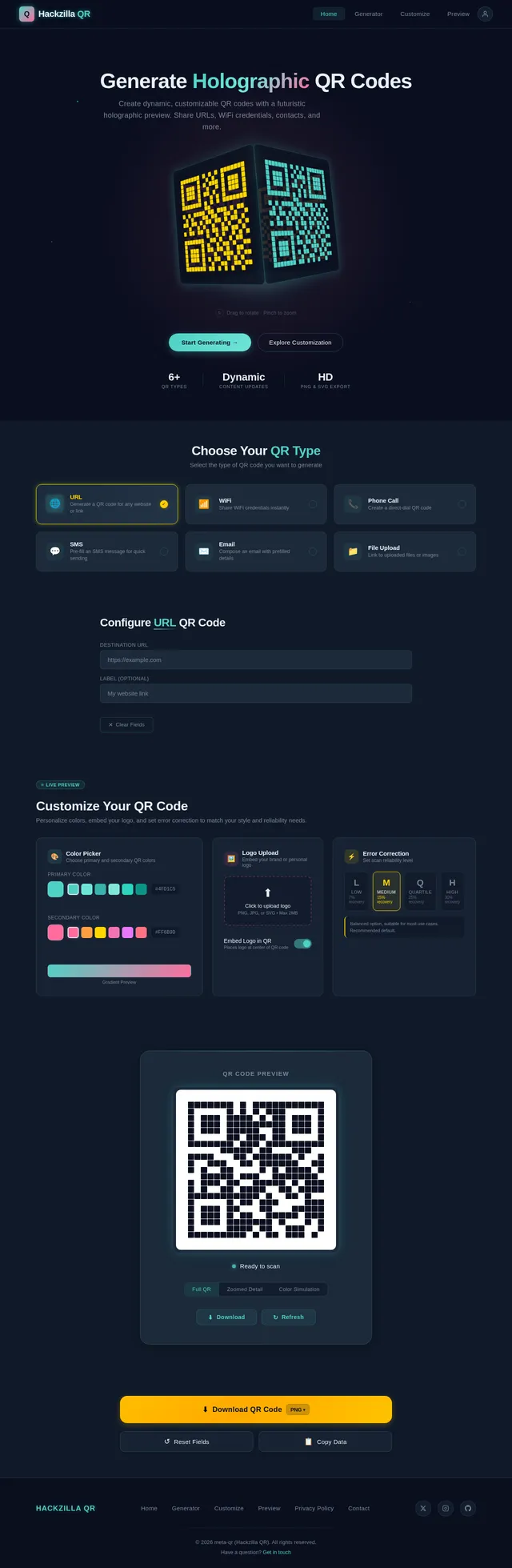
The homepage of meta-qr will feature an interactive holographic QR code generator.
Concept Details:
- Visuals: The homepage will display a 3D holographic QR code that rotates slowly in the center of the screen. Users can interact with the hologram by dragging it to rotate or zoom in/out.
- Customization in Real-Time: As users select customization options (e.g., colors, logos), the holographic QR code updates dynamically, showcasing the changes in real-time.
- Background Animation: A subtle, animated grid of glowing lines will move gently in the background, evoking a futuristic, high-tech atmosphere.
- Micro-Interactions: Buttons and sliders will have smooth animations, with hover effects that mimic the glow of neon lights.
- Transitions: Page transitions will use a "fade-in hologram" effect, where elements appear as if materializing from light beams.
This bold design will make meta-qr instantly memorable and engaging, setting it apart from traditional QR code generators.
7. Non-Functional Requirements
- The system must load within 3 seconds on a standard 4G connection.
- The QR codes generated must maintain a minimum scan success rate of 99% across devices.
- The platform must support responsive design for optimal usability on both desktop and mobile devices.
- The system must adhere to accessibility standards (e.g., WCAG 2.1 Level AA).
- The platform must support English as the primary language.
8. Tech Stack
Frontend
- React for Web
Backend
- Python
- FastAPI
Database
- MySQL (with Alembic for migrations)
AI Tools
- Litellm for LLM Routing
Local Orchestration
- Docker
- docker-compose
9. Assumptions and Constraints
- The system will target individual users only, with no features for business analytics or tracking.
- The system will operate in the Tanzanian context, assuming a primary user base in TZ.
- The system will not include a mobile app initially but will be optimized for mobile web browsers.
- The system will not support offline QR code generation.
10. Glossary
- Dynamic QR Code: A QR code that allows its content to be updated after creation.
- Error Correction Level: A feature of QR codes that allows them to remain scannable even if partially damaged.
- Holographic Design: A visual effect that simulates a 3D, futuristic appearance.
- LLM Routing: The process of directing queries to the most appropriate large language model for processing.
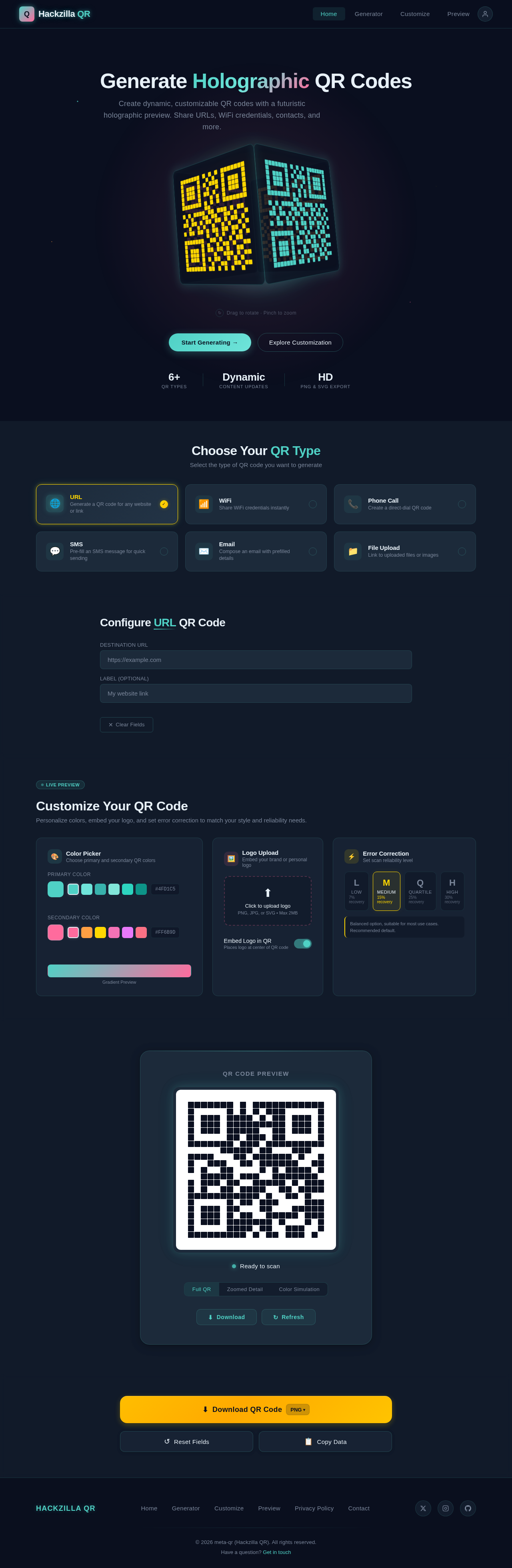
Generate Holographic QR Codes
Create dynamic, customizable QR codes with a futuristic holographic preview. Share URLs, WiFi credentials, contacts, and more.
Choose Your QR Type
Select the type of QR code you want to generate
Configure URL QR Code
Customize Your QR Code
Personalize colors, embed your logo, and set error correction to match your style and reliability needs.
QR Code Preview
No comments yet. Be the first!