mars-pages
 lyndal chase
create a flow chart for an app design that is for a tourism app for bali. It needs the following pages: home/welcome, places to stay (budget accommodation, medium and expensive accommodation), places to eat (budget, medium to expensive), places to explore using a map. It also needs a sign up/register or login page.
Comments (0)
Sign in to leave a comment
System Requirements
System Requirements Document (SRD)
Project Name: mars-pages
1. Introduction
The mars-pages project is a tourism-focused application designed to provide users with a comprehensive guide to exploring Bali. The app offers categorized recommendations for accommodations, dining, and attractions, ensuring inclusivity for various budgets. With an interactive map and a personalized user experience, mars-pages aims to enhance the way tourists discover and navigate Bali.
This document outlines the system requirements for mars-pages, including functional and non-functional requirements, user personas, design concepts, and technical specifications.
2. System Overview
The mars-pages application is a mobile and web-based platform that allows users to:
- Discover accommodations and dining options categorized by budget.
- Explore Bali's attractions through an interactive map.
- Access personalized recommendations and features after logging in.
The system is designed to ensure a seamless and engaging user experience while maintaining secure access to protected features.
Key features include:
- A user-friendly interface with a vibrant and tropical theme.
- Secure authentication to access personalized content.
- Interactive map functionality for exploring attractions.
The app will cater to both local and international tourists, with a focus on accessibility and inclusivity.
3. Functional Requirements
Authentication and Access Control
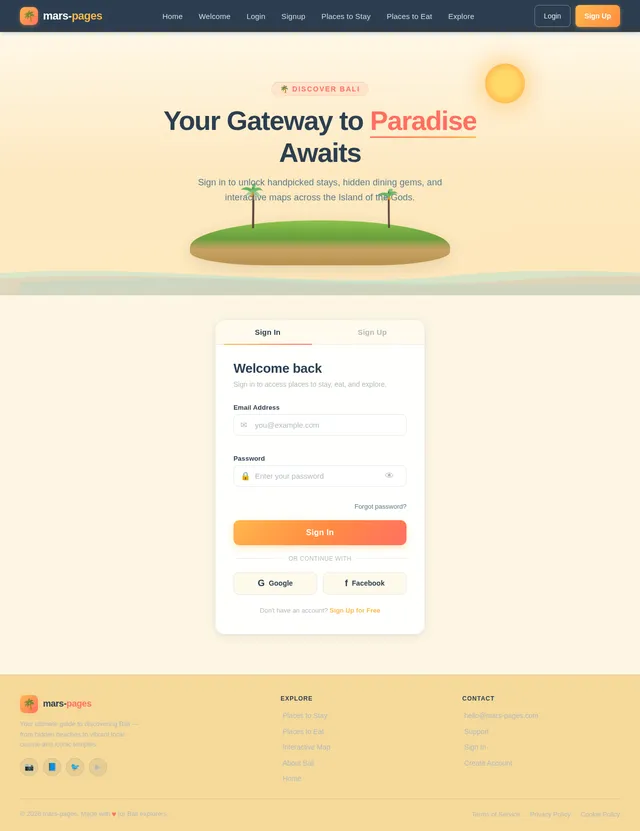
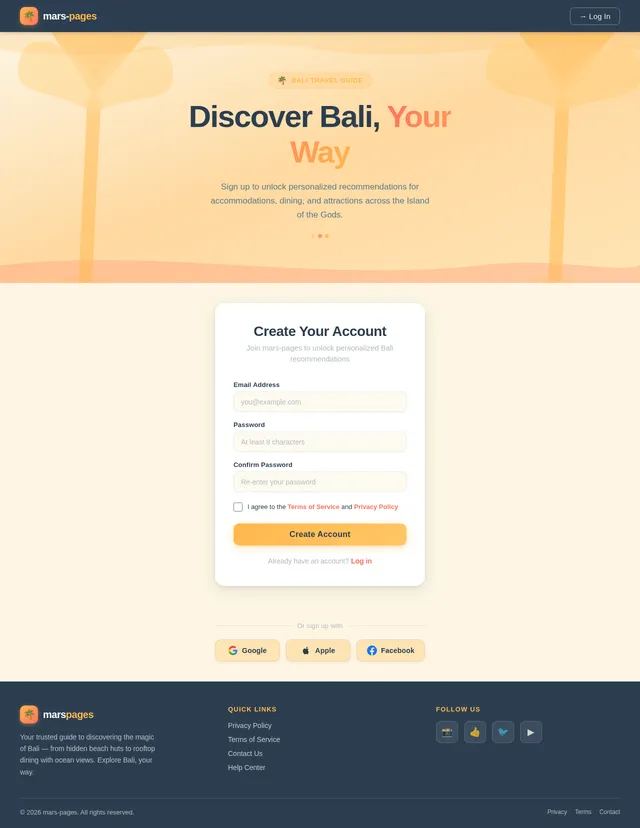
- As a User, I should be able to sign up or log in to access the app's features.
- As a User, I should not be able to access protected features (e.g., accommodations, dining, map) without logging in.
Home/Welcome Page
- As a Guest, I should be able to view a welcome page with an overview of the app's features.
Places to Stay
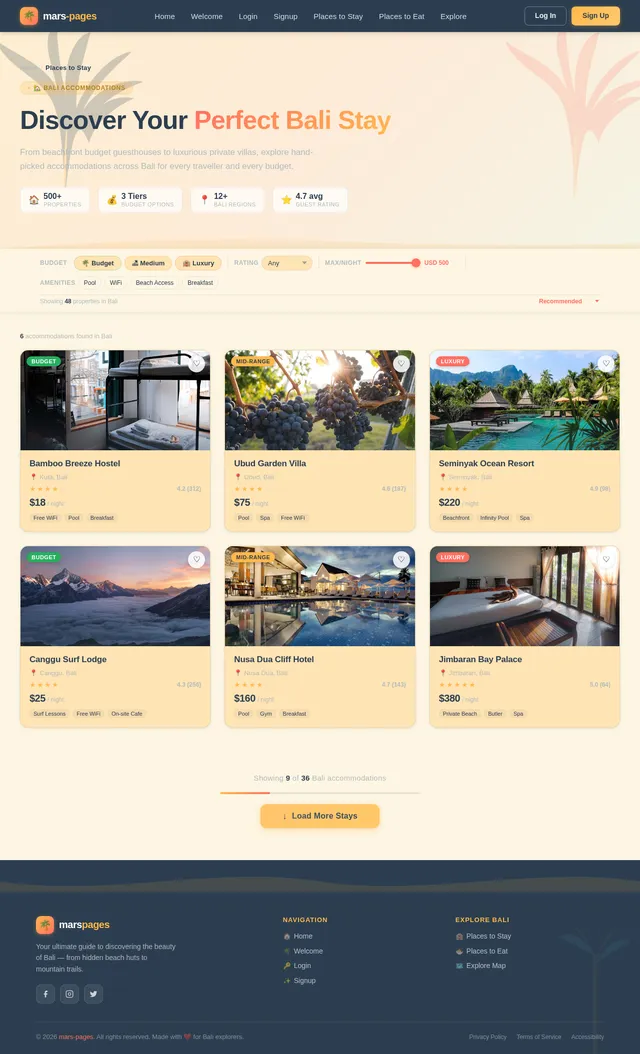
- As a User, I should be able to view accommodations categorized as budget, medium, or expensive.
Places to Eat
- As a User, I should be able to view dining options categorized as budget or medium to expensive.
Explore (Interactive Map)
- As a User, I should be able to explore attractions using an interactive map.
4. User Personas
Guest
- Description: A first-time visitor to the app who has not yet signed up or logged in.
- Access: Can only view the welcome page.
Registered User
- Description: A user who has signed up and logged in to the app.
- Access: Can access all features, including accommodations, dining, and the interactive map.
5. Visuals Colors and Theme
The mars-pages app will feature a vibrant, tropical-inspired color palette to reflect the essence of Bali.
- Background: #FDF6E3 (Soft Sand Beige)
- Surface: #FFE4B5 (Warm Peach)
- Text: #2C3E50 (Deep Ocean Blue)
- Accent: #FF6F61 (Sunset Coral)
- Muted Tones: #B2BABB (Calm Gray)
This palette creates a warm, inviting atmosphere while maintaining readability and usability.
6. Signature Design Concept
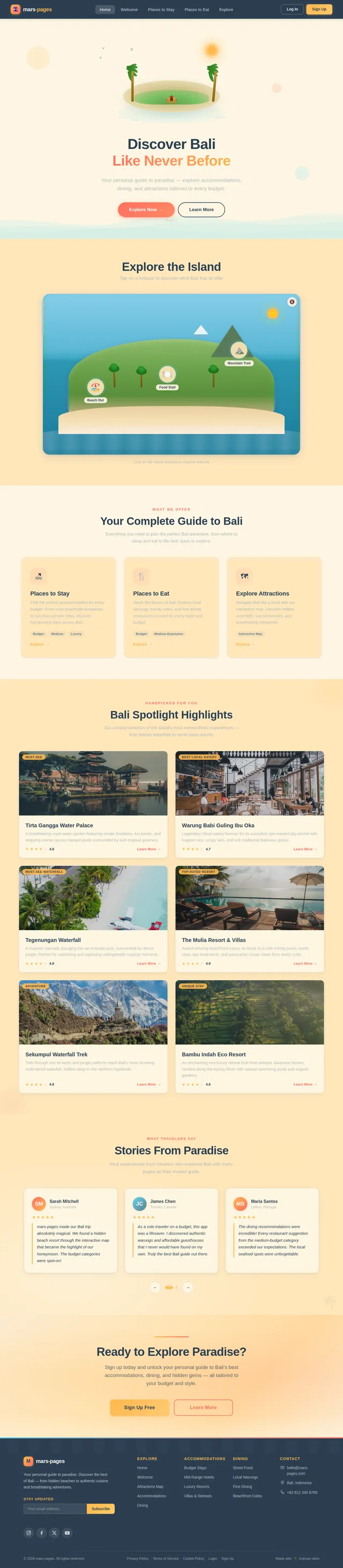
The mars-pages app will feature an interactive tropical island homepage as its signature design concept.
Concept Details:
- Visuals: The homepage will resemble a 3D tropical island with animated palm trees, waves, and birds.
- Navigation: Users can interact with the island by tapping or clicking on different areas to access features. For example:
- A beach hut for "Places to Stay."
- A food stall for "Places to Eat."
- A mountain trail for "Explore."
- Animations: Smooth transitions between sections, with elements like waves gently moving and birds flying across the screen.
- Micro-Interactions: Hover effects and subtle sound effects (e.g., ocean waves, chirping birds) to enhance engagement.
This design will create a memorable first impression and immerse users in the tropical theme of the app.
7. Non-Functional Requirements
- Performance: The app should load within 2 seconds on a standard 4G connection.
- Scalability: The system should support up to 100,000 concurrent users.
- Security: User data must be encrypted, and authentication should comply with industry standards (e.g., OAuth 2.0).
- Localization: The app should support English as the default language, with options for other languages in future updates.
- Accessibility: The app should comply with WCAG 2.1 AA standards.
8. Tech Stack
Frontend
- React for Web
- React Native for Mobile
Backend
- Python
- FastAPI
Database
- MySQL (with Alembic for migrations)
AI Tools
- GPT 5.4 for user-friendly responses
- Google Nano Banana for image generation
Orchestration
- Docker for local development
- Kubernetes for server-side orchestration
9. Assumptions and Constraints
Assumptions
- Users will have internet access while using the app.
- The app will initially target English-speaking users.
Constraints
- The app must comply with Australian data privacy laws.
- Budget constraints may limit the use of advanced AI features in the initial release.
10. Glossary
- Guest: A user who has not logged in to the app.
- Registered User: A user who has signed up and logged in to the app.
- Interactive Map: A feature that allows users to explore attractions visually on a map.
- OAuth 2.0: An industry-standard protocol for secure authentication.
- WCAG 2.1 AA: Web Content Accessibility Guidelines, ensuring the app is accessible to users with disabilities.
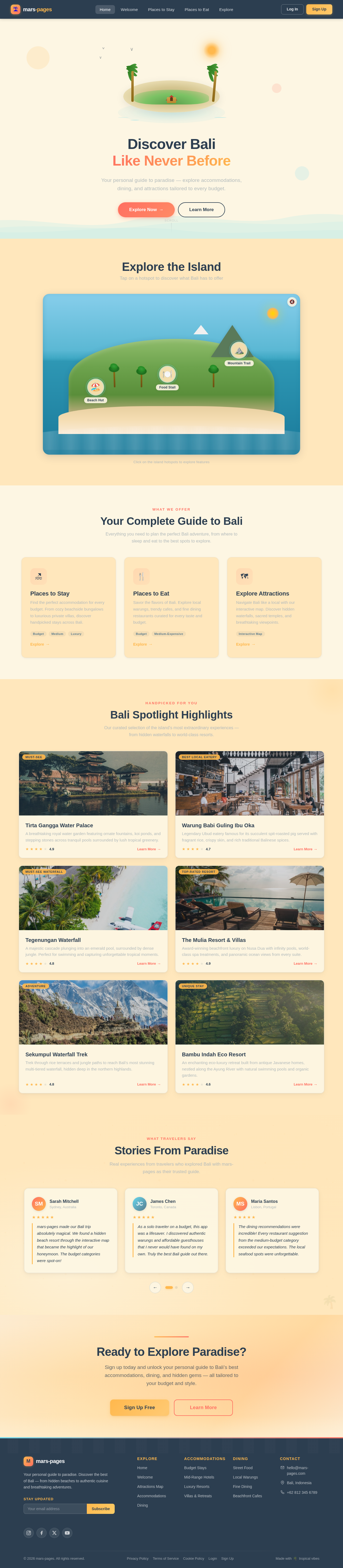
Discover BaliLike Never Before
Your personal guide to paradise — explore accommodations, dining, and attractions tailored to every budget.
Explore the Island
Tap on a hotspot to discover what Bali has to offer
Discover handpicked accommodations from budget-friendly bungalows to luxury beachfront villas across Bali.
Discover More →Explore the best local warungs, hidden eateries, and fine dining spots serving authentic Balinese cuisine.
Discover More →Navigate Bali's stunning attractions with our interactive map — waterfalls, temples, rice terraces, and more.
Discover More →Discover handpicked accommodations from budget-friendly bungalows to luxury beachfront villas across Bali.
Discover More →Explore the best local warungs, hidden eateries, and fine dining spots serving authentic Balinese cuisine.
Discover More →Navigate Bali's stunning attractions with our interactive map — waterfalls, temples, rice terraces, and more.
Discover More →Click on the island hotspots to explore features
Your Complete Guide to Bali
Everything you need to plan the perfect Bali adventure, from where to sleep and eat to the best spots to explore.
Places to Stay
Find the perfect accommodation for every budget. From cozy beachside bungalows to luxurious private villas, discover handpicked stays across Bali.
Explore→Places to Eat
Savor the flavors of Bali. Explore local warungs, trendy cafes, and fine dining restaurants curated for every taste and budget.
Explore→Explore Attractions
Navigate Bali like a local with our interactive map. Discover hidden waterfalls, sacred temples, and breathtaking viewpoints.
Explore→Bali Spotlight Highlights
Our curated selection of the island's most extraordinary experiences — from hidden waterfalls to world-class resorts.
 Must-See
Tirta Gangga Water Palace
A breathtaking royal water garden featuring ornate fountains, koi ponds, and stepping stones across tranquil pools surrounded by lush tropical greenery.
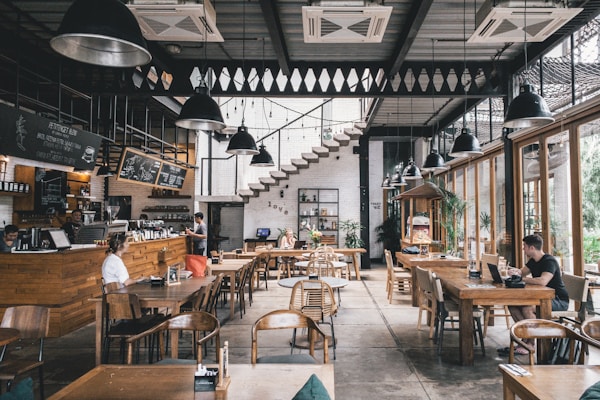 Best Local Eatery
Warung Babi Guling Ibu Oka
Legendary Ubud eatery famous for its succulent spit-roasted pig served with fragrant rice, crispy skin, and rich traditional Balinese spices.
 Must-See Waterfall
Tegenungan Waterfall
A majestic cascade plunging into an emerald pool, surrounded by dense jungle. Perfect for swimming and capturing unforgettable tropical moments.
 Top-Rated Resort
The Mulia Resort & Villas
Award-winning beachfront luxury on Nusa Dua with infinity pools, world-class spa treatments, and panoramic ocean views from every suite.
 Adventure
Sekumpul Waterfall Trek
Trek through rice terraces and jungle paths to reach Bali's most stunning multi-tiered waterfall, hidden deep in the northern highlands.
 Unique Stay
Bambu Indah Eco Resort
An enchanting eco-luxury retreat built from antique Javanese homes, nestled along the Ayung River with natural swimming pools and organic gardens.
Stories From Paradise
Real experiences from travelers who explored Bali with mars-pages as their trusted guide.
Ready to Explore Paradise?
Sign up today and unlock your personal guide to Bali’s best accommodations, dining, and hidden gems — all tailored to your budget and style.
No comments yet. Be the first!