lunar-muze
 Niku Solanki
muze candy crush saga jeva game banana hai pr thoda different

Comments (0)
Sign in to leave a comment
System Requirements
System Requirements Document (SRD)
Project Name: lunar-muze
1. Introduction
The lunar-muze project is a puzzle game inspired by the popular mechanics of Candy Crush Saga but with a unique twist. The goal is to retain the core gameplay experience of match-3 puzzles while incorporating distinct visual and functional variations that make the game feel fresh, engaging, and enjoyable for players. This document outlines the system requirements for the development of lunar-muze, ensuring a balance between familiarity and innovation.
The game is targeted primarily at the Indian market (IN), with a focus on creating a culturally resonant and universally appealing design.
2. System Overview
lunar-muze is a mobile-first puzzle game designed to captivate players with its addictive gameplay and unique aesthetic. The game will feature:
- A match-3 core mechanic with innovative power-ups and combos.
- A visually distinct theme that blends space exploration with vibrant, playful elements.
- A progression system that includes story-driven levels and special challenges.
- Multiplayer and social features to enhance engagement and competition.
The system will be developed for both Android and iOS platforms, with potential expansion to web-based gameplay.
3. Functional Requirements
Core Gameplay
- As a Player, I should be able to match 3 or more similar elements to score points.
- As a Player, I should be able to use unique power-ups that are visually and functionally distinct.
- As a Player, I should experience dynamic level designs with increasing difficulty.
Visual and Thematic Enhancements
- As a Player, I should feel immersed in a space-themed environment with vibrant and playful visuals.
- As a Player, I should see animations and effects that enhance the gameplay experience.
Progression and Challenges
- As a Player, I should be able to progress through story-driven levels with unique objectives.
- As a Player, I should encounter special challenges that offer rewards and variety.
Social and Multiplayer Features
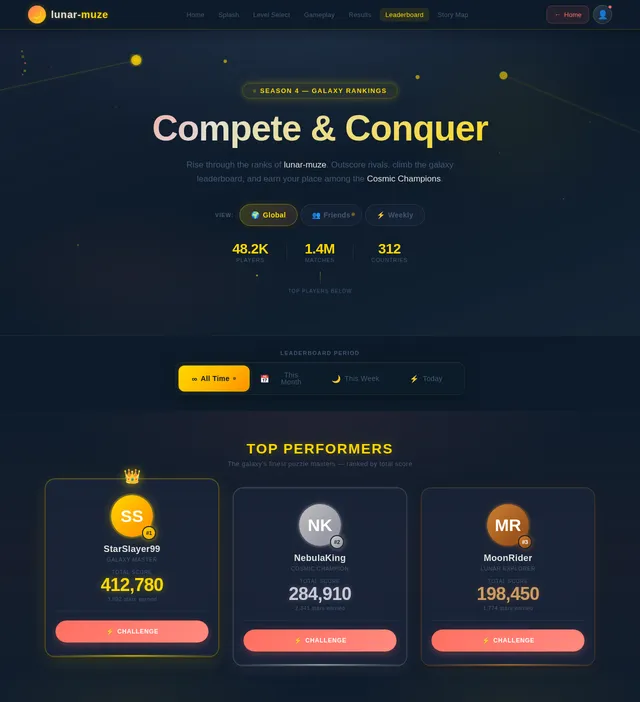
- As a Player, I should be able to compete with friends on leaderboards.
- As a Player, I should be able to send and receive in-game gifts or lives.
4. User Personas
1. Casual Player
- Description: Enjoys light, relaxing gameplay during breaks or leisure time.
- Goals: Wants a fun and visually appealing experience without steep learning curves.
2. Competitive Player
- Description: Seeks to achieve high scores and dominate leaderboards.
- Goals: Wants challenging levels, multiplayer features, and competitive rewards.
3. Explorer Player
- Description: Loves discovering new mechanics, themes, and storylines.
- Goals: Wants unique levels, engaging narratives, and innovative gameplay elements.
5. Visuals Colors and Theme
The lunar-muze color palette is inspired by the vastness of space and the vibrancy of playful elements.
- Background: #0D1B2A (Deep Space Blue)
- Surface: #1B263B (Midnight Navy)
- Text: #E0E1DD (Soft Lunar White)
- Accent: #FF6F61 (Cosmic Coral)
- Muted Tones: #415A77 (Nebula Gray)
These colors will create a visually striking yet calming environment, perfect for a puzzle game.
6. Signature Design Concept
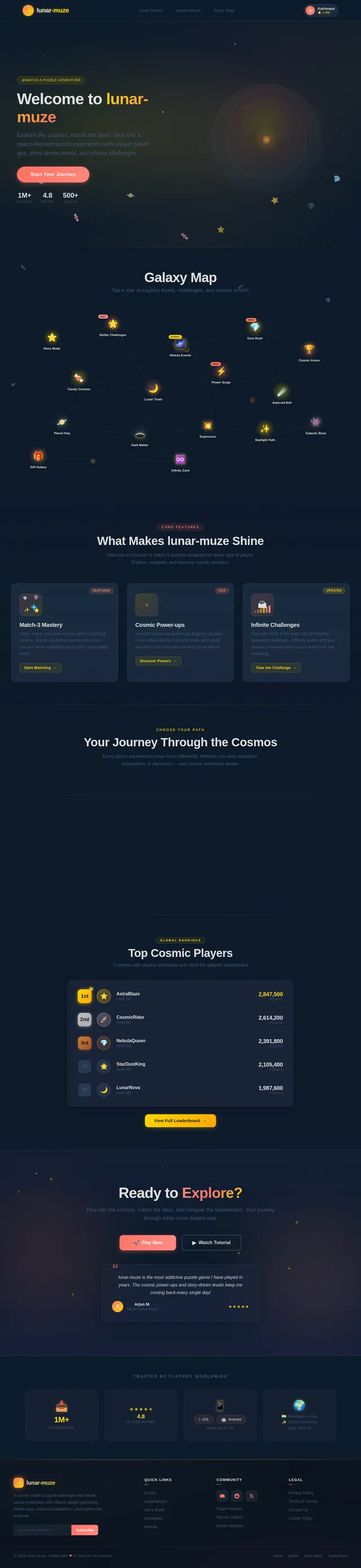
The lunar-muze homepage will feature an interactive galaxy map.
Concept Details:
- Visuals: The homepage will resemble a starry night sky, with constellations representing different game levels or features.
- Interaction: Players can tap on stars to zoom into specific levels or features, with smooth transitions and animations.
- Animations: Stars will twinkle subtly, and constellations will connect dynamically as players interact.
- Micro-interactions: Hovering over stars will display tooltips with level names or descriptions.
- Theme Integration: The map will include playful elements like floating candies, gems, or space-themed icons to tie into the gameplay.
This design will make the game instantly memorable and provide an immersive first impression.
7. Non-Functional Requirements
- The game should load within 3 seconds on modern smartphones.
- The UI/UX should be optimized for both Android and iOS devices.
- The game should support offline play for single-player levels.
- The multiplayer features should have minimal latency (<100ms).
- The system should handle up to 1 million concurrent users.
8. Tech Stack
Frontend
- React Native for mobile app development.
Backend
- Python with FastAPI for server-side logic.
Database
- MySQL for structured data (e.g., user profiles, leaderboards).
- MongoDB for unstructured data (e.g., game states, analytics).
AI Models
- GPT 5.4 for personalized in-game tips and hints.
- Google Nano Banana for generating space-themed visuals.
Orchestration
- Docker for local development.
- Kubernetes for server-side orchestration.
9. Assumptions and Constraints
- The game will primarily target the Indian market but should appeal to a global audience.
- The initial release will focus on mobile platforms, with web support planned for future updates.
- The game will be free-to-play with optional in-app purchases.
- Development will adhere to a 6-month timeline.
10. Glossary
- Match-3: A gameplay mechanic where players align three or more identical elements to score points.
- Power-ups: Special items or abilities that enhance gameplay.
- Leaderboards: A ranking system displaying top players.
- Constellations: Groups of stars representing game levels or features.
No comments yet. Be the first!