indigo-blog
 Hemen Ashodia
build an Ai blog website

Comments (0)
Sign in to leave a comment
Project Tasks20
Implement Theme & Base Structure
As a frontend developer, I want to implement the global color theme, typography, and layout structure across all pages so that the app visually matches the indigo-blog mock-design pages exactly. This includes: setting up CSS custom properties for Indigo (#4B0082), Gold (#FFD700), White, and Light Gray (#F5F5F5); configuring Open Sans (headings) and Merriweather (body) fonts; creating shared layout components (TopBar, Sidebar, Footer); removing any scaffold pages not present in the design (e.g. welcome page, ai-assistant page if not in designs); and ensuring all existing scaffold pages are wired to the new theme shell.
Build Landing Page
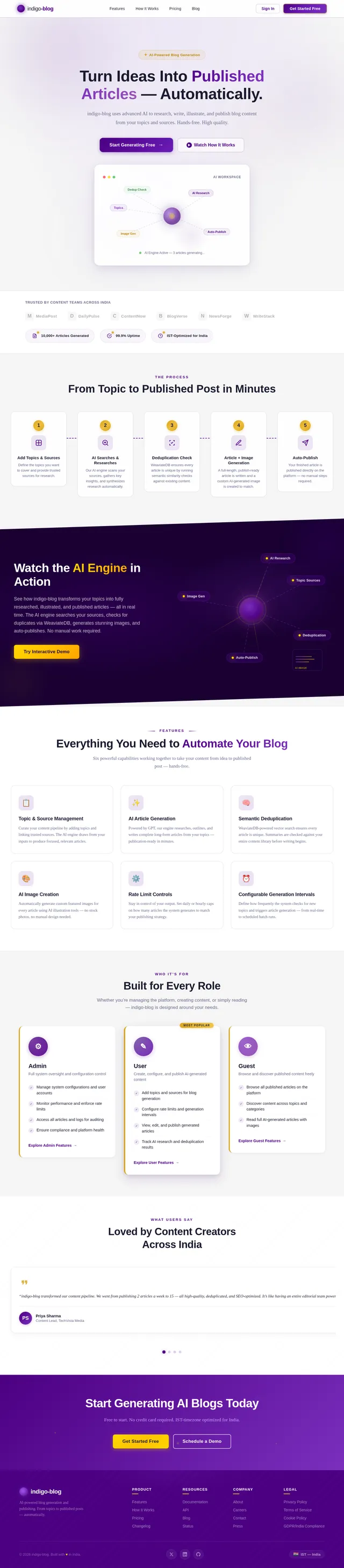
As a frontend developer, I want to implement the Landing page based on the existing Landing (v2) JSX design so that guests, users, and admins see an interactive AI workspace homepage. The page includes: a dynamic topic map with 3D floating nodes, a glowing AI orb animation for live article generation, a live image creation showcase, micro-interactions on hover, and a publishing celebration confetti animation. Entry point for all personas — links to Login and Blog. Remove any pre-existing scaffold home page and replace with this design.
Build Login Page
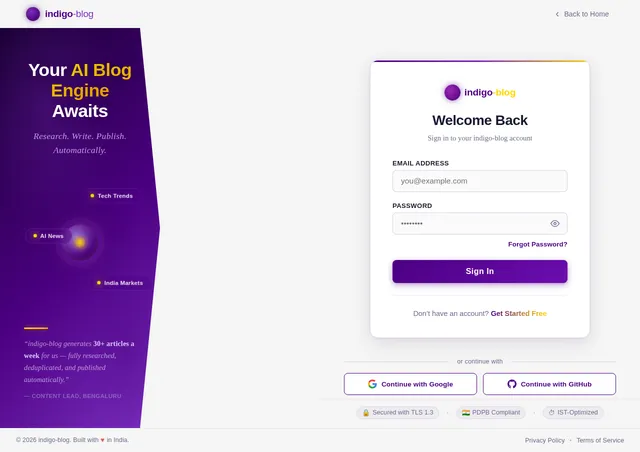
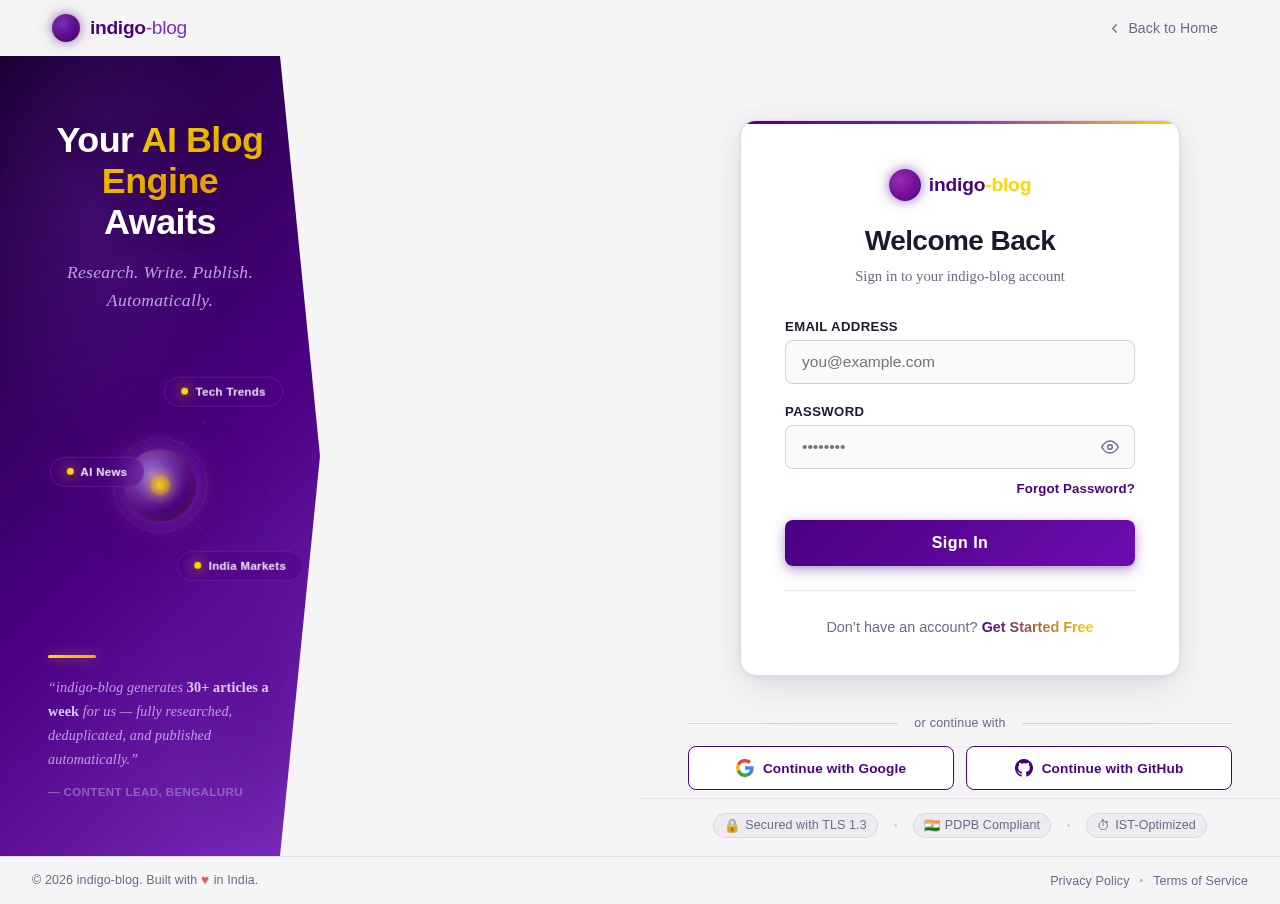
As a frontend developer, I want to implement the Login page based on the existing Login (v2) JSX design so that users and admins can sign in. The page includes email/password fields, validation, and navigation to the Dashboard on success. Follows the indigo-blog theme. Remove the scaffold login page and replace it with this design. Links from Landing page.
Build Article Detail Page
As a frontend developer, I want to implement the Article detail page based on the existing Article (v2) JSX design so that guests and users can read a full published blog post. The page includes: article title, AI-generated hero image, full article body, author/date metadata, and a back-to-blog navigation link. Accessible from the Blog page by guests and from Articles page by users.
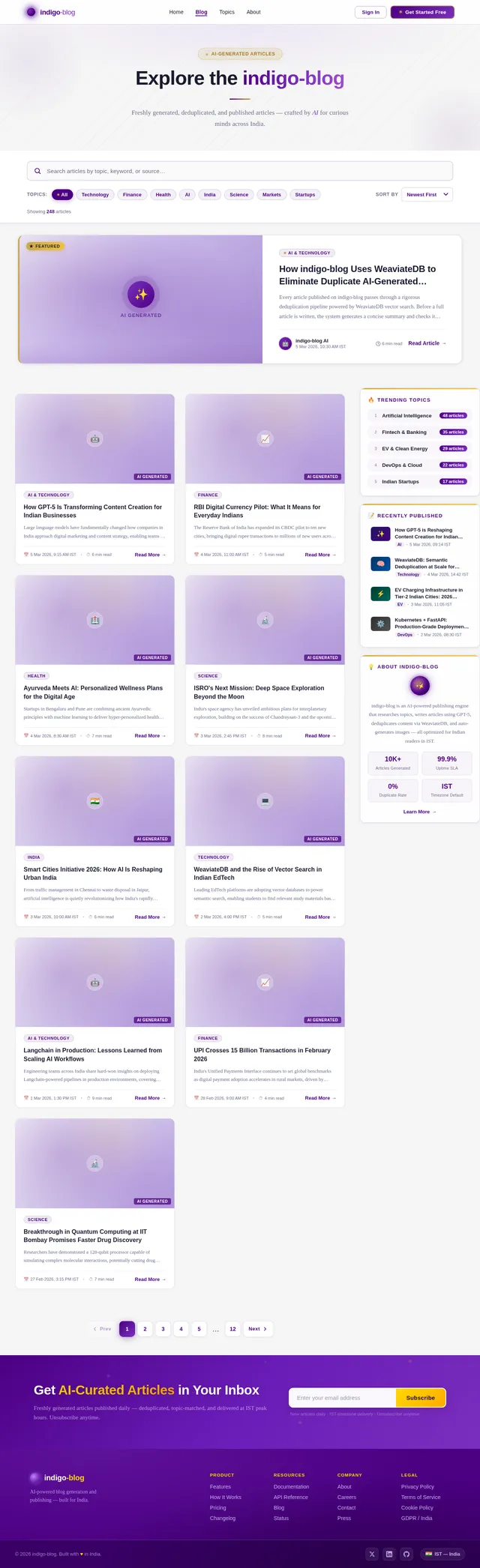
Build Blog Browse Page
As a frontend developer, I want to implement the Blog page based on the existing Blog (v2) JSX design so that guests can browse and search published articles. The page includes: a searchable article grid/list, category/tag filters, article cards with AI-generated thumbnails, and links to individual Article detail pages. Also provides a link to Login for guests wishing to sign in.
Topics & Sources API
As a backend developer, I want to implement REST API endpoints for topic and source management so that users can create, read, update, and delete topics and their associated sources. Endpoints: POST /topics, GET /topics, DELETE /topics/{id}, POST /topics/{id}/sources, DELETE /topics/{id}/sources/{source_id}. Uses MySQL via SQLAlchemy and Alembic migrations.
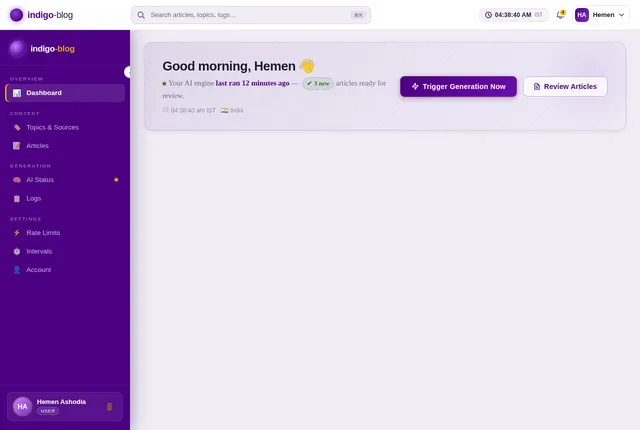
Build Dashboard Page
As a frontend developer, I want to implement the Dashboard page based on the existing Dashboard (v2) JSX design so that users and admins can view an overview of their stats, recent articles, and system activity. The page includes: stat cards, recent articles list, generation status indicators, and navigation to Topics, Articles, and Settings. Admin view also shows system monitoring and logs. Entry point after login.
Rate Limits & Intervals API
As a backend developer, I want to implement REST API endpoints for rate limit and interval configuration so that users can save and retrieve their generation preferences. Endpoints: GET /settings/rate-limits, PUT /settings/rate-limits, GET /settings/intervals, PUT /settings/intervals. Validates ranges per SRD constraints and stores in MySQL.
Article Generation Pipeline
As an AI engineer, I want to implement the end-to-end article generation pipeline so that the system can automatically search sources for given topics, generate article summaries, deduplicate via WeaviateDB, write full articles using GPT 5.2 via Litellm/Langchain, generate images using Google Nano Banana, and publish articles. Pipeline steps: 1) Source scraping per topic, 2) Story synthesis with GPT 5.2, 3) Summary generation + WeaviateDB deduplication check, 4) Full article generation if no duplicate, 5) Image generation, 6) Publish + save to WeaviateDB.
User Management Admin API
As a backend developer, I want to implement REST API endpoints for admin user management so that admins can list, view, update roles, suspend, and delete user accounts. Endpoints: GET /admin/users, GET /admin/users/{id}, PATCH /admin/users/{id}, POST /admin/users/{id}/suspend, DELETE /admin/users/{id}. Restricted to Admin role via RBAC middleware.
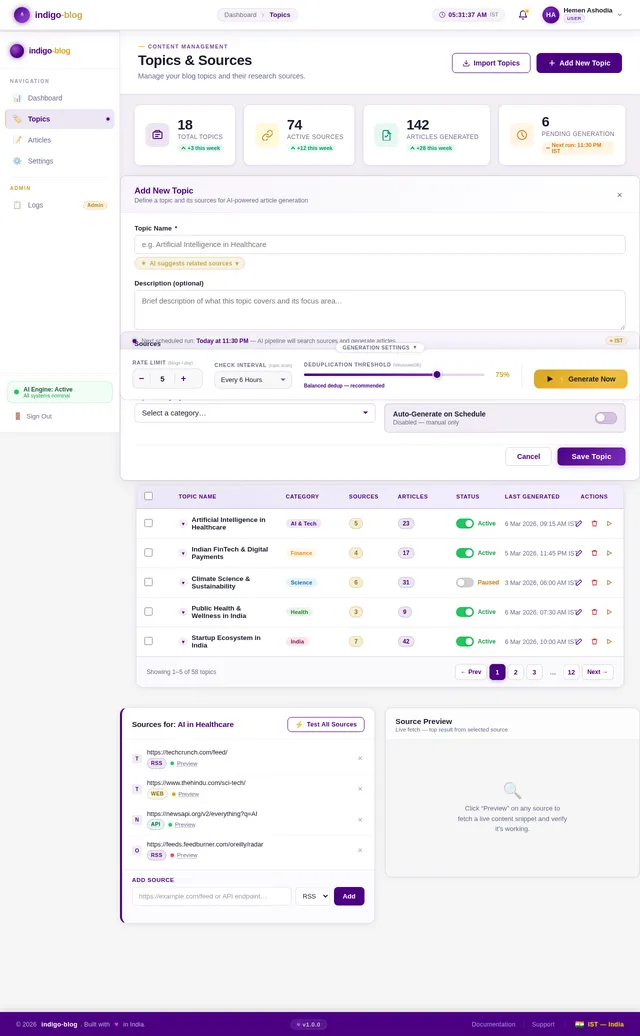
Build Topics Page
As a frontend developer, I want to implement the Topics page based on the existing Topics (v2) JSX design so that users can add, view, and manage their list of topics and associated sources. The page includes: a topic list panel, an 'Add Topic' form, a source management sub-panel per topic (add/remove sources), and status indicators for each topic. Links from Dashboard; leads to Settings for rate limit configuration.
Build Articles Page
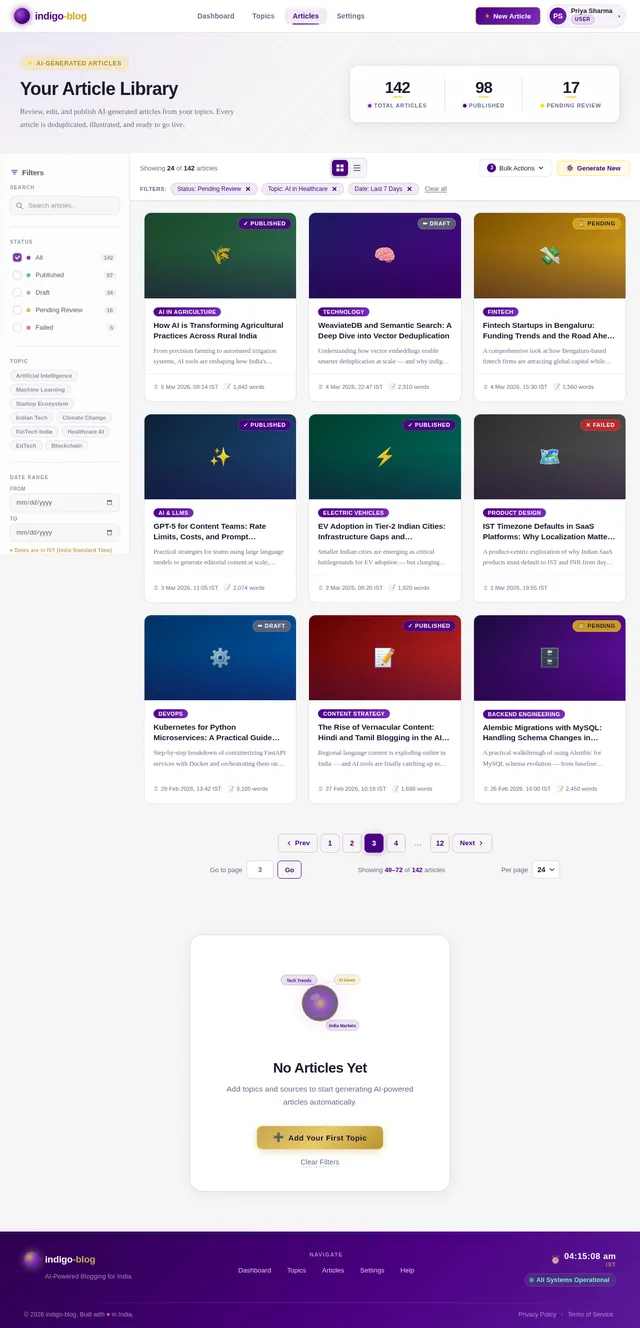
As a frontend developer, I want to implement the Articles page based on the existing Articles (v2) JSX design so that users can review AI-generated articles, edit them, and publish them. The page includes: a list/grid of generated articles with status badges (draft, published, duplicate-rejected), a preview panel, edit capability, and a publish action button. Admin can also audit all content. Links from Dashboard.
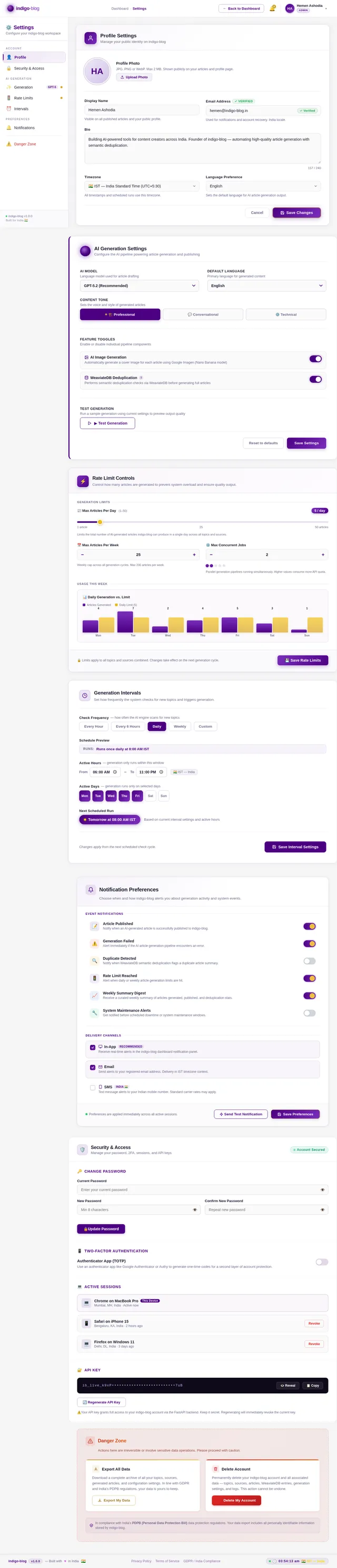
Build Settings Page
As a frontend developer, I want to implement the Settings page based on the existing Settings (v2) JSX design so that users can configure rate limits and generation intervals. The page includes: a rate limit slider/input (max articles per day/week), interval frequency selector (hourly, daily, weekly, custom cron), active hours picker, and a save button. Admin view includes additional system configuration options. Links from Topics and Dashboard.
Build Users Admin Page
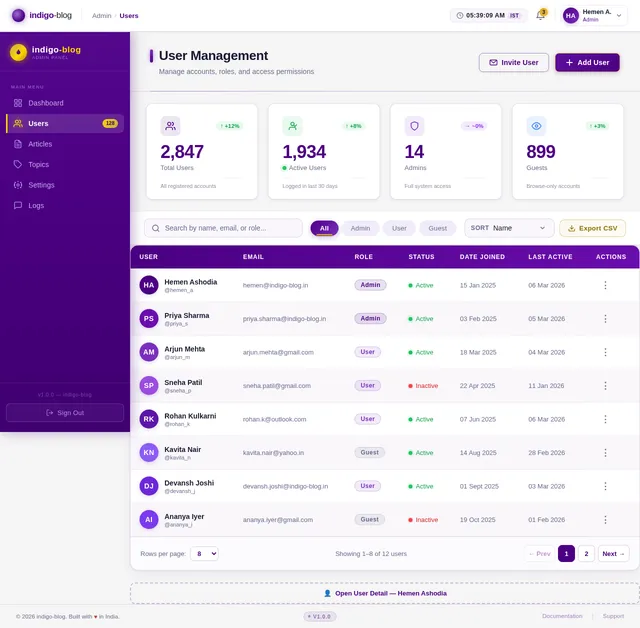
As a frontend developer, I want to implement the Users page based on the existing Users (v2) JSX design so that admins can manage user accounts. The page includes: a searchable user table with role badges (Admin/User/Guest), status indicators, action menus (edit, suspend, delete), a user detail slide-in drawer with profile, activity, and permissions tabs, and pagination. Links from Dashboard (admin flow only).
WeaviateDB Integration & Deduplication
As a data engineer, I want to integrate WeaviateDB into the article pipeline so that generated article summaries are checked for semantic duplicates before full generation, and published articles are saved for future deduplication. Includes: WeaviateDB schema setup for article vectors, similarity search query on summary embedding, insert-on-publish flow, and a deduplication threshold configuration.
Generation Scheduler Service
As a backend developer, I want to implement a scheduler service so that the system automatically triggers topic searches and article generation at user-configured intervals. Supports: hourly, every 6 hours, daily, weekly, and custom cron expressions. Respects per-user rate limits. Uses Celery or APScheduler with Redis/MySQL for job state. Exposes next-run timestamp via API.
Articles CRUD & Publish API
As a backend developer, I want to implement REST API endpoints for article management so that users can list, retrieve, edit, and publish generated articles. Endpoints: GET /articles, GET /articles/{id}, PATCH /articles/{id}, POST /articles/{id}/publish, DELETE /articles/{id}. Returns article metadata, content, status (draft/published/rejected), and AI-generated image URL.
Public Blog & Article Read API
As a backend developer, I want to implement public REST API endpoints so that guests can browse, search, and read published blog articles without authentication. Endpoints: GET /blog/articles (with search and filter params), GET /blog/articles/{slug}. Returns published articles with full content, images, and metadata. No auth required.
Dashboard Stats & Logs API
As a backend developer, I want to implement REST API endpoints for dashboard statistics and system logs so that users see their generation overview and admins can monitor system activity. Endpoints: GET /dashboard/stats (articles generated, published, rate limit usage), GET /admin/logs (paginated system activity log). Aggregates data from MySQL and generation pipeline.
Wire Frontend to Backend APIs
As a frontend developer, I want to connect all implemented pages to their respective backend API endpoints so that the application is fully functional end-to-end. This includes: setting up an Axios/Fetch API client with auth token injection, connecting Topics page to Topics & Sources API, Articles page to Articles CRUD API, Settings page to Rate Limits & Intervals API, Dashboard to Stats API, Users page to User Management API, and Blog/Article pages to Public Blog API. Handle loading, error, and empty states on all pages.
No comments yet. Be the first!