frosty-project
 Netfotech Team AI
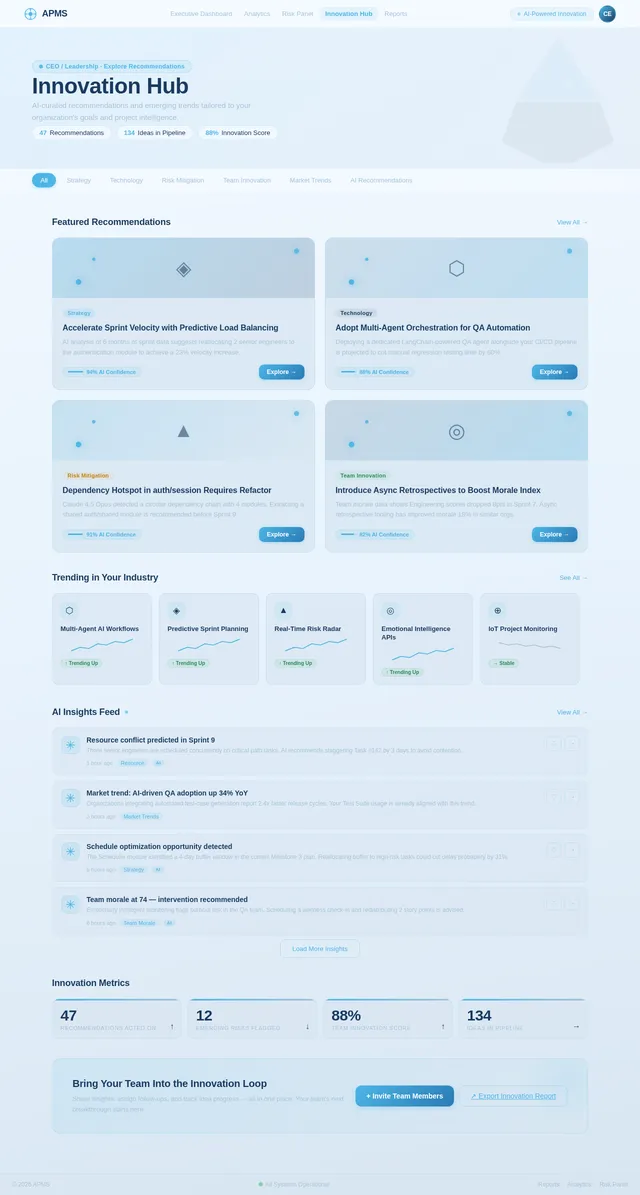
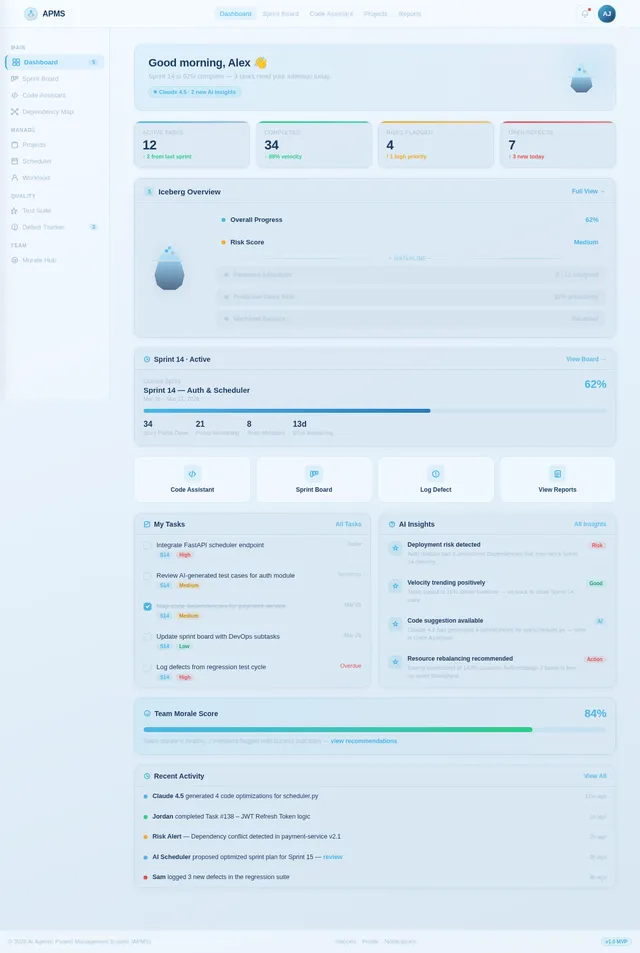
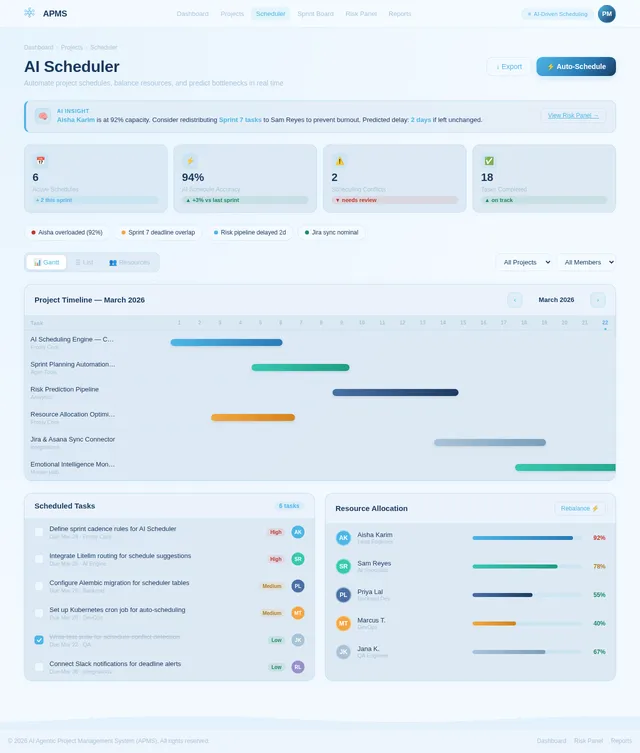
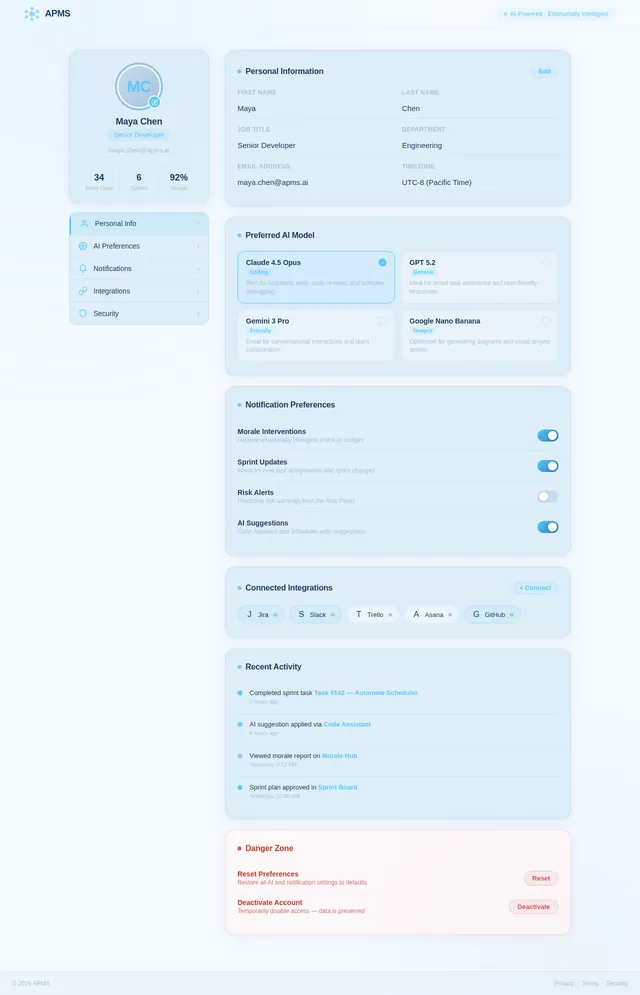
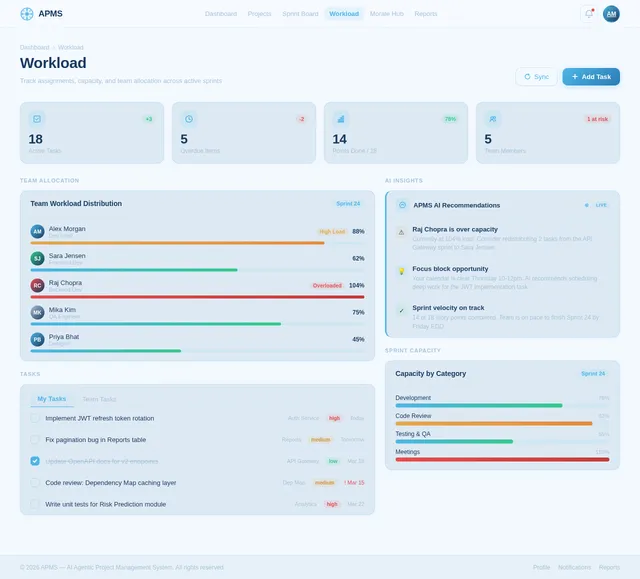
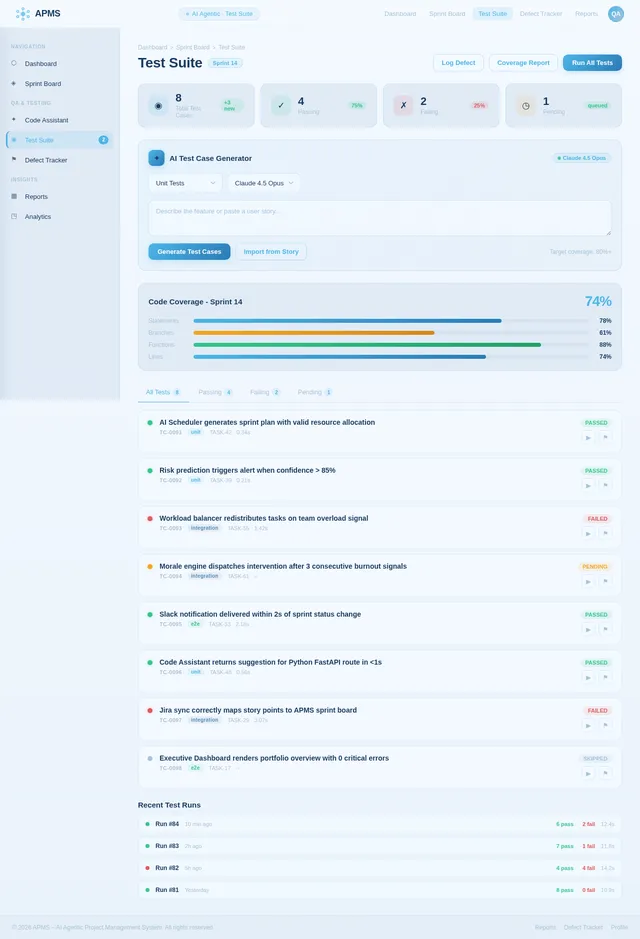
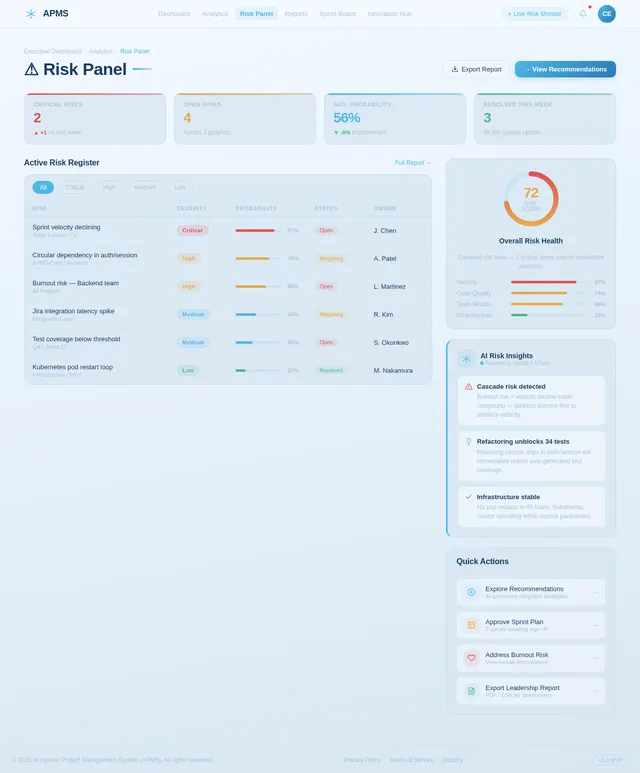
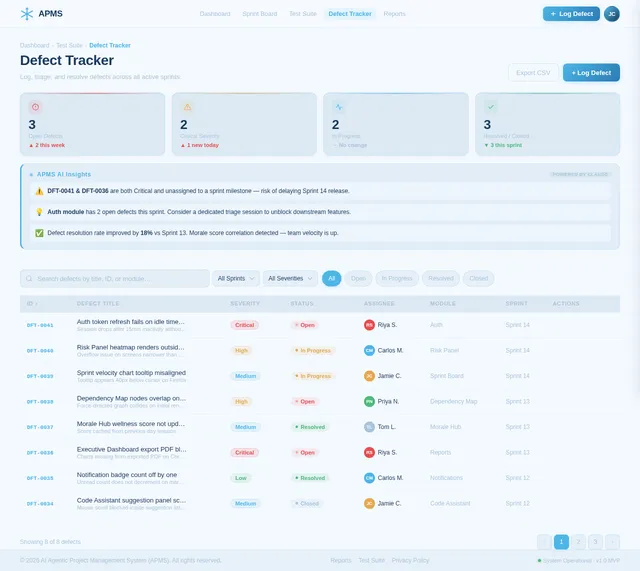
📘 Business Requirements Document (BRD) AI Agentic Project Management System (APMS) A Multi Agent, Emotionally Intelligent, Predictive, and Fully Integrated Project Management AI 1. Executive Summary The AI Agentic Project Management System (APMS) is an advanced, multi agent AI ecosystem designed to automate, optimize, and elevate project management across modern enterprises. It integrates seamlessly with leading project management platforms (Jira, Trello, Asana, Monday, MS Project), collaboration tools (Slack, SharePoint, Confluence), and IoT devices to deliver end to end project intelligence. APMS transforms raw project data into actionable insights, automates scheduling and resource allocation, predicts risks, balances workloads, and enhances team morale through emotionally intelligent interventions. It also includes Agile driven multi agent collaboration for software development, enabling autonomous sprint planning, code dependency mapping, and smart task assignment. This system reduces manual overhead, prevents burnout, accelerates delivery, and strengthens organizational decision making. 2. Business Objectives Primary Goals • Automate project planning, scheduling, and resource allocation. • Reduce project delays through predictive analytics and early risk detection. • Improve team productivity and morale using emotionally intelligent AI. • Enhance collaboration across tools and departments. • Enable autonomous Agile software development through multi agent coordination. • Provide real time insights, alerts, and recommendations to project managers. • Minimize manual updates and administrative overhead. Strategic Impact • Faster project delivery • Higher team satisfaction • Reduced operational costs • Improved accuracy in planning and forecasting • Stronger alignment between business goals and execution 3. Scope • AI driven project scheduling, resource allocation, and risk management • Multi agent Agile system (Product Manager, Developer, Tester agents) • Integration with Jira, Trello, Asana, Monday, MS Project • Integration with Confluence, SharePoint, Slack • Predictive analytics for workload balancing and delay prediction • Emotionally intelligent team morale assessment • IoT based project monitoring • Automated reporting, approvals, and progress tracking • Code dependency graph generation and smart code modification suggestion 4. Functional Requirements 4.1 AI Project Manager Agent • Automates project scheduling based on priorities, dependencies, and team availability • Allocates resources dynamically • Generates risk assessments and mitigation plans • Converts raw data into actionable insights • Sends alerts for delays, bottlenecks, and pending tasks • Automates approvals and reporting workflows 4.2 Multi Agent Agile System - Agents & Responsibilities Product Manager Agent • Converts user inputs into epics, stories, and acceptance criteria • Prioritizes backlog using business value scoring • Plans sprints and defines release timelines Developer Agent • Generates code suggestions • Creates and updates code dependency graphs • Suggests modifications based on new requirements • Collaborates with Tester agent for quality assurance Tester Agent • Generates test cases automatically • Executes automated tests where possible • Flags defects and suggests fixes Collaboration Features • Agents communicate autonomously • Sprint planning and retrospectives automated • Smart task assignment based on skill, workload, and past performance 4.3 Predictive Analytics Engine • Predicts project delays using historical and real time data • Balances workloads to prevent burnout • Forecasts resource shortages • Recommends optimal sprint lengths and team compositions • Detects inefficiencies and suggests process improvements 4.4 Emotionally Intelligent AI • Monitors team morale through sentiment analysis (Slack, emails, stand ups) • Detects stress, burnout signals, and communication breakdowns • Suggests interventions (breaks, workload redistribution, recognition prompts) • Provides morale dashboards for managers 4.5 Hyper Personalization Engine • Tailors Agile workflows to individual strengths • Recommends tasks based on skill, preference, and performance patterns • Adjusts sprint velocity predictions per team member • Creates personalized learning and improvement suggestions 4.6 IoT Integration Layer [PHASE 2] • Connects with IoT devices for real time project monitoring • Tracks environmental conditions (manufacturing, construction, hardware labs) • Alerts managers about anomalies affecting project timelines • Enables automated logging of physical progress 4.7 AI Driven Innovation Engine • Scans market trends, competitor movements, and emerging technologies • Suggests new features, improvements, and innovation opportunities • Helps leadership stay ahead of industry shifts 4.8 Integrations Project Management Tools • Jira [Phase 1] • Trello • Asana [Phase 1] • Monday • Microsoft Project [Phase 1] Collaboration Tools • Slack • Microsoft Teams [Phase 1] • Confluence [Phase 1] Development Tools • GitHub • GitLab • Bitbucket 5. Non Functional Requirements 5.1 Performance • Real time insights with • Scalable to 10,000+ concurrent users 5.2 Security • Role based access control • Data encryption (in transit & at rest) • Compliance with GDPR, SOC2, ISO 27001 5.3 Reliability • 99.9% uptime • Automated failover and redundancy 5.4 Usability • Intuitive dashboards • Natural language interface • Multi device accessibility 6. User Stories Project Manager • “As a PM, I want automated scheduling so I can reduce manual planning time.” • “As a PM, I want risk predictions so I can prevent delays.” Developer • “As a developer, I want AI generated code suggestions to speed up development.” Tester • “As a tester, I want automated test case generation to improve coverage.” Leadership • “As a CEO, I want predictive insights to make informed decisions.” 7. Future Enhancements • Autonomous project execution • Voice driven project management • Cross company multi agent collaboration • Digital twin simulations for project forecasting Workflow diagrams 1.1 High-level end-to-end workflow Actors: • User / Project Manager • AI Project Manager Agent • Product Manager Agent • Developer Agent • Tester Agent • Predictive Analytics Engine • Emotion AI Engine • Integrations Layer (Jira, Trello, Asana, Monday, MS Project, Confluence, SharePoint, Slack, IoT, Git, etc.) Diagram (logical flow – text description) • User / PM initiates interaction o Input: Natural language (chat/voice) or via PM tools (Jira, Trello, etc.). o Examples: “Create a project plan”, “Plan next sprint”, “Show risks for Release 2”. • AI Project Manager Agent interprets request o Parses intent, scope, constraints, deadlines. o Queries Integrations Layer for current project data (tasks, epics, resources, statuses). • Data aggregation & context building o Pulls from: Jira/Trello/Asana/Monday/MS Project (tasks, timelines, dependencies). Confluence/SharePoint (requirements, docs). Slack/Teams (communication patterns). Git/GitLab/Bitbucket (code activity). IoT feeds (where relevant). • Delegation to specialized agents o Product Manager Agent: backlog refinement, epic/story creation, prioritization. o Developer Agent: code dependency graph, implementation suggestions, impact analysis. o Tester Agent: test case generation, coverage planning, defect risk estimation. • Predictive Analytics Engine runs o Predicts: Delays Bottlenecks Resource overload Sprint success probability • Emotion AI Engine evaluates team morale o Analyzes: Slack/Teams sentiment Meeting notes Velocity trends vs. communication tone. o Flags: Burnout risk Frustration Communication breakdowns. o Suggests: Workload redistribution Recognition prompts Process tweaks. • Hyper-personalization layer adjusts plan o Tailors: Task assignments to strengths/preferences. Sprint load per individual. Learning recommendations. • User / PM review & approval Approves, edits, or rejects suggestions. Human-in-the-loop for critical changes. • Execution & continuous monitoring Agents continuously: Track progress Update tools (Jira, etc.) Recalculate risks Alert on deviations Adjust assignments. 1.2 Sprint planning & execution workflow (multi-agent) Flow 1. PM/User: “Plan next sprint for Project X with focus on Feature Y.” 2. AI PM Agent: o Fetches backlog, priorities, team capacity. 3. Product Manager Agent: o Selects stories for sprint. o Breaks down tasks if needed. 4. Developer Agent: o Builds/updates code dependency graph. o Estimates complexity. o Suggests implementation order. 5. Tester Agent: o Generates test cases for selected stories. o Plans test execution. 6. Predictive Analytics Engine: o Validates sprint feasibility. o Predicts risk of spillover. 7. Emotion AI Engine: o Checks current team load & morale. o Suggests adjustments if burnout risk is high. Updates Jira/Trello/etc. 8. AI PM Agent: o Finalizes sprint plan. o Updates Jira/Trello/etc. 9. During sprint: o Agents monitor: Task progress Code changes Test results Communication signals. o Trigger: Alerts Reassignments Risk updates. 10. End of sprint: o Auto-generated: Sprint report Retrospective insights Improvement suggestions.

Comments (0)
Sign in to leave a comment
System Requirements
System Requirements Document (SRD)
Project Name: AI Agentic Project Management System (APMS)
1. Introduction
The AI Agentic Project Management System (APMS) is an advanced, multi-agent, emotionally intelligent, predictive, and fully integrated project management AI system. Designed to cater to large enterprises, mid-sized businesses, and startups, APMS aims to revolutionize project management by automating workflows, optimizing resource allocation, predicting risks, and enhancing team morale.
This document outlines the system requirements for APMS, ensuring that all features and integrations are included as must-haves for the Minimum Viable Product (MVP). APMS is built to deliver seamless integration with leading project management tools, collaboration platforms, and IoT devices, providing a comprehensive, end-to-end project management solution.
2. System Overview
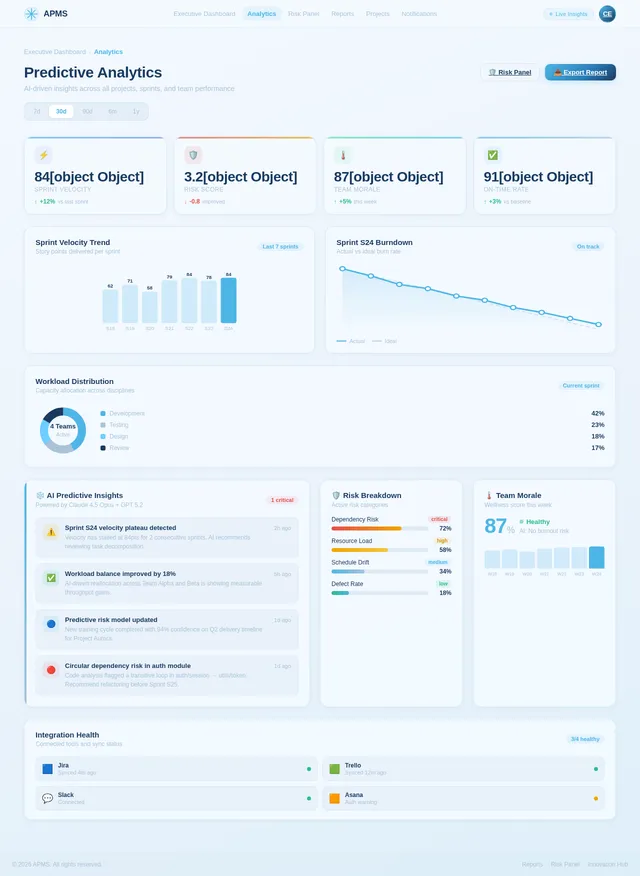
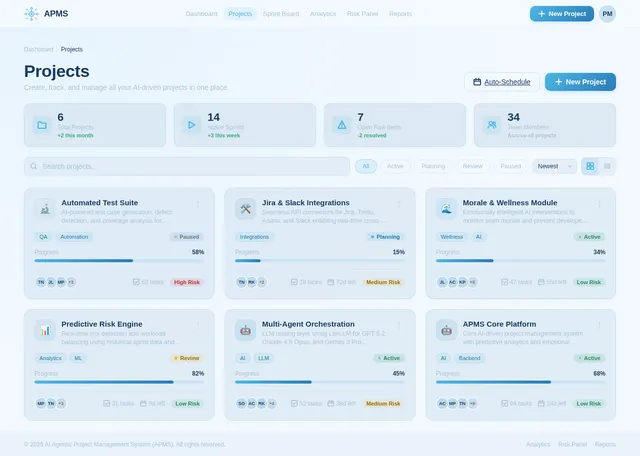
The AI Agentic Project Management System (APMS) is a next-generation AI-driven project management system that combines predictive analytics, emotional intelligence, and hyper-personalization to streamline project workflows. It integrates with tools like Jira, Trello, Asana, Slack, and Confluence, enabling real-time insights, autonomous Agile collaboration, and emotionally intelligent interventions.
Key features include:
- AI-driven project scheduling and resource allocation.
- Predictive analytics for risk detection and workload balancing.
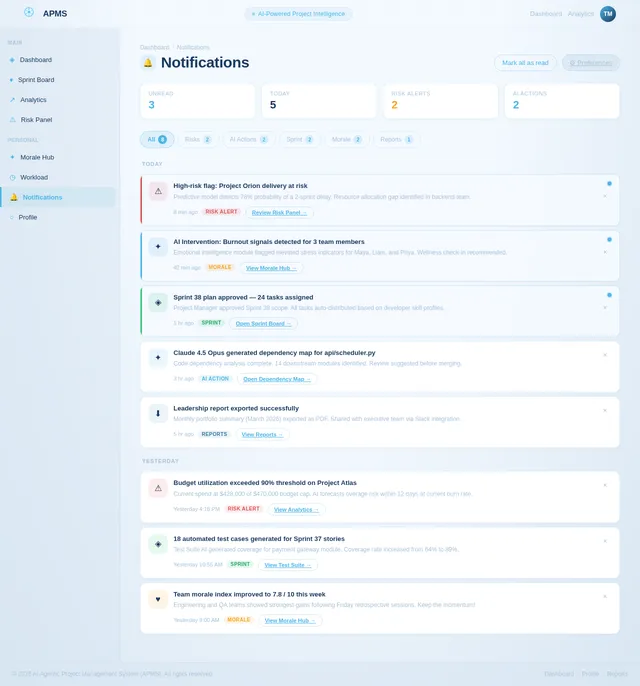
- Emotionally intelligent AI to monitor and improve team morale.
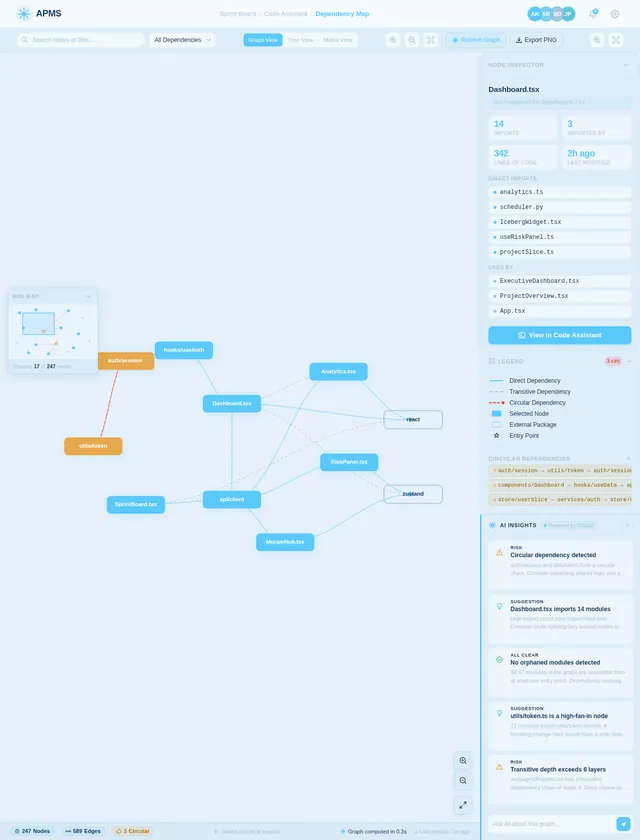
- Multi-agent collaboration for Agile workflows, including sprint planning, code dependency mapping, and automated testing.
- Hyper-personalization to tailor workflows to individual strengths and preferences.
APMS is designed to be scalable, secure, and user-friendly, ensuring it meets the needs of enterprises, mid-sized businesses, and startups alike.
3. Functional Requirements
As story points:
- As a Project Manager, I should be able to automate project scheduling and resource allocation.
- As a Project Manager, I should receive predictive insights to identify risks and prevent delays.
- As a Developer, I should receive AI-generated code suggestions to speed up development.
- As a Tester, I should have automated test case generation to improve coverage.
- As a Team Member, I should receive emotionally intelligent interventions to improve morale and prevent burnout.
- As a CEO, I should receive predictive insights to make informed decisions.
- As a User, I should be able to integrate the system with Jira, Trello, Asana, Slack, and other tools seamlessly.
- As a User, I should be able to monitor real-time project progress through IoT integration.
- As a User, I should have the ability to selectively re-run specific system requirements for regeneration.
4. User Personas
-
Project Manager (PM)
- Responsible for planning, scheduling, and overseeing projects.
- Needs predictive insights, risk assessments, and automated workflows.
-
Developer
- Focuses on coding and implementing project requirements.
- Requires AI-generated code suggestions and dependency mapping.
-
Tester
- Ensures the quality of the product through rigorous testing.
- Needs automated test case generation and defect detection.
-
Team Member
- Includes all contributors to the project.
- Requires emotionally intelligent interventions and workload balancing.
-
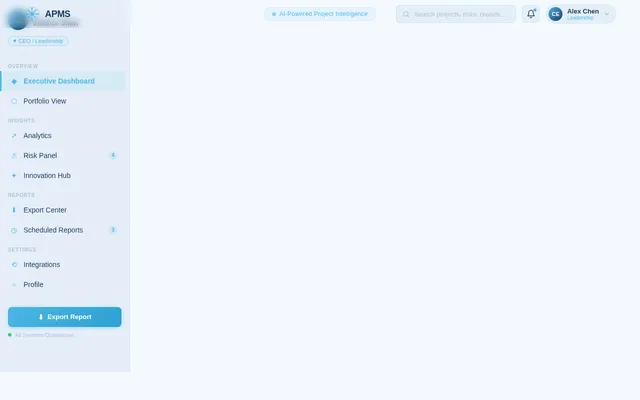
CEO/Leadership
- Oversees organizational goals and project alignment.
- Needs high-level predictive insights and recommendations.
-
System Administrator
- Manages the technical setup and maintenance of the system.
- Requires tools for monitoring system performance and selectively re-running specific system requirements for regeneration.
5. Visuals Colors and Theme
Unique Color Palette for APMS:
- Background: #F5FAFF (Crystal White)
- Surface: #D9EAF7 (Cool Sky Blue)
- Text: #1B3A5D (Deep Ocean Blue)
- Accent: #5AC8FA (Bright Azure)
- Muted Tones: #A9C3D9 (Frosted Steel Blue)
This palette reflects the "agentic" and "intelligent" theme, evoking a sense of clarity, precision, and calmness, which aligns with the project's emotionally intelligent and predictive nature.
6. Signature Design Concept
Interactive Galaxy of Agents
The APMS homepage will feature an interactive galaxy map that symbolizes the interconnectedness and intelligence of the multi-agent system.
-
Visual Design:
The galaxy is a dynamic, 3D space where each star represents a feature or agent (e.g., Project Manager Agent, Developer Agent, Tester Agent). The stars are connected by glowing constellations that represent workflows and integrations. -
Interactions:
Users can hover over or click on stars to explore specific features. For example:- Clicking on the "Predictive Analytics Engine" star reveals a detailed dashboard with risk predictions and workload balancing insights.
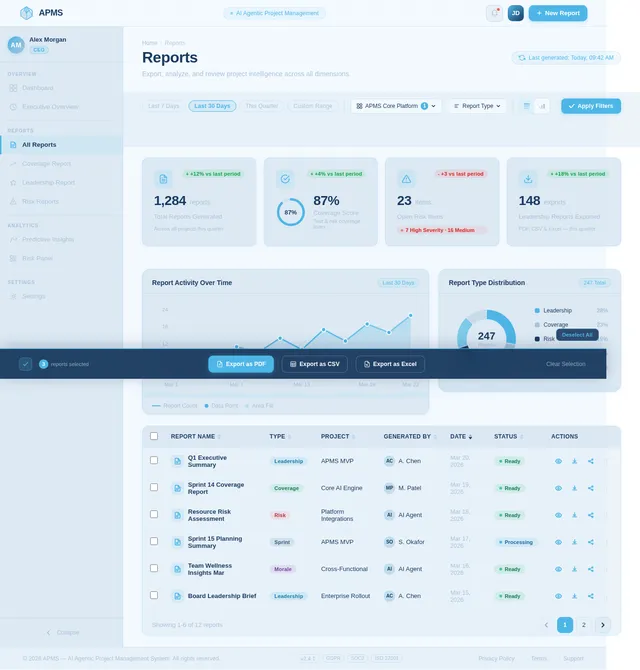
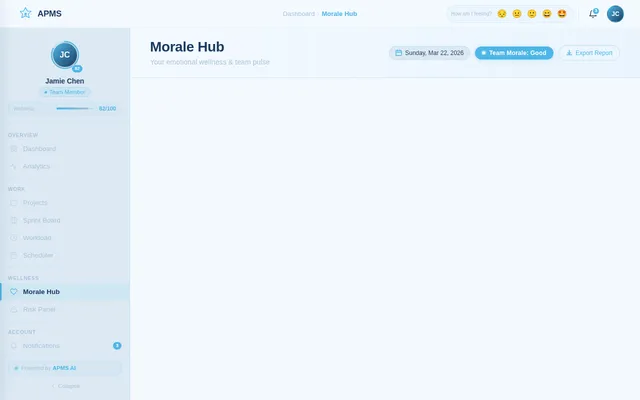
- Clicking on the "Emotion AI Engine" star displays team morale metrics and suggested interventions.
-
Animations:
- Stars pulse gently, and constellations shimmer to indicate activity.
- Clicking a star triggers a zoom-in animation, revealing contextual data and actionable insights.
-
Micro-interactions:
- Hover effects highlight stars and display tooltips with feature summaries.
- Clicking a star triggers smooth transitions to detailed views, with contextual overlays and interactive charts.
This design ensures the homepage is visually stunning, intuitive, and functional, leaving a lasting impression on users while emphasizing the intelligence and interconnectedness of the system.
7. Non-Functional Requirements
-
Performance
- Real-time insights with sub-second response times.
- Scalable to support 10,000+ concurrent users.
-
Security
- Role-based access control.
- Data encryption (in transit and at rest).
- Compliance with GDPR, SOC2, and ISO 27001 standards.
-
Reliability
- 99.9% uptime guarantee.
- Automated failover and redundancy mechanisms.
-
Usability
- Intuitive dashboards with natural language interfaces.
- Accessible across multiple devices (desktop, mobile, tablet).
-
Selective Re-run Capability
- Users should be able to manually trigger the regeneration of specific system requirements.
- The system should log and display the history of re-runs for traceability.
8. Tech Stack
Frontend:
- React for Web
- React Native for Mobile App
Backend:
- Python
- FastAPI
Database:
- RDBMS: MySQL (with Alembic for migrations)
- NoSQL: MongoDB
AI Models:
- GPT 5.2 for user-friendly responses
- Claude 4.5 Opas for academic or coding work
- Gemini 3 Pro for friendly interactions
- Google Nano Banana for image generation
AI Tools:
- Litellm for LLM Routing
- Langchain
Orchestration:
- Local: Docker, docker-compose
- Server-Side: Kubernetes
9. Assumptions and Constraints
- The system will be deployed in a cloud environment with high availability.
- All integrations (e.g., Jira, Slack) will provide APIs for seamless connectivity.
- The system will support English as the primary language, with potential for localization in future phases.
- IoT integration will be implemented in Phase 2.
- Selective re-run capability will be available for system administrators and project managers.
10. Glossary
- AI: Artificial Intelligence
- PM: Project Manager
- IoT: Internet of Things
- MVP: Minimum Viable Product
- RDBMS: Relational Database Management System
- NoSQL: Non-Relational Database
- Selective Re-run Capability: A feature allowing users to manually trigger the regeneration of specific system requirements.
This updated SRD ensures that the AI Agentic Project Management System (APMS) is designed to meet the needs of large enterprises, mid-sized businesses, and startups, with all features and integrations included as must-haves for the MVP. Let me know if further refinements are needed!
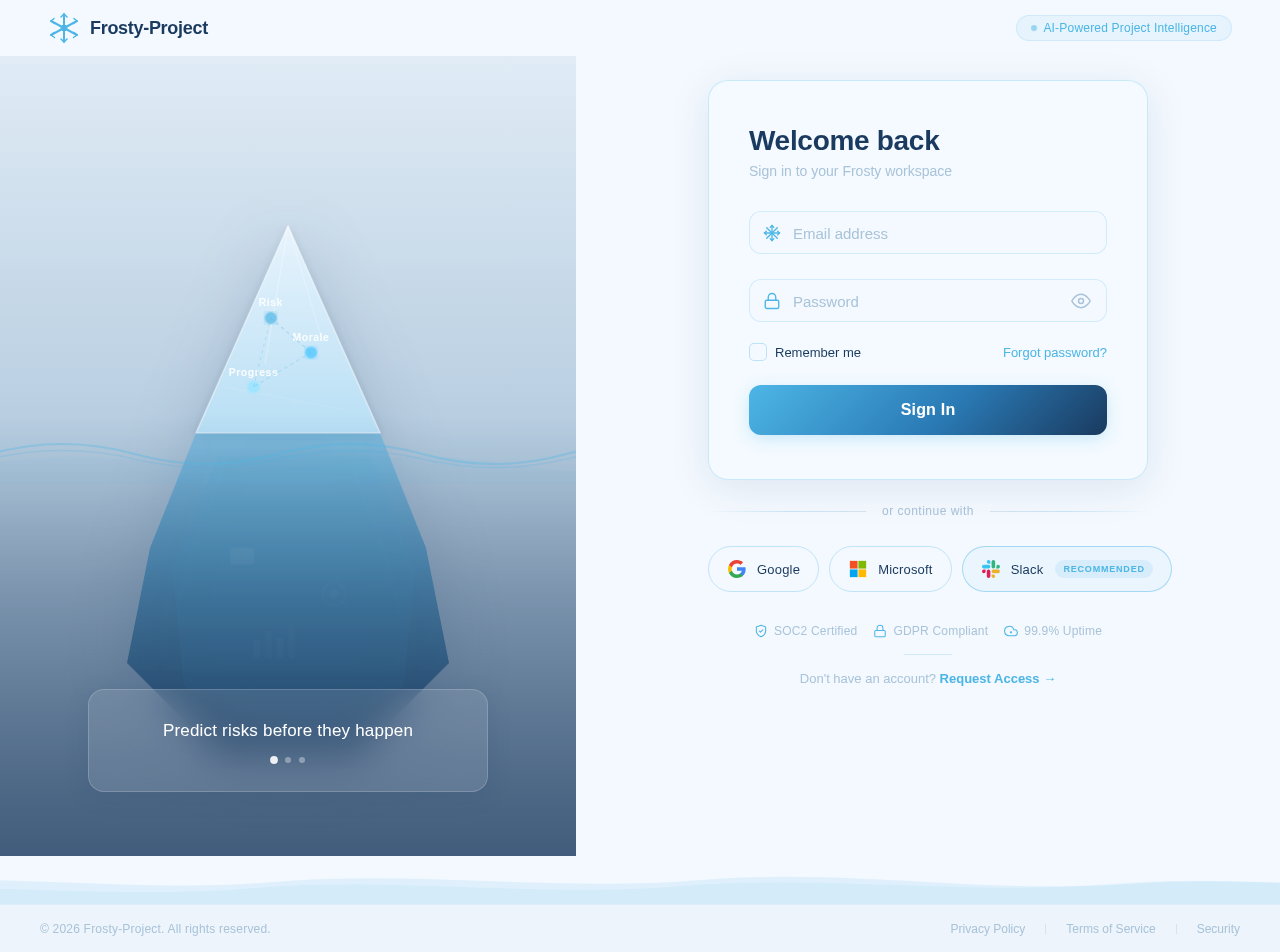
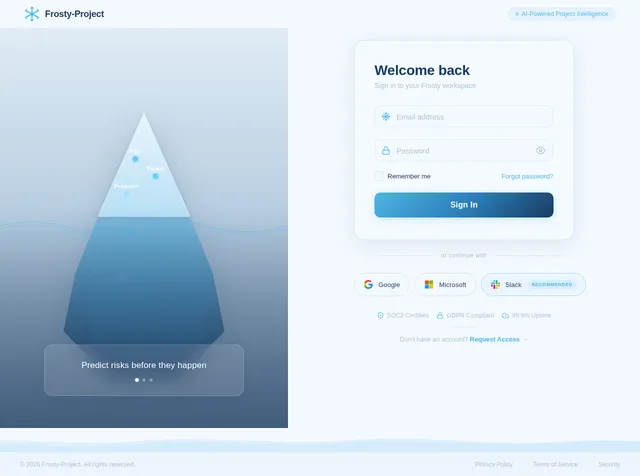
Welcome back
Sign in to your Frosty workspace
Don't have an account? Request Access →
No comments yet. Be the first!