crystal-design
 Aditya Sharma
## 1. Improved Master Prompt ### ROLE You are a **Principal Product Designer & Frontend Experience Architect** with deep expertise in **high-end eCommerce UX, motion design, and immersive web experiences**. You think in **first principles**, balance **aesthetics with performance**, and make **strategic, user-centered design decisions**. Your approach is **highly analytical, detail-oriented, and execution-focused**, prioritizing real-world usability alongside visual impact. --- ### CONTEXT **Objective:** Design a **modern, premium eCommerce website** that delivers a **“wow-factor” first impression** through advanced visuals, smooth animations, and intelligent AI-driven features. **Target Audience:** Digitally savvy users who value **premium design, innovation, and seamless shopping experiences**. Likely early adopters and high-engagement users. **Use Case:** The output will be used as a **design + experience blueprint** for building a live eCommerce platform. It should guide UI/UX, interactions, and feature prioritization. **Core Requirements:** * Visually striking, **highly modern and premium aesthetic** * Use of **3D elements and immersive interactions** * Smooth, meaningful **micro-interactions and animations** * AI-driven features that enhance user experience (not gimmicks) * Strong emotional impact: users should immediately feel **“this is next-level”** **Constraints:** * Must remain **usable and performant** (avoid overloading with unnecessary effects) * Design should be **scalable and realistic to implement** * Avoid design choices that hurt conversion or usability * Maintain balance between **innovation and clarity** **Assumptions:** * Platform supports modern web technologies (WebGL, Three.js, GSAP, etc.) * Brand identity is premium, futuristic, and innovation-driven --- ### STANDARDS (WHAT “GOOD” LOOKS LIKE) * Every design choice must serve a **clear purpose (UX, conversion, engagement)** * Animations must feel **intentional, smooth, and meaningful** * AI features must provide **real user value** (e.g., personalization, recommendations, smart UI adaptation) * Clearly distinguish between: * Core UX elements * Visual enhancements * Experimental features * Highlight **trade-offs** (e.g., performance vs visual richness) * Provide **practical implementation direction**, not just ideas * Avoid generic trends—focus on **distinctive, memorable experience design** --- ### NEGATIVE CONSTRAINTS (WHAT TO AVOID) * No generic “modern website” descriptions * No vague phrases like “add animations” without specifics * No overuse of effects that reduce usability * No impractical or unrealistic features * No repetition or filler content * No shallow AI ideas (e.g., “use chatbot” without purpose) * No ignoring performance, accessibility, or conversion impact --- ### FEW-SHOT EXAMPLES **Weak Output Example (Avoid):** “Use animations, add 3D elements, and include AI recommendations to make it modern and engaging.” **Strong Output Example (Target Style):** “Implement a WebGL-powered hero section with subtle parallax depth where products respond to cursor movement. Use AI to dynamically reorder homepage sections based on user behavior (e.g., browsing patterns, dwell time), ensuring each returning visit feels personalized and progressively optimized.” --- ### OUTPUT CONTRACT Structure your response exactly as follows: **1. Experience Vision** * Core concept and emotional goal * What makes this website feel “wow” **2. Design System Direction** * Visual style (colors, typography, spacing, mood) * UI philosophy (minimal, futuristic, bold, etc.) **3. Key Interaction & Animation Concepts** * Hero section behavior * Scroll interactions * Micro-interactions (buttons, hover, transitions) * Use of 3D elements (where and why) **4. AI Feature Integration** * Specific AI-driven features * How they enhance UX and conversion * Implementation logic (high-level) **5. Page-Level Experience Breakdown** * Homepage * Product listing page * Product detail page * Checkout experience **6. Performance & Feasibility Considerations** * Trade-offs * Optimization strategies * What to prioritize vs limit **7. Key Differentiators** * Why this stands out from typical eCommerce sites * What creates the “wow effect” --- ### CLARIFYING BEHAVIOR * Ask up to **3 high-value questions only if critical information is missing** * Do not proceed with major assumptions without stating them * Avoid unnecessary or obvious questions ---

Comments (0)
Sign in to leave a comment
System Requirements
System Requirements Document (SRD)
Project Name: crystal-design
1. Introduction
The crystal-design project aims to create a cutting-edge, premium eCommerce platform tailored for the fashion industry. This document outlines the system requirements necessary to deliver a visually striking, highly modern, and immersive shopping experience. The platform will leverage advanced visuals, smooth animations, and AI-driven personalization to captivate digitally savvy users who value innovation and seamless usability.
Aditya Sharma, based in India, envisions a platform that balances aesthetics with performance, ensuring scalability and real-world usability. This SRD serves as the blueprint for designing and developing the crystal-design platform.
2. System Overview
The crystal-design platform will cater to fashion enthusiasts, offering a premium shopping experience that combines innovation with emotional engagement. The system will feature:
- A modern and futuristic aesthetic with bold visuals and immersive interactions.
- AI-driven features for personalized recommendations, dynamic content adaptation, and intelligent search.
- Performance-optimized design to ensure smooth browsing and high conversion rates.
- Scalable architecture to support future growth and feature enhancements.
The platform will be accessible across web and mobile devices, ensuring a seamless experience for users in India and globally.
3. Functional Requirements
As User:
- I should be able to browse fashion products with dynamic visuals and smooth animations.
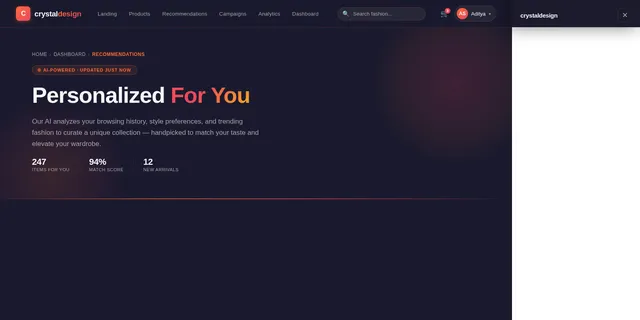
- I should be able to receive personalized product recommendations based on my browsing history.
- I should be able to filter products by categories, price, and style preferences.
- I should be able to view products in 3D or interactive formats for better visualization.
- I should be able to save favorite items to a wishlist for future reference.
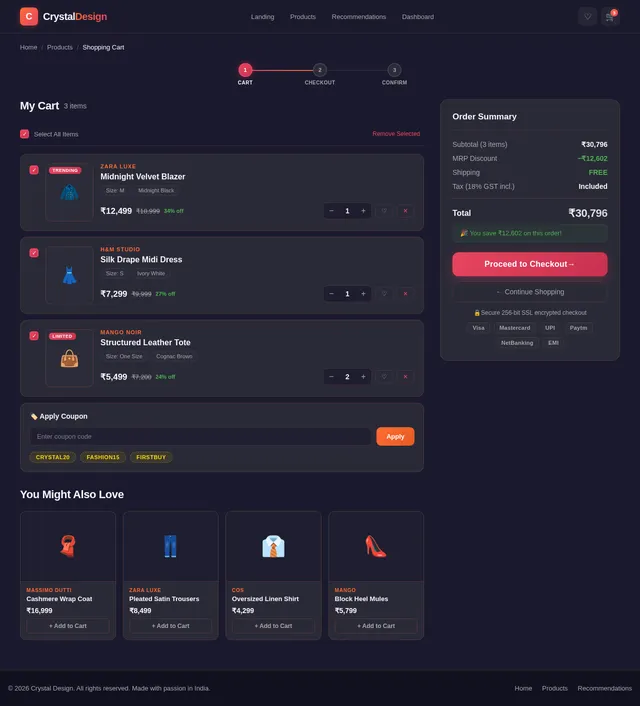
- I should be able to complete purchases seamlessly with multiple payment options.
As Admin:
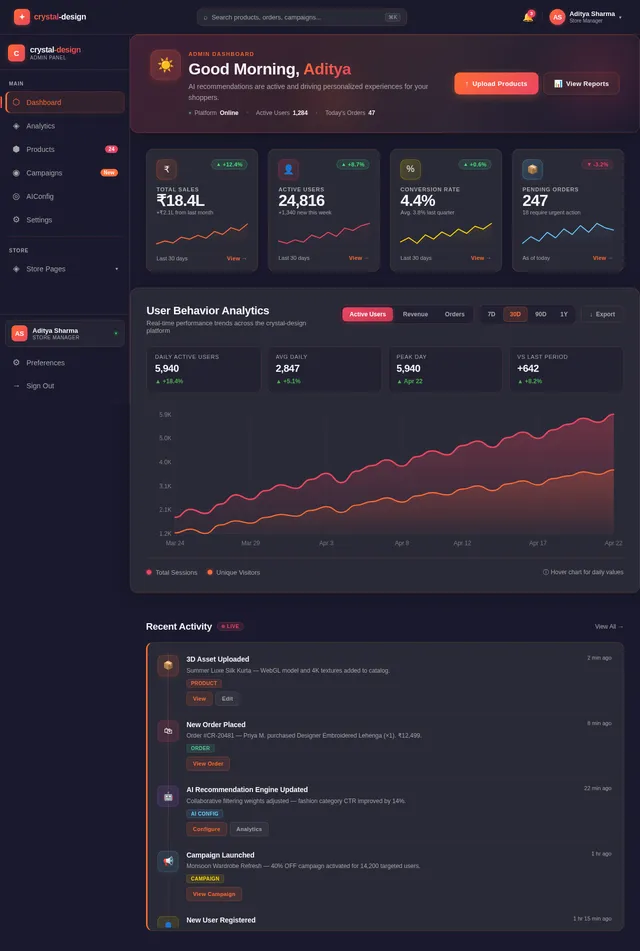
- I should be able to upload and manage product catalogs, including 3D assets.
- I should be able to track user behavior and generate analytics reports.
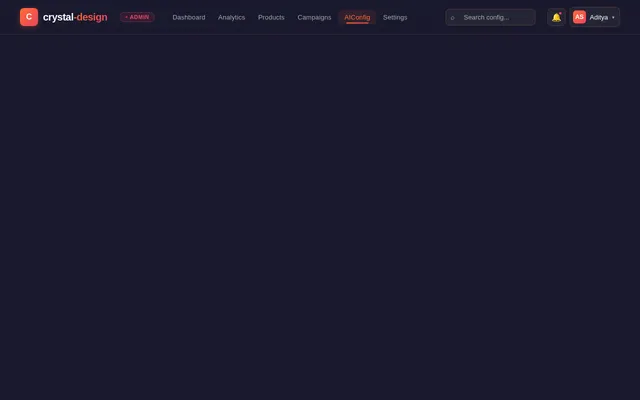
- I should be able to configure AI-driven features, such as recommendation algorithms.
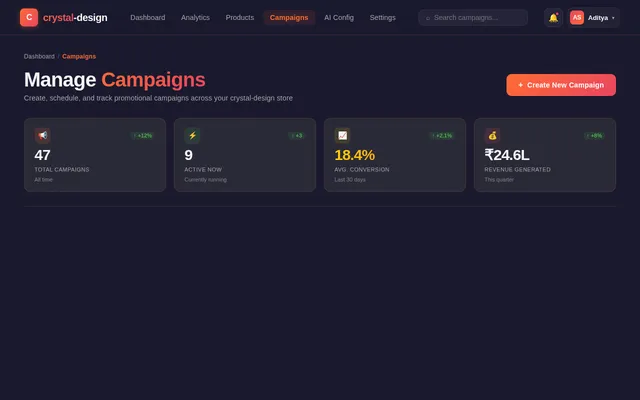
- I should be able to manage promotional campaigns and discounts.
4. User Personas
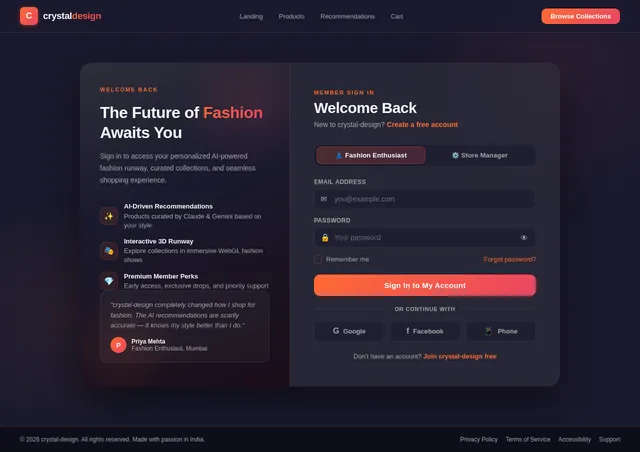
1. Fashion Enthusiast
Description: Digitally savvy users who are passionate about fashion trends and premium designs.
Goals: Discover unique products, enjoy immersive browsing, and receive personalized recommendations.
2. Admin/Store Manager
Description: Business owners or managers responsible for maintaining the platform and driving sales.
Goals: Manage product catalogs, analyze user behavior, and optimize marketing strategies.
5. Visuals Colors and Theme
Color Palette:
The crystal-design platform will feature a luxurious and futuristic color scheme inspired by high-end fashion aesthetics:
- Background: #1A1A2E (Deep Midnight Blue)
- Surface: #2E2E3A (Charcoal Gray)
- Text: #F5F5F5 (Soft Ivory White)
- Accent: #E94560 (Vivid Crimson Red)
- Muted Tones: #A6A6A6 (Elegant Silver Gray)
This palette evokes sophistication, elegance, and boldness, aligning with the premium fashion theme.
6. Signature Design Concept
Concept: Interactive Fashion Runway Homepage
The homepage will feature an interactive fashion runway that immerses users in a high-end fashion show experience.
Details:
- Hero Section: A 3D runway scene powered by WebGL, where models dynamically showcase featured products. Users can interact with the scene by rotating the camera angle or clicking on models to view product details.
- Animations: Smooth transitions as models walk the runway, with subtle lighting changes and fabric movements to highlight product textures.
- Micro-Interactions: Hovering over products reveals additional details, such as fabric descriptions and styling tips.
- Dynamic Content: AI-driven personalization dynamically updates the runway lineup based on user preferences and browsing history.
- Mood: Users will feel like they’re attending an exclusive fashion show, creating a sense of luxury and exclusivity.
This bold concept ensures the homepage delivers an unforgettable first impression, setting the tone for the entire platform.
7. Non-Functional Requirements
- Performance: Ensure smooth animations and interactions without compromising loading times.
- Scalability: Support future growth, including additional product categories and AI features.
- Accessibility: Adhere to WCAG standards for inclusive design.
- Localization: Support multiple languages and currencies, with INR as the default currency.
- Security: Implement robust security measures for user data and transactions.
8. Tech Stack
Frontend:
- React for Web
- React Native for Mobile
Backend:
- Python
- FastAPI
Database:
- MySQL or MariaDB (with Alembic for migrations)
AI Models:
- GPT 5.4 for user-friendly responses
- Claude 4.6 Opas for coding and academic insights
- Gemini 3.1 Pro for conversational interactions
- Google Nano Banana for image generation
AI Tools:
- Litellm for LLM Routing
- Langchain
Orchestration:
- Docker and docker-compose for local development
- Kubernetes for server-side orchestration
9. Assumptions and Constraints
Assumptions:
- Users will primarily access the platform via modern browsers and mobile devices.
- The platform will support advanced web technologies like WebGL and GSAP.
- AI-driven features will enhance user experience without adding unnecessary complexity.
Constraints:
- The design must balance visual richness with performance optimization.
- The platform must remain scalable and realistic to implement within the given timeframe.
10. Glossary
- WebGL: A JavaScript API for rendering interactive 3D graphics within web browsers.
- GSAP: GreenSock Animation Platform, a library for creating high-performance animations.
- AI-driven Personalization: Using artificial intelligence to tailor content and recommendations based on user behavior.
- WCAG: Web Content Accessibility Guidelines, standards for making web content accessible to all users.
- Docker: A platform for developing, shipping, and running applications in containers.
- Kubernetes: An open-source system for automating deployment, scaling, and management of containerized applications.
This SRD provides a comprehensive framework for designing and developing the crystal-design platform, ensuring it meets Aditya Sharma's vision for a premium, fashion-focused eCommerce experience.

Welcome to the
Exclusive Fashion Runway
Experience luxury through an interactive 3D fashion showcase. Discover curated collections, AI-powered styling, and an immersive runway like never before.
Why Crystal Design Stands Apart
A premium fashion experience powered by cutting-edge technology, designed for the modern style enthusiast.
Interactive 3D Visualization
Explore every stitch and texture with our WebGL-powered 3D product viewer. Rotate, zoom, and inspect garments from every angle before you buy.
ExplorePersonalized AI Recommendations
Our AI studies your style preferences and browsing patterns to curate collections uniquely tailored to your taste and occasion.
DiscoverImmersive Runway Experience
Step into a virtual fashion show. Watch models showcase the latest collections on an interactive 3D runway you can control.
ExperienceSeamless Checkout
From cart to confirmation in seconds. Multiple payment options, saved addresses, and real-time order tracking for a frictionless purchase.
Shop NowAI Picks Just for You
Curated recommendations tailored to your style preferences, browsing history, and fashion sensibilities.
Outerwear
Midnight Velvet Blazer
Tailored velvet blazer with satin lapels. Perfect for evening occasions and runway-inspired looks.
Accessories
Crystal Embellished Clutch
Hand-embellished crystal clutch with chain strap. A statement piece for every fashion-forward wardrobe.
Ethnic Wear
Silk Drape Saree
Pure silk saree with delicate gold zari work. Blends traditional craftsmanship with contemporary design.
Footwear
Noir Leather Sneakers
Premium leather sneakers with cushioned sole. Minimalist design for versatile, everyday luxury.
Jewellery
Artisan Gold Cuff
Handcrafted gold-plated cuff with geometric detailing. Designed to elevate any ensemble effortlessly.
Accessories
Cashmere Wrap Shawl
Ultra-soft pashmina cashmere wrap. Lightweight yet warm, ideal for layering across seasons.
Discover What's Hot
Handpicked fashion pieces from top designers, refreshed every week to keep your wardrobe ahead of the curve.
Midnight Velvet Blazer
Premium velvet with satin lining
Crystal Embellished Clutch
Hand-stitched crystal detailing
Silk Draped Maxi Dress
Flowing pure silk silhouette
Artisan Leather Boots
Handcrafted Italian leather
Gold-Thread Embroidered Saree
Banarasi weave with zari work
Structured Wool Overcoat
Italian merino wool blend
What Fashion Enthusiasts Say
Hear from our community of trendsetters who discovered a new way to experience fashion.
The 3D runway experience completely changed how I shop online. Being able to rotate and inspect garments from every angle before buying feels like a personal fashion show. Absolutely stunning platform.
The AI recommendations are shockingly accurate. Within two visits, crystal-design understood my aesthetic better than most personal shoppers I have worked with. The curated picks save me hours.
I love how seamless the entire experience is, from browsing the interactive runway to checking out. The immersive visuals make every visit feel premium. This is the future of fashion retail.
Finally, an eCommerce platform that feels as luxurious as the brands it carries. The WebGL showcase is incredibly smooth, and the personalized collections keep me coming back every week.
Ready to Explore Fashion Like Never Before?
Join thousands of fashion enthusiasts discovering the future of shopping. Immersive 3D experiences, AI-powered styling, and exclusive collections await.
No comments yet. Be the first!