solar-website
 Midhun Kola
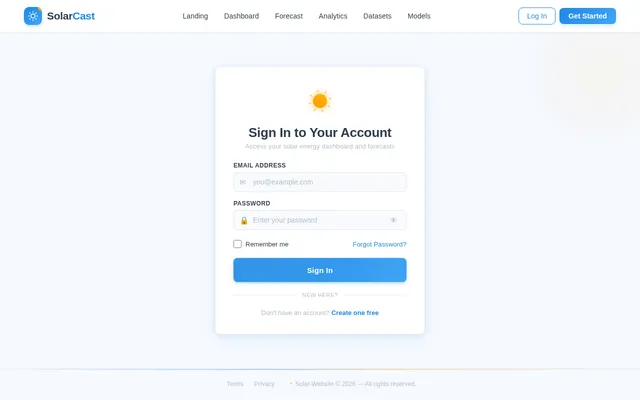
🌐 Website Development for Energy Consumption Forecasting System 🔷 1. Introduction A web-based application is developed to make the energy forecasting model accessible and interactive. The website allows users (such as building managers or users) to input parameters like temperature, humidity, and occupancy, and receive predicted energy consumption instantly. This system integrates a machine learning regression model with a user-friendly interface. 🔷 2. Purpose of the Website Provide a simple interface for prediction Visualize energy consumption data using graphs Enable real-time forecasting Make the model accessible without coding knowledge 🔷 3. System Architecture 5 Components: 1. Frontend (User Interface) Developed using: HTML CSS JavaScript 👉 Responsibilities: Take user inputs Display prediction results Show graphs (charts) 2. Backend (Server) Developed using: Python (Flask / Django) 👉 Responsibilities: Handle user requests Load trained regression model Perform prediction 3. Machine Learning Model Random Forest Regression (main model) Trained using historical data 👉 Responsibilities: Predict energy consumption 4. Database (Optional) Stores: Historical data User inputs Prediction results 🔷 4. Workflow of the Website User Input → Frontend Form → Backend Server → ML Model → Prediction → Display Output Explanation: User enters: Temperature Humidity Occupancy Data is sent to backend Backend processes input Model predicts energy usage Result is displayed on webpage 🔷 5. Website Features ✔ Input Form Fields for: Temperature Humidity Occupancy Time ✔ Prediction Output Displays predicted energy consumption (kWh) ✔ Graph Visualization 7 Shows: Actual vs Predicted values Helps understand model performance ✔ Responsive Design Works on mobile and desktop 🔷 6. Technologies Used Component Technology Frontend HTML, CSS, JavaScript Backend Python (Flask/Django) ML Model Scikit-learn Visualization Matplotlib / Chart.js 🔷 7. Model Integration Train model using Python Save model using: import joblib joblib.dump(model, "model.pkl") Load in backend: model = joblib.load("model.pkl") 👉 This allows real-time prediction on the website 🔷 8. Advantages of Website ✔ Easy to use ✔ No coding required for users ✔ Real-time predictions ✔ Visual insights with graphs 🔷 9. Limitations ❌ Requires server hosting ❌ Depends on internet ❌ Model accuracy depends on data 🔷 10. Future Enhancements Add real-time IoT sensor data Deploy on cloud (AWS / Azure) Add user login system Improve UI/UX design 🔷 11. Conclusion The website provides an efficient platform to deploy and interact with the energy consumption forecasting model. By combining machine learning with web technologies, users can easily predict energy usage and make informed decisions to optimize energy efficiency in smart buildings.

Comments (0)
Sign in to leave a comment
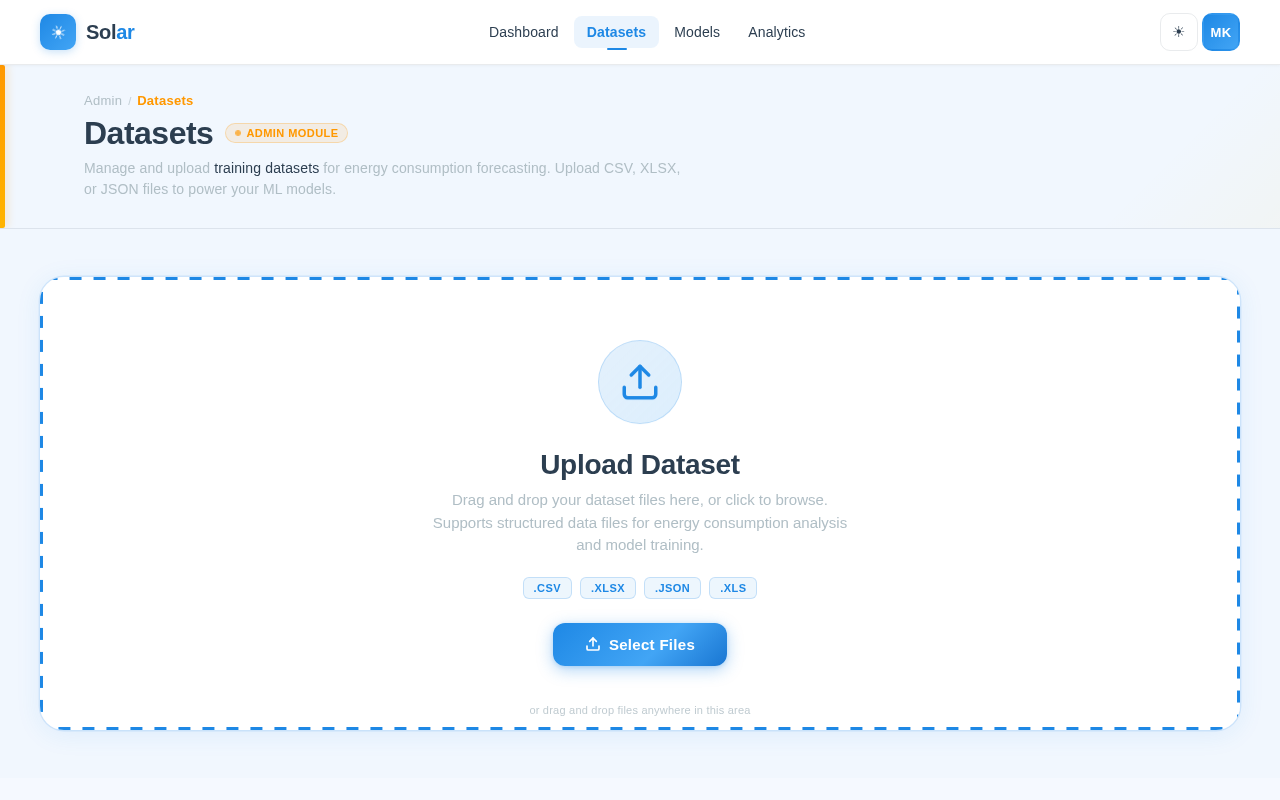
Datasets
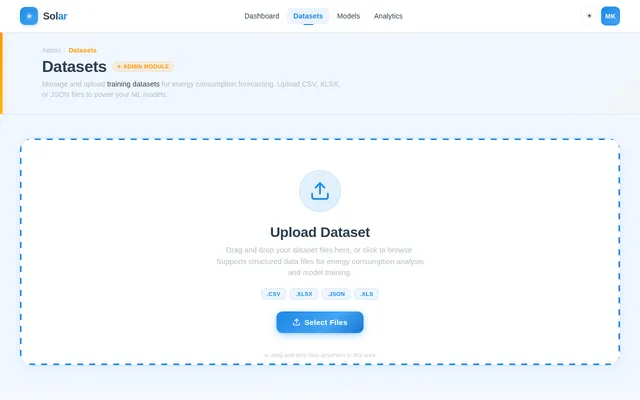
Admin ModuleManage and upload training datasets for energy consumption forecasting. Upload CSV, XLSX, or JSON files to power your ML models.
Upload Dataset
Drag and drop your dataset files here, or click to browse. Supports structured data files for energy consumption analysis and model training.
No comments yet. Be the first!