
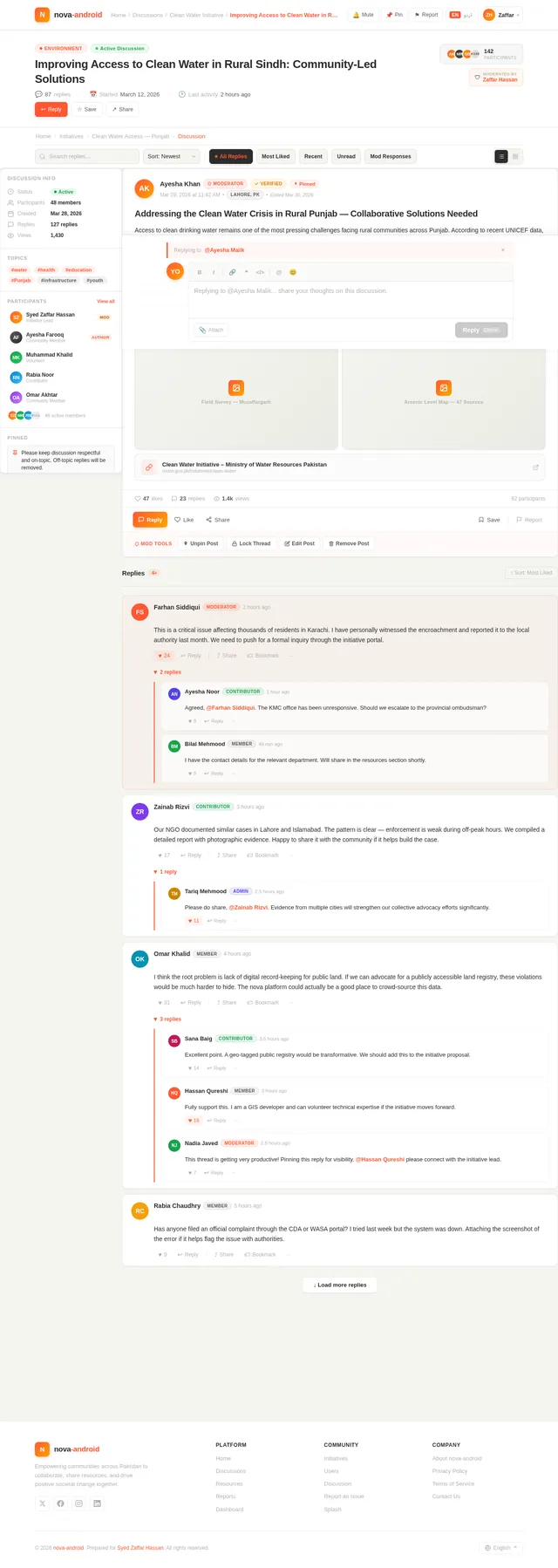
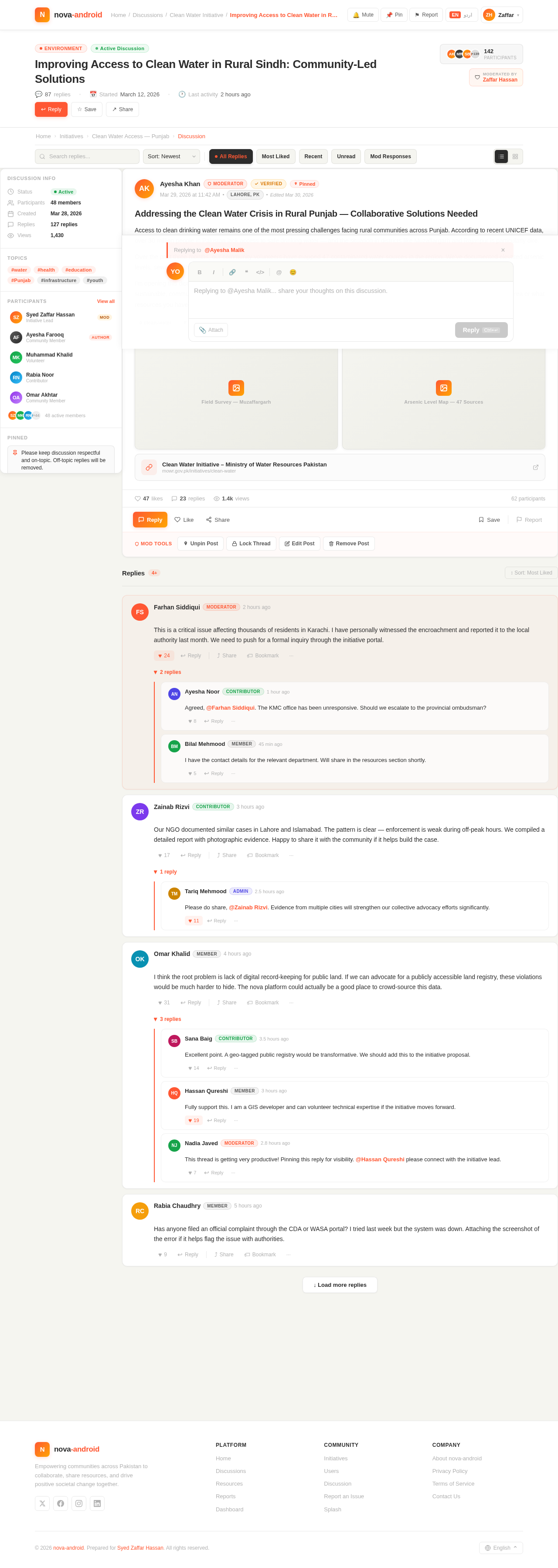
Access to clean drinking water remains one of the most pressing challenges facing rural communities across Punjab. According to recent UNICEF data, over 30 million people in Pakistan lack access to safe drinking water — and the situation in districts like Muzaffargarh and Rajanpur is particularly dire.
Over the past three months, our community volunteers have mapped 47 contaminated water sources in the region. We've documented elevated arsenic levels, sewage infiltration, and infrastructure decay in areas that have received no government attention in over a decade.
I'm opening this discussion to gather input from engineers, health workers, NGO representatives, and local residents who can help us design sustainable, community-owned water filtration and distribution systems. Every perspective counts — please share what has worked in your area or what resources you have access to. Let's turn collaboration into real, measurable impact.
No comments yet. Be the first!