
Assign PHQ-9 Depression Assessment
Wearable sleep-onset delay increased 38% and in-app mood-check entries trended downward over the last 14 days, matching a pattern flagged in 3 prior high-risk cohorts.

AI-synthesized overview of clinical status, key metrics, and recommended actions
Emerging signals warrant closer monitoring this week.
A snapshot of vital signs, activity, sleep, and lab results. Select a metric to view its historical trend.
Narrative synthesis of assessment performance and behavioral context
This assessment evaluated depressive symptom severity across the nine PHQ-9 item domains, including mood, interest, sleep, appetite, concentration, and self-harm risk. Scoring draws on standardized clinical instruments combined with 14 days of behavioral and activity signal synchronized from the NEURO World mobile application.
Patient scored in the moderate range on the PHQ-9, consistent with self-reported low mood and reduced interest captured during intake.
The self-harm risk item indicated no current thoughts of self-harm, consistent with the patient’s safety screening at intake.
Responses to the interest/pleasure and energy items reflected persistent anhedonia and fatigue over the past two weeks, aligning with DSM-5 depressive criteria.
Wearable-derived sleep and activity metrics over the prior 14 days showed no clinically significant disruption correlating with symptom fluctuation.
Synced activity, sleep, and vitals from connected devices
Chronological record of assessments, lab ingestions, wearable syncs, clinician actions, AI insights, and nudges for this patient.
neuro's clinical AI analyzed wearable, assessment, and behavioral signals for this patient to surface next-best actions. Review the evidence, then approve or dismiss each recommendation.
Wearable sleep-onset delay increased 38% and in-app mood-check entries trended downward over the last 14 days, matching a pattern flagged in 3 prior high-risk cohorts.
Patient missed medication logging for 5 consecutive days. Confidence is high given consistent prior logging cadence over the past 90 days.
Resting heart rate trend up 12 bpm over 3 weeks correlates with subclinical anxiety markers observed in comparable patient profiles.
No clinician contact in 21 days and portal engagement dropped 40% week-over-week, raising dropout risk for the current care plan.
Consistent sleep-onset delay detected across 4 weeks of wearable data. A low-acuity behavioral nudge track may improve sleep quality metrics.

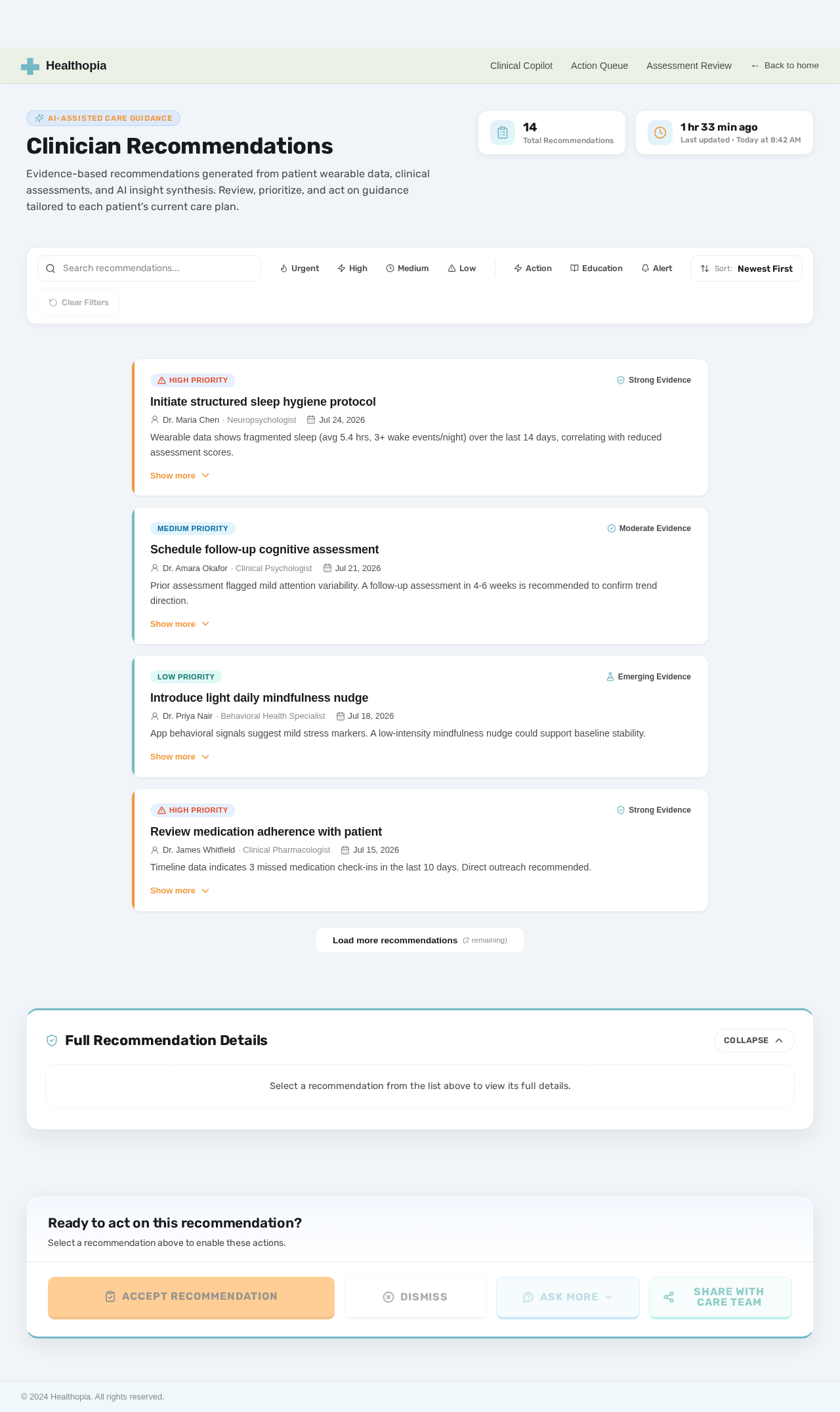
Evidence-based recommendations generated from patient wearable data, clinical assessments, and AI insight synthesis. Review, prioritize, and act on guidance tailored to each patient's current care plan.
Select a recommendation above to enable these actions.
No comments yet. Be the first!